Urban Planning & Architectural ...
Online Conference
20 Oct 2026 / 22 Oct 2026 read moreConference Coordinator
[email protected]
Whatsapp: (+20)1000028021
Subscribe to our newsletter
The global tourism sector is navigating a critical transition, moving beyond traditional models toward a paradigm that prioritizes environmental stewardship, social equity, and the authentic preservation of cultural identity. As travel patterns evolve in an increasingly digitalized and hyper-connected world, the cultural tourism industry faces the dual challenge of accommodating growing visitor numbers while ensuring the long-term resilience of fragile heritage sites and local ecosystems.
The current era of tourism is defined by a shift toward "regenerative" practices, where the objective is to leave destinations better than they were found. This movement requires a sophisticated integration of digital intelligence, community-led heritage management, and climate-resilient infrastructure to manage the complexities of modern travel.
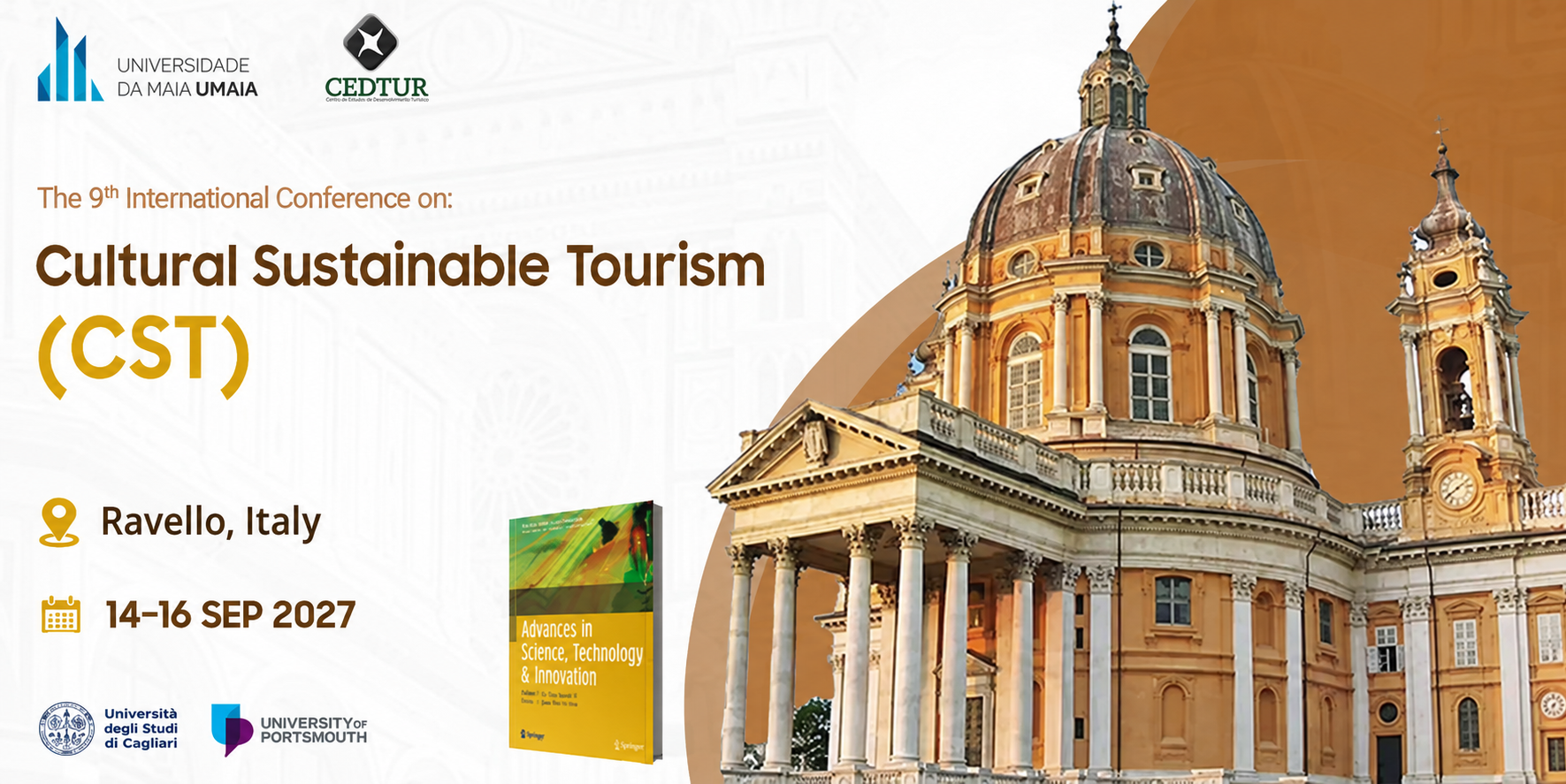
In response to these systemic shifts, the 9th edition of the Cultural Sustainable Tourism (CST) conference serves as a global forum for redefining the future of heritage travel. By integrating technological innovation with regenerative and community-centric strategies, CST 2027 provides a definitive platform where academic research, policy expertise, and industry leadership converge. This edition emphasizes actionable, future-proof solutions, including policy roundtables and specialized publication opportunities, to foster a sustainable and inclusive global tourism ecosystem.
Conference Scope
CST 2027 functions as a premier international hub for the convergence of diverse academic, corporate, and entrepreneurial expertise, bringing together researchers, destination managers, heritage conservationists, and policymakers to foster multidisciplinary research that addresses the urgent need to redesign tourism frameworks in a rapidly evolving global context.
Statement of Purpose
CST 2027 aims to provide a comprehensive, interdisciplinary forum that bridges the gap between heritage preservation and modern economic evolution. Our mission is to facilitate the exchange of knowledge, methodologies, and best practices among scholars and tourism practitioners. By examining the synergy between digital storytelling and regenerative tourism, we aim to offer actionable insights that empower tourism leaders, strategists, and policymakers to lead the transition toward a prosperous, equitable, and environmentally resilient global tourism market.
1.1. Generative AI for Personalized Visitor Experiences.
1.2. Agentic AI and Autonomous Visitor Services.
1.3. VR, AR, and Mixed Reality for Digital Site Interpretation.
1.4. Big Data Analytics and Predictive Visitor Intelligence.
1.5. Digital Twins for Heritage Conservation and Management.
1.6. Spatial Computing and Immersive Cultural Experiences.
1.7. Human-AI Collaboration in Tourism.
1.8. AI Decision Support Systems for Cultural Tourism Management.
2.1. Inclusive Tourism Development and Universal Accessibility.
2.2. Empowering Local Artisans and Creative Communities.
2.3. Participatory Planning and Community-Based Site Management.
2.4. Bridging Digital Divides in Rural Communities.
2.5. Equitable Tourism Benefits and Anti-Gentrification Strategies.
2.6. Community-Owned Tourism Enterprises.
2.7. Community Well-Being and Social Resilience.
2.8. Youth Engagement and Intergenerational Heritage Transmission.
3.1. Co-Creation of Cultural Tourism Experiences.
3.2. Community Storytelling and Destination Identity.
3.3. Balancing Commercialization with Heritage Integrity.
3.4. Blockchain for Cultural Heritage Authentication.
3.5. User-Generated Content and Digital Destination Branding.
3.6. UNESCO Intangible Cultural Heritage.
3.7. Ethics of Heritage Interpretation.
3.8. Living Heritage and Traditional Knowledge Systems.
4.1. Global Tourism Governance Frameworks.
4.2. Cross-Border Cultural Corridor Governance.
4.3. Policy Responses to the Platform Economy.
4.4. UNESCO World Heritage Management Frameworks.
4.5. Collaborative Governance Models.
4.6. Ethical Management of Sensitive Heritage Sites.
4.7. Innovative Partnerships and Sustainable Funding Models.
4.8. Responsible AI, Digital Ethics, and Data Governance.
5.1. Nature-Positive Tourism Strategies.
5.2. Regenerative Tourism Models.
5.3. Biodiversity Conservation in Heritage Landscapes.
5.4. Circular Resource Management.
5.5. Community-Led Ecological Restoration.
5.6. Traditional Landscapes and Regenerative Agriculture.
5.7. Ecological Footprint Assessment.
5.8. Nature-Based Solutions for Heritage Resilience.
6.1. Adaptive Reuse for Heritage Accommodation.
6.2. Net-Zero and Low-Carbon Heritage Hospitality.
6.3. Water and Waste Efficiency in Historic Buildings.
6.4. Biophilic Design in Traditional Architecture.
6.5. Sustainability Certification in Heritage Hospitality.
6.6. Sustainable Local Supply Chains.
6.7. Traditional Knowledge in Hospitality Practices.
6.8. Balancing Modern Comfort with Historic Character.
7.1. Low-Carbon Mobility for Cultural Tourism.
7.2. Walkability and Cycling Heritage Networks.
7.3. Smart Mobility and Visitor Transportation Systems.
7.4. Public Transport Integration for Heritage Destinations.

7.5. Universal Design for Accessible Tourism.
7.6. Sustainable Last-Mile Connectivity.
7.7. Mobility Planning for Historic Cities.
7.8. Visitor Mobility and Carbon Reduction Strategies.
8.1. Integrated Cultural and Natural Heritage Management.
8.2. Holistic Landscape Planning.
8.3. Community Participation in Landscape Conservation.
8.4. Environmental Impact Assessment.
8.5. Traditional Land-Use Systems.
8.6. Cultural Identity and Landscape Preservation.
8.7. International Best Practices.
8.8. Landscape Governance and Policy.
9.1. Visitor Flow Optimization.
9.2. Overtourism Mitigation Strategies.
9.3. Predictive Analytics for Destination Management.
9.4. Real-Time Visitor Monitoring Systems.
9.5. Gamification for Sustainable Visitor Behavior.
9.6. Carrying Capacity Assessment.
9.7. Equitable Visitor Distribution.
9.8. Smart Capacity Planning.
10.1. Cross-Border Heritage Collaboration.
10.2. Heritage Interpretation Along Cultural Routes.
10.3. Economic Impact of Cultural Corridors.
10.4. Digital Navigation Platforms.
10.5. Stakeholder Collaboration.
10.6. Destination Branding.
10.7. Cultural Exchange Programs.
10.8. Long-Term Route Sustainability.
11.1. Creative Tourism and Experience Design.
11.2. Cultural Entrepreneurship and Innovation Ecosystems.
11.3. Creative Placemaking.
11.4. Digital Art in Heritage Spaces.
11.5. Festivals and Event-Based Tourism.
11.6. Heritage Education Through Creative Practice.
11.7. Creative Industry Clusters.
11.8. Arts for Cultural Engagement.
12.1. Ethical Heritage Conservation.
12.2. Adaptive Conservation Approaches.
12.3. Visitor Access and Conservation Balance.
12.4. Digital Documentation and Archiving.
12.5. Heritage Management in Urban Contexts.
12.6. Community Stewardship.
12.7. Non-Invasive Conservation Technologies.
12.8. AI-Assisted Heritage Documentation and Monitoring.
13.1. ESG Frameworks for Cultural Tourism.
13.2. Social and Cultural Return on Investment.
13.3. Carbon Accounting and Environmental Performance.
13.4. International Geoparks and Conservation Standards.
13.5. Comparative Benchmarking Frameworks.
13.6. Regenerative Tourism Indicators and KPIs.
13.7. Impact Communication and Reporting.
13.8. Decision Support Systems for Sustainable Development.
14.1. Climate Risk Modeling.
14.2. Adaptive Heritage Conservation.
14.3. Disaster Risk Management.
14.4. Climate-Resilient Retrofitting.
14.5. Climate Justice and Cultural Heritage.
14.6. Coastal Heritage Protection.
14.7. Community Capacity Building.
14.8. Climate Emergency Planning for Heritage Sites.
15.1. Pilgrimage Management.
15.2. Authentic Spiritual Experiences.
15.3. Interfaith Cultural Dialogue.
15.4. Pilgrimage Infrastructure.
15.5. Intangible Religious Heritage.
15.6. Sacred Site Conservation.
15.7. Community Development Through Spiritual Tourism.
15.8. Digital Interpretation of Sacred Heritage.
16.1. Culinary and Agricultural Tourism.
16.2. Industrial Heritage Tourism.
16.3. Maritime and Underwater Heritage Tourism.
16.4. Archaeological Tourism.
16.5. Literary and Artistic Tourism.
16.6. Island and Coastal Heritage Tourism.
16.7. International Sustainable Tourism Frameworks.
16.8. Future Tourism Scenarios and Heritage Futures.

All accepted submissions to the conference, after a rigorous double-blinded peer-review process by the respective Editorial Board, will be published in:
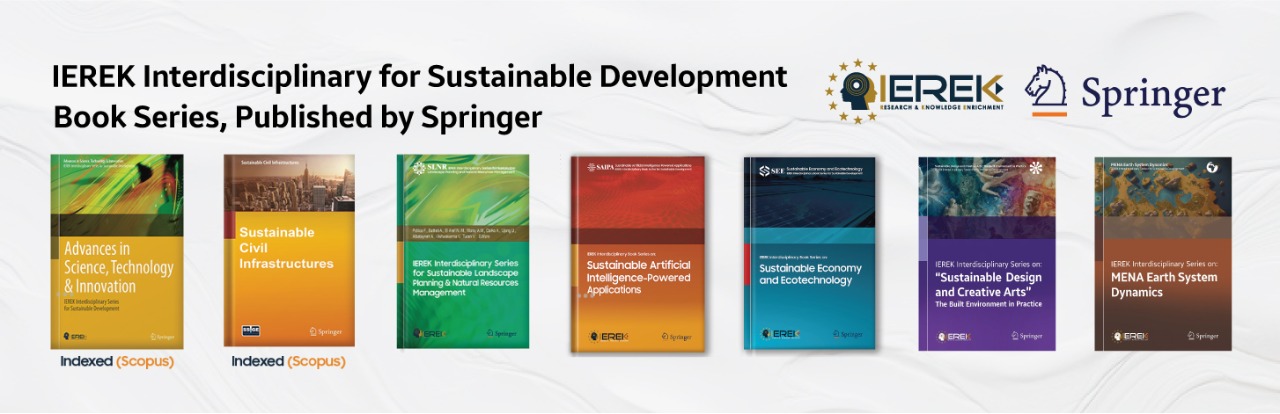
Advances in Science, Technology and Innovation (ASTI), an IEREK interdisciplinary book series published by Springer Nature. (SCOPUS indexed)
Publisher: Springer Nature (IEREK Interdisciplinary book series)
Indexing: SCOPUS indexed; some titles in Web of Science (ISI)
Focus: Emerging research in science, technology, and innovation for sustainable development, addressing UN SDGs.

An IEREK interdisciplinary book series published by Springer Nature, focusing on the built environment in practice.
Publisher: Springer Nature
Focus: Sustainable design, architecture, landscape architecture, urban design, public art, visual and fine arts, creative practices, environmental communication, and interdisciplinary research addressing sustainable and resilient built environments through practical and innovative approaches.
Key Areas: Sustainable Design, Architecture, Landscape Architecture, Urban Design, Creative Arts, Visual Arts, Public Art, Environmental Communication, Eco-Art, Sustainable Materials, Circular Economy, Fashion Design, Interdisciplinary Design Research, and Built Environment Practice.
Internationally peer-reviewed, open-access journals published by IEREK Press. Covering a wide range of disciplines including sustainability, architecture, engineering, and environmental sciences.
Journal on:
| Title | Date |
|---|---|
| Abstract Submission Deadline | 20 July 2027 |
| Last Notification for Abstract Acceptance & Approval to present | 30 July 2027 |
| Early Payment Deadline | 30 April 2027 |
| Regular Payment Deadline | 30 June 2027 |
| Late Payment Deadline | 30 July 2027 |
| Paper Submission Deadline | 08 Oct 2027 |
| Notification of acceptance/ rejection of submitted paper | From 30 Jul 2027 |
| Letter of Visa (for delegates who need visa entry) *payment required* | 15 Aug 2027 |
| Conference Program | 15 Aug 2027 |
| Conference Launch | 14 Sep 2027 |
Payments through the website are currently unavailable due to ongoing website enhancements. IEREK offers alternative payment methods, including bank transfer and secure third-party online payment links.
The registration fee does not cover accommodation or travel expenses. A list of accommodation options can be suggested by our team if available. Please contact [email protected] for inquiries.
We recommend that all authors take advantage of the benefits that IEREK offers, including various attendance types, publishing opportunities, and opportunities for discounts and waivers.
We are pleased to inform all applicants that they can use their previous publications to register for an IEREK membership, which offers a special discount.
IEREK offers a special discount to applicants from collaborative universities that have signed an MoU with IEREK to host or co-host one of its conferences.
IEREK also provides special discounts to authors from low and medium-income countries.
The disclosed fees are for the conference participation (Publication is free of charge, but only the conference participants can be considered for publishing in the conference proceedings).
Some of the disclosed conference fees may vary depending on the book series and/or journal(s) presented as a publication outlet, as we encourage submission to newly founded book series and/or journal(s) by presenting a discounted rate for the conference's fees.
IEREK offers many types of registrations that are diverse in registration fees; applicants can choose the type they are familiar with as follows:
Participants who are PhD holders, post-doctoral researchers, and universities’ affiliated professors and experts in the field.
Must provide proof of enrollment in a university by providing an enrollment certificate and/or a valid university ID (with issue/expiry date) etc.
Participants who are not affiliated with universities such as practitioners, policymakers, entrepreneurs, etc.
Have access to the event to enjoy the discussions, coffee breaks, and lunch as a co-author or audience.
IEREK Community members receive 25% off the Regular payment stage.
If you are a returning author, published researcher, institutional partner, or active contributor to IEREK activities, you may be eligible for exclusive Community benefits. Visit the IEREK Community Section to learn more and check your eligibility.
| Type of Registration | Early Payment Deadline 30 Apr 2026 |
Regular Payment Deadline 30 June 2026 |
Late Payment Deadline 30 Jul 2026 |
|---|---|---|---|
| Scopus-indexed ASTI Book by Springer | |||
| Student / Early Career Researcher | 300 € | 350 € | 400 € |
| Academic | 350 € | 400 € | 450 € |
| Professional / Industry | 400 € | 450 € | 500 € |
| Co-author/ Audience | 150 € | 200 € | 250 € |
| Open Access IEREK Press Journals | |||
| Student / Early Career Researcher | 200 € | 250 € | 300 € |
| Academic | 250 € | 300 € | 350 € |
| Professional / Industry | 300 € | 350 € | 400 € |
| Co-author/ Audience | 150 € | 200 € | 250 € |
IEREK offers various types of participation. Applicants can apply for in-person attendance to benefit fully from conference discussions and knowledge exchange.
IEREK also offers virtual attendance for authors to present their research papers online; however, we strongly encourage all applicants to attend the conference in person.
The physical fee covers:
* Each research paper should have one main author who should pay the full fee (Author fees) regardless of attendance. Co-authors, each, have their fees to pay to attend the event. This applies to online attendance as well as physical attendance.
* A research paper fee allows only one author, whether main or co-author, to attend the conference and receive only one conference kit. Extras can be requested for an additional fee.
| Type of Registration | Early Payment Deadline 30 Apr 2026 |
Regular Payment Deadline 30 June 2026 |
Late Payment Deadline 30 Jul 2026 |
|---|---|---|---|
| Scopus-indexed ASTI Book by Springer | |||
| Student / Early Career Researcher | 250 € | 300 € | 350 € |
| Academic | 300 € | 350 € | 400 € |
| Professional / Industry | 350 € | 400 € | 450 € |
| Co-author/ Audience | 100 € | 150 € | 200 € |
| Open Access IEREK Press Journals | |||
| Student / Early Career Researcher | 150 € | 200 € | 250 € |
| Academic | 200 € | 250 € | 300 € |
| Professional / Industry | 250 € | 300 € | 350 € |
| Co-author/ Audience | 100 € | 150 € | 200 € |
IEREK offers virtual attendance, providing authors with a unique link to join the conference sessions and present their papers as per the announced program.
The online fee covers:
* Each research paper should have one main author who should pay the full fee (Author fees) regardless of attendance.
* Co-authors, each, have their fees to pay to attend the event. This applies to online attendance as well as physical attendance.
* If an author is eligible for more than one discount, IEREK will apply only the highest discount. Discounts cannot be combined.
* Authors should contact the conference manager through this email [email protected] to consider the discount and waiving for all the above cases so that the conference manager can provide an exclusive invoice for each case.
Afghanistan, Algeria, Angola, Bangladesh, Benin, Bhutan, Bolivia, Burkina Faso, Burundi, Cabo Verde, Cambodia, Cameroon, Central African Republic, Chad, Comoros, Congo, Congo Dem. Rep., Côte d'Ivoire, Djibouti, Egypt, Eritrea, Eswatini, Ethiopia, Gambia, Ghana, Guinea, Guinea-Bissau, Haiti, Honduras, India, Iran, Jordan, Kenya, Kiribati, Kyrgyz Republic, Lao PDR, Lebanon, Lesotho, Liberia, Madagascar, Malawi, Mali, Mauritania, Micronesia, Mongolia, Morocco, Mozambique, Myanmar, Nepal, Nicaragua, Niger, Nigeria, Pakistan, Papua New Guinea, Philippines, Rwanda, Samoa, Turkey, São Tomé and Principe, Senegal, Sierra Leone, Solomon Islands, Somalia, South Sudan, Sri Lanka, Sudan, Syria, Tajikistan, Tanzania, Timor-Leste, Togo, Tunisia, Uganda, Ukraine, Uzbekistan, Vanuatu, Vietnam, Yemen, Zambia, Zimbabwe
IEREK puts a lot of effort into expediting the peer review process to publish articles as quickly as possible. This requires prompt responses from all authors to the editors' comments, if any. Your swift response is highly appreciated to advance the production process and get your articles online. We prioritize the first author to respond as per our formula. The conference proceedings will be divided into multiple books, with the first one scheduled for publication within 6 months after the conference date. We encourage all authors to aim for publication in the first release.
Registration and financial transactions for this conference are managed through our strategic partners, working in close academic partnership with IEREK to ensure seamless delivery of conference services and publication standards.
Both entities work in close academic partnership with IEREK to ensure the highest standards of financial transparency, conference administration, and publication quality.
IEREK has an unyielding policy regarding plagiarism. We believe that copying/taking the ideas and work of other Authors without permission and credit is fraudulent. The Reviewing committee and IEREK employees have the authority to reject a paper during its reviewing process, based on the paper being subjected to either minor or major plagiarism.
Authors must refer to, and abide by, the following instructions in submitting their abstracts/ papers:
This is not a prerequisite for presenting your work at the conference. Meaning, you can present your submitted abstract without intending to publish your work.
This process can only be initiated after payment completion and confirmation:
Registration
To help the organizers plan for inter-disciplinary dialogue, participants are requested to choose from the conference themes/ Topics upon registration.
They must also refer to, and abide by, the following instructions in registering and submitting their abstracts/ papers:
Types of Participation
Organized from the comfort of your own home, the conference offers a virtual attendance option for your convenience. That said, participants will have a chance to present their abstract/research, online, and have their work considered for publication in the proceedings.
Virtual presenters are required to submit an abstract and extend this abstract following the “author instructions” below and before the deadline (see Important Dates). At least one author must pay the registration fee (see Conference Fees).
For any reason, authors may wish to submit pre-recorded video presentations no later than 15 days prior to the conference. Alternatively, they may wish to record a voice-over PowerPoint presentation for submission to the conference organizers.
Organized at the University of Portsmouth, UK, offering a Physical attendance option for your convenience. That said, participants will have a chance to present their abstract/research, on campus, and have their work considered for publication in the ASTI Series by Springer as part of the conference proceedings.
See Author Instructions and Conference Fees for more information.
3. Non-presenting participant
Non-presenting participants may also wish to attend the conference as Audience Members or Co-authors contributing to an already submitted abstract/ paper.
Attending a conference dramatically enhances both your professional and personal development. They help you sharpen the saw, meet and converse with industry experts, expand your resources and grow your professional network. IEREK Conference will help you:
1. Open Discussions: We bring together leading academic scientists, from different universities and countries, to exchange and share their experiences and research results.
2. Internationally Accredited Certificate: The participants are granted internationally recognized certificates acknowledged by IEREK, the University, and Partnering Organizations.
3. Publication: Selected high-quality manuscripts will be published, after peer review, in the Advances in Science, Technology & Innovation (ASTI) book series by Springer or by IEREK Press Journals, both of which are indexed in world-renowned databases.
4. Research Technologies: Conferences can expand your resources by providing a great opportunity to promote gathered information on new technologies related to your research.
5. Networking: You can engage with industry experts to discuss with them the very latest research projects they could be working on and increase your chances of collaboration in future projects.
6. Academic Reputation: Attending many conferences will make you a known figure in academic circles and an active member of the academic community.
For IEREK's Provious Publications, Please Click here
- Cultural Sustainable Tourism (CST) - 1st Edition

- Cultural Sustainable Tourism (CST) - 2nd Edition

- Cultural Sustainable Tourism (CST) - 3rd Edition

- Cultural Sustainable Tourism (CST) - 4th Edition

- Cultural Sustainable Tourism (CST) - 5th Edition

- Cultural Sustainable Tourism (CST) - 6th Edition

Conference Coordinator
[email protected]
Whatsapp: (+20)1000028021
Subscribe to our newsletter
Join IEREK community