Disrupting for Good: AI, ...
Online Conference
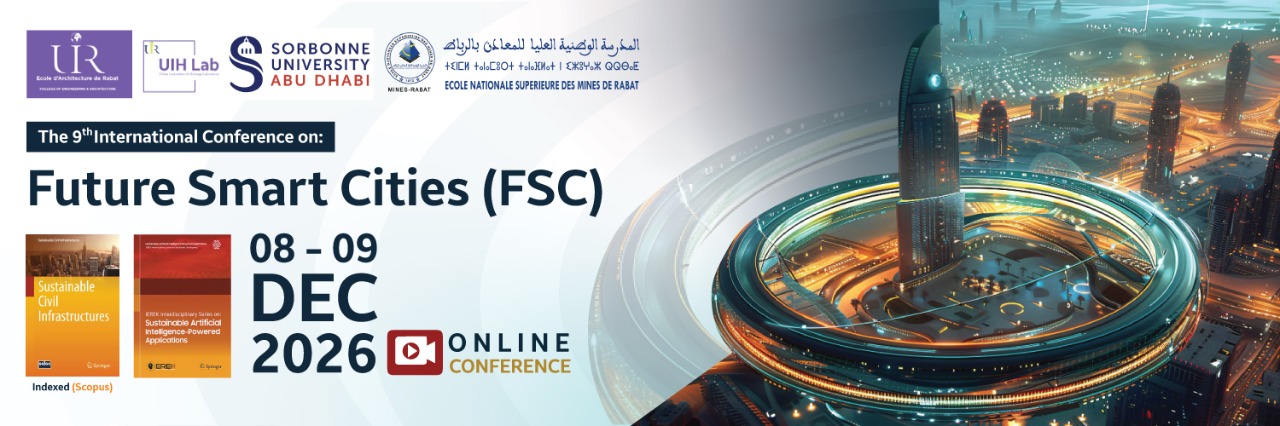
28 Jan 2026 / 29 Jan 2026 read more
Conference Coordinator
[email protected]
(+20) 3 5763827 | (+20) 3 5763828
(+20)1000028021
Subscribe to our newsletter
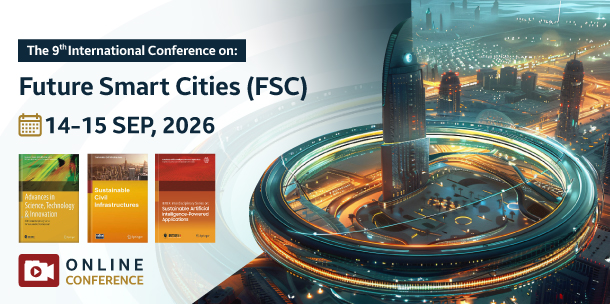
The focal point of focus for the 9th edition of the International Conference on “Future Smart Cities” (FSC) is to enhance human life through the strategic use of technology, data-driven solutions, and intelligent networks. This will provide cities with the opportunity to have more livable urban environments, resilient, and responsive to the needs of their inhabitants.
The FSC conference will discuss many important aspects of daily life, ranging from transportation and energy management to public safety and infrastructure, aspects which should be seamlessly integrated. It will also discuss the employment of advanced technologies such as the Internet of Things (IoT), artificial intelligence (AI), and data analytics, which allow us to optimize resource allocation, improve efficiency, and foster a sustainable and inclusive urban future for generations to come.
Conference Scope:
The 9th edition of the conference focuses on the dynamic and innovative approach to the urban landscape. FSC aims to move beyond theoretical concepts and focus on practical and actionable strategies for building the cities of our future. It will explore how technologies and collaborative models can transform cities from the ground up into smarter, more sustainable, and more livable urban environments.
Statement of Purpose
The FSC 2026 conference has a unique purpose, that of prompting discussions that lead to tangible, on-the-ground strategies for building smarter, more inclusive, and sustainable cities. The main goal is, therefore, to empower participants and attendees to become drivers of positive change, inspiring the creation of urban environments that not only meet the challenges of today but also anticipate the needs of the future. The conference seeks to build a global community of forward-thinking individuals dedicated to shaping our cities’ future and paving the way for a more resilient and equitable built environment.
This theme includes the integration of public transit, AI-driven traffic management, micro-mobility solutions, and the rise of autonomous vehicles. It will explore urban strategies and design guidelines for creating efficient and sustainable transportation networks.
This theme focuses on the modernization of infrastructure systems, including smart grids, sustainable water management, and the integration of circular economy principles into the built environment.
This theme will address how technology can enhance social inclusion, public health, and citizen engagement. Topics include digital governance, responsive public services, and the design of urban spaces and pedestrian networks to promote human well-being.
This theme will explore how smart technologies can be leveraged to combat climate change, reduce urban heat islands, and promote greener environments through smart waste management, sustainable architecture, and nature-based solutions.
This section addresses the critical challenge of making cities more environmentally sustainable. Topics include smart waste and water management, renewable energy integration, strategies for improving air quality, and promoting urban biodiversity.
This theme explores the financial and economic dimensions of smart cities. It covers innovative financing for urban projects, Smart City as a Service (SCaaS) models, and the role of public-private partnerships.
This theme focuses on how technology can enhance citizen safety. Topics include AI-powered applications, predictive policing, and robust cybersecurity measures to protect urban data and infrastructure investments.
This section discusses the human dimension of smart cities. It focuses on how technology can improve public health, education, and social life, as well as the design and development of parks and public spaces. Topics also include smart healthcare services, remote patient monitoring, and the use of urban data to create healthier, more livable communities.
This theme highlights the role of data analytics and AI in smart cities. Topics include machine learning for predictive infrastructure maintenance, computer vision for real-time traffic analysis, and natural language processing for enhancing e-governance. It will also explore how predictive analytics optimize urban planning, resource allocation, and emergency response systems in real time.
This section will investigate how blockchain technology can provide transparency and security in urban systems, including secure voting, land registry, and decentralized energy trading.
This theme explores the expansion of the Internet of Things (IoT) into the Internet of Everything (IoE), where not only devices but also people, data, and processes are interconnected to create responsive urban ecosystems. Topics include distributed acoustic sensing (DAS) for traffic analysis and other innovative sensing technologies.
This section addresses the ethical implications of smart city technologies, focusing on bridging the digital divide, ensuring equitable access to services, and protecting data privacy for all residents
This theme will explore how smart cities can leverage technology to build resilience against challenges such as climate change and public health crises. Topics include smart early-warning systems and rapid response protocols enabled by connected data.
We recommend that all authors take advantage of the benefits that IEREK offers, including various attendance types, publishing opportunities, and opportunities for discounts and waivers.
We are pleased to inform all applicants that they can use their previous publications to register for an IEREK membership, which offers a special discount.
IEREK offers a special discount to applicants from collaborative universities that have signed an MoU with IEREK to host or co-host one of its conferences.
IEREK also provides special discounts to authors from low and medium-income countries.
IEREK offers many alternative venues for publication. All accepted submissions to the conference, after a rigorous double-blinded peer-review process by the respective and highly-distinguished Editorial Board, will be published through one of the following venues:
Selected papers (according to the preference of the author) will be published in one of the Scopus-indexed or Web of Science-indexed book series or through related journal special issues. See the publishing opportunities section.
Accepted papers (according to the preference of the author) will be published through the Springer book series or through a special issue in one of the IEREK press open-access Journals.
IEREK offers many types of registrations that are diverse in registration fees; applicants can choose the type they are familiar with as follows:
Participants who are PhD holders, post-doctoral researchers, and universities’ affiliated professors and experts in the field.
Must provide proof of enrollment in a university by providing an enrollment certificate and/or a valid university ID (with issue/expiry date) etc.
Participants who are not affiliated with universities such as practitioners, policymakers, entrepreneurs, etc.
Have access to the event to enjoy the discussions, coffee breaks, and lunch as a co-author or audience.
An author may need to attend the conference for presentation only to present a research idea without publication or full paper submission; the fee in this case will be decreased.
| Type of Registration | Early Payment Deadline 10 May 2026 |
Regular Payment Deadline 10 June 2026 |
Late Payment Deadline 10 July 2026 |
|---|---|---|---|
| Scopus indexed-ASTI Book by Springer | |||
| Student | 300 € | 350 € | 400 € |
| Academic | 350 € | 400 € | 450 € |
| Professional | 400 € | 450 € | 500 € |
| Co-author/ Audience | 100 € | 150 € | 200 € |
| SAIPA Book by Springer | |||
| Student | 250 € | 300 € | 350 € |
| Academic | |||
| Professional | |||
| Co-author/ Audience | 100 € | 150 € | 200 € |
| Open Access IEREK Press Journals | |||
| Student | 200 € | 250 € | 300 € |
| Academic | 250 € | 300 € | 350 € |
| Professional | 300 € | 350 € | 400 € |
| Co-author/ Audience | 100 € | 150 € | 200 € |
IEREK offers virtual attendance, providing authors with a unique link to join the conference sessions and present their papers as per the announced program.
IEREK is dedicated to optimizing the benefits for each delegate so, similar to physical attendance, when it comes to virtual attendance IEREK also provides two venues for publication, which are:
Type 1:
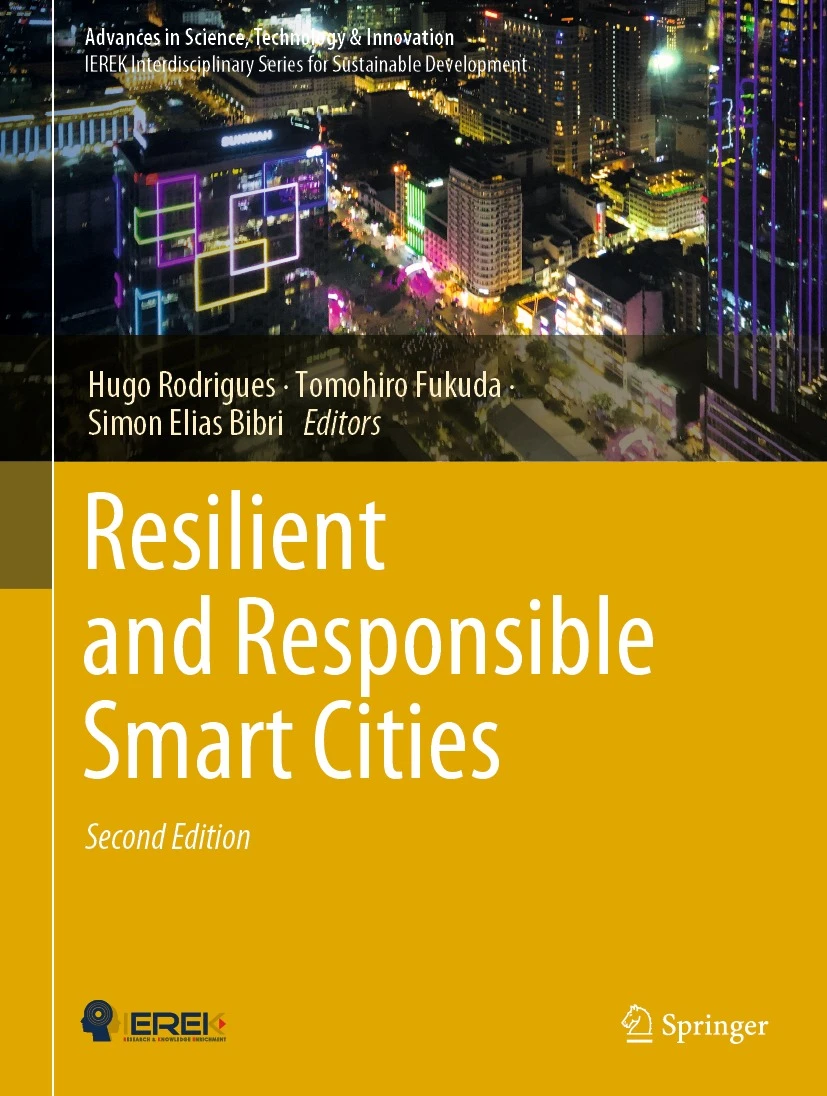
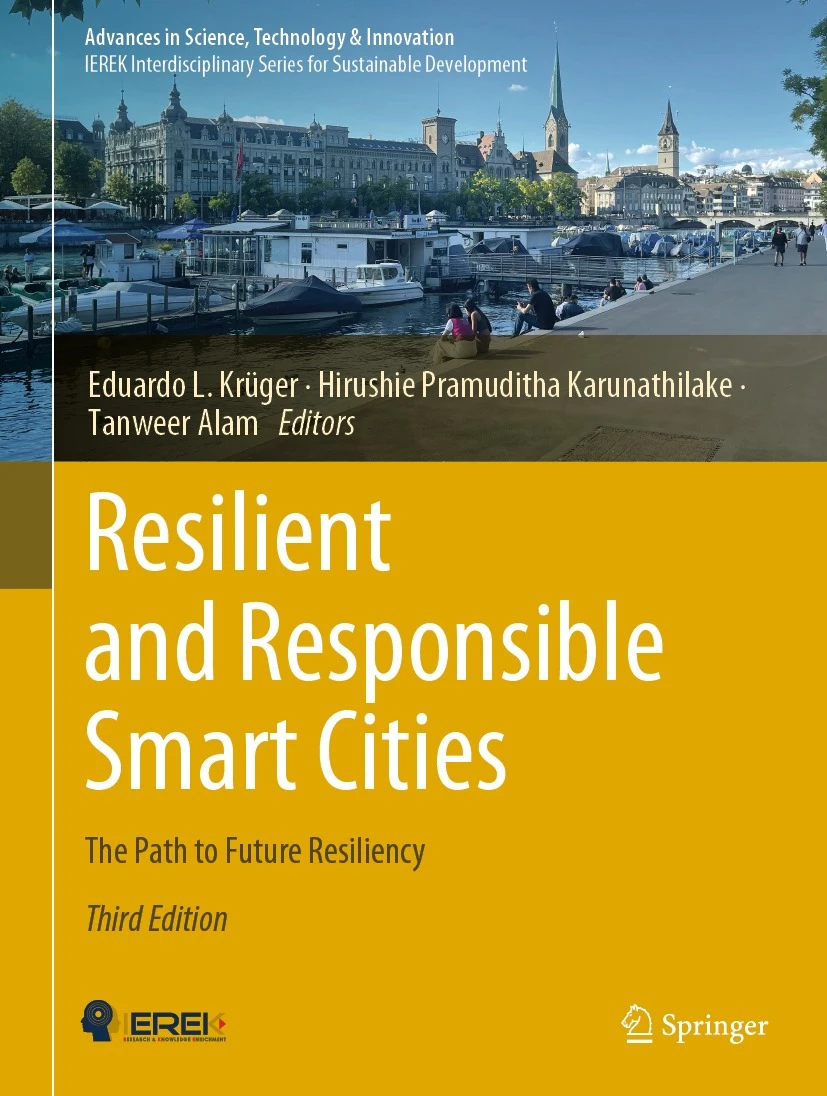
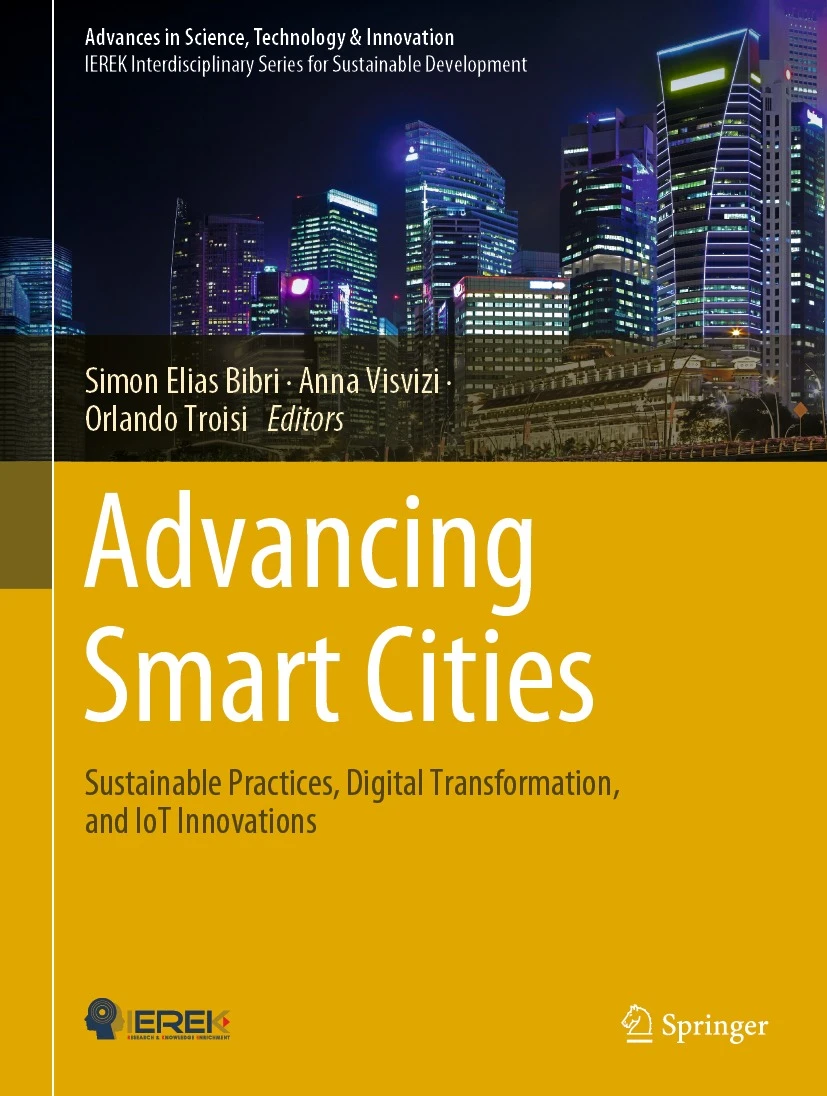
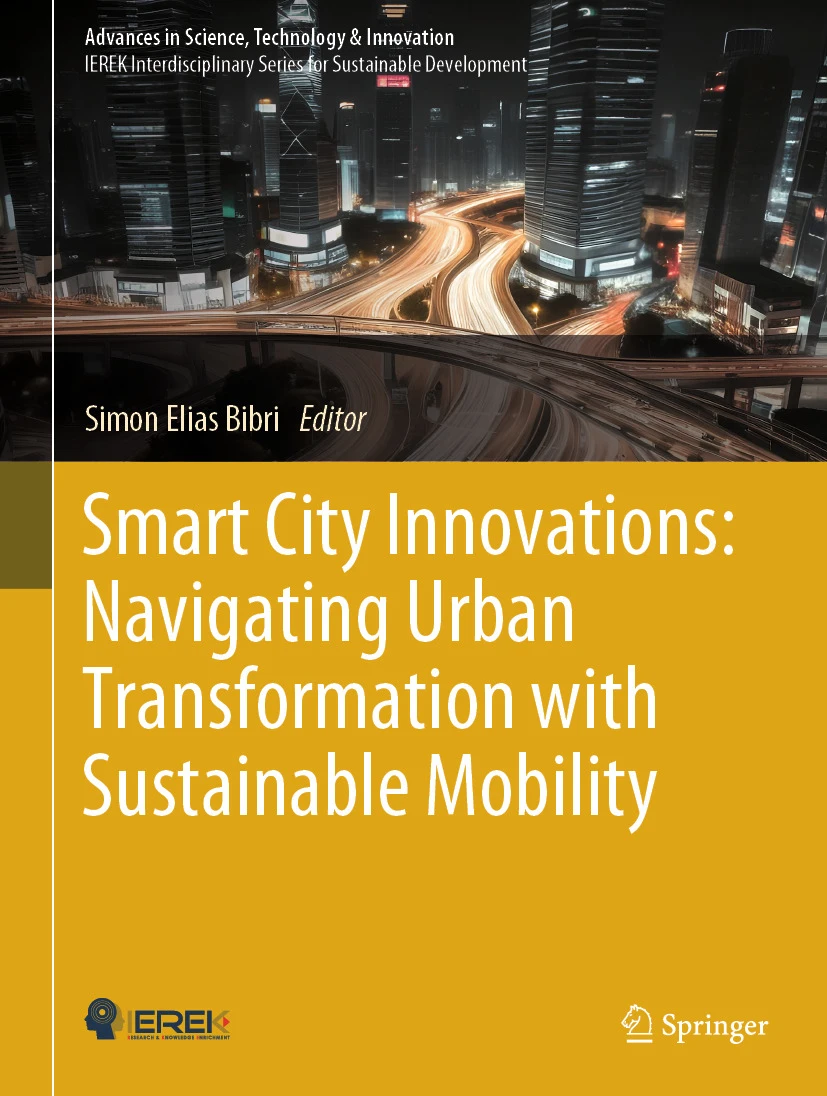
Online attendance + Publication through Scopus and Web of Science indexation Through IEREK – Springer Nature Interdisciplinary book series “Advances in Science, Technology, and Innovation” ASTI, see previous publications here! here.
Online attendance + Publication through Scopus, Web of Science (SCImago), EI Compendex, zbMATH indexation Through Springer Nature Interdisciplinary book series, “Sustainable Civil Infrastructure” see previous publication here! here.
Type 2:
Through IEREK – Springer Nature Interdisciplinary book series “Sustainable Landscape Planning, and Natural Resources Management” (SLNR). See previous publication here.
The online fee covers:
* Each research paper should have one main author who should pay the full fee (Author fees) regardless of attendance.
* Co-authors, each, have their fees to pay to attend the event. This applies to online attendance as well as physical attendance.
* Participants can use only one type of discount opportunity, which meets their preferences.
* Authors should contact the conference manager through this email [email protected] to consider the discount and waiving for all the above cases so that the conference manager can provide an exclusive invoice for each case.
| Afghanistan, Algeria, Angola, Bangladesh, Benin, Bhutan, Bolivia, Burkina Faso, Burundi, Cabo Verde, Cambodia, Cameroon, Central African Republic, Chad, Comoros, Congo, Congo Dem. Rep., Côte d'Ivoire, Djibouti, Egypt, Eritrea, Eswatini, Ethiopia, Gambia, Ghana, Guinea, Guinea-Bissau, Haiti, Honduras, India, Iran, Jordan, Kenya, Kiribati, Kyrgyz Republic, Lao PDR, Lebanon, Lesotho, Liberia, Madagascar, Malawi, Mali, Mauritania, Micronesia, Mongolia, Morocco, Mozambique, Myanmar, Nepal, Nicaragua, Niger, Nigeria, Pakistan, Papua New Guinea, Philippines, Rwanda, Samoa, São Tomé and Principe, Senegal, Sierra Leone, Solomon Islands, Somalia, South Sudan, Sri Lanka, Sudan, Syria, Tajikistan, Tanzania, Timor-Leste, Togo, Tunisia, Uganda, Ukraine, Uzbekistan, Vanuatu, Vietnam, Yemen, Zambia, Zimbabwe |

iDirect is a new and efficient platform that allows direct submissions of research papers across various fields of science. iDirect accepts and covers all fields of science, not only those related to a particular conference. Individual authors are encouraged to submit their research discussing new ideas and presenting solutions to everyday problems that fall under numerous scientific themes. The iDirect platform is integrated into the peer review system for online conferences. You can publish your work through iDirect without the need to attend the conference or adhere to any submission deadlines. iDirect accepts a wide range of disciplines, eliminating the need to align with the conference's specific theme or scope. Based on the scope of your research, we will identify the most relevant proceedings for publication. The editor will schedule a discussion with you to review your presentation before proceeding to the peer-review process. Learn more here!


IEREK puts a lot of effort into expediting the peer review process to publish articles as quickly as possible. This requires prompt responses from all authors to the editors' comments, if any. Your swift response is highly appreciated to advance the production process and get your articles online. We prioritize the first author to respond as per our formula. The conference proceedings will be divided into multiple books, with the first one scheduled for publication within 6 months after the conference date. We encourage all authors to aim for publication in the first release.
| Title | Date |
|---|---|
| Abstract Submission Deadline | 08 March 2026 |
| Last Notification for Abstract Acceptance & Approval to present | 20 March 2026 |
| Early Payment Deadline | 10 May 2026 |
| Regular Payment Deadline | 10 June 2026 |
| Late Payment Deadline | 10 July 2026 |
| Extended Abstract / Short Paper Submission Deadline | 15 June 2026 |
| Notification of acceptance/ rejection of submitted extended abstract/ short paper | 30 June 2026 |
| Conference Program | 14 Aug 2026 |
| Conference Launch | 14 Sep 2026 |

All accepted submissions to the conference, after a rigorous double-blinded peer-review process by the respective Editorial Board, will be published in one of the following:
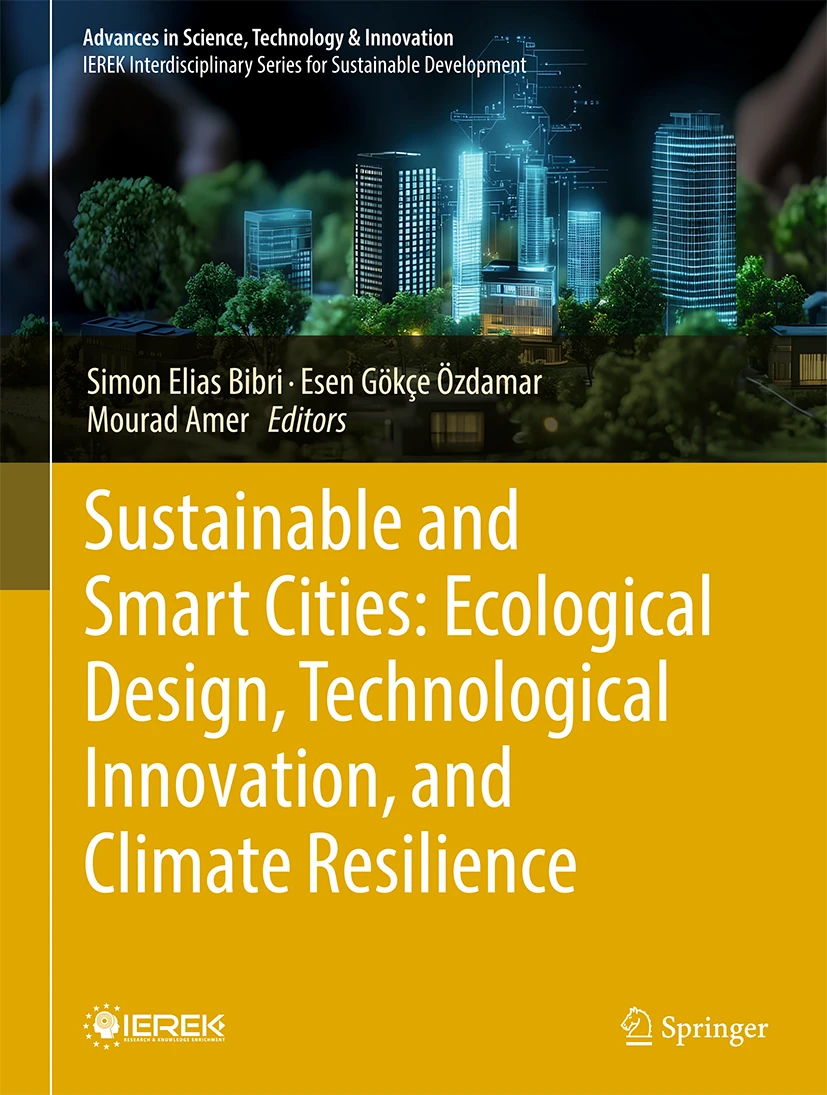
Advances in Science, Technology and Innovation (ASTI), an IEREK interdisciplinary book series published by Springer Nature. (SCOPUS indexed)
Publisher: Springer Nature (IEREK Interdisciplinary book series)
Indexing: SCOPUS indexed; some titles in Web of Science (ISI)
Focus: Emerging research in science, technology, and innovation for sustainable development, addressing UN SDGs.

Publisher: Springer (Peer-reviewed book series)
Focus: Advancing interdisciplinary research and applications of artificial intelligence to support sustainability and the achievement of global development goals.
Key Areas: Artificial intelligence; sustainable development; machine learning; smart cities; renewable energy; precision agriculture; environmental monitoring; climate modeling; Internet of Things (IoT).
Internationally peer-reviewed, open access journals published by IEREK Press. Covering a wide range of disciplines including sustainability, architecture, engineering, and environmental sciences.
Journal on:
IEREK has an unyielding policy regarding plagiarism. We believe that copying/taking the ideas and work of other Authors without permission and credit is fraudulent. The Reviewing committee and IEREK employees have the authority to reject a paper during its reviewing process, based on the paper being subjected to either minor or major plagiarism.
Authors must refer to, and abide by, the following instructions in submitting their abstracts/ papers:
This is not a prerequisite for presenting your work at the conference. Meaning, you can present your submitted abstract without intending to publish your work.
This process can only be initiated after payment completion and confirmation:
Registration
To help the organizers plan for inter-disciplinary dialogue, participants are requested to choose from the conference themes/ Topics upon registration.
They must also refer to, and abide by, the following instructions in registering and submitting their abstracts/ papers:
Types of Participation
1. Attend/ Present Virtually and Publish in Conference proceedings
Organized from the comfort of your own home, the conference offers a virtual attendance option for your convenience. That said, participants will have a chance to present their abstract/research, online, and have their work considered for publication in the proceedings.
Virtual presenters are required to submit an abstract and extend this abstract following the “author instructions” below and before the deadline (see Important Dates). At least one author must pay the registration fee (see Registration & Fees).
For any reason, authors may wish to submit pre-recorded video presentations no later than 15 days prior to the conference. Alternatively, they may wish to record a voice-over PowerPoint presentation for submission to the conference organizers.
2. Non-presenting participant
Non-presenting participants may also wish to attend the conference as Audience Members or Co-authors contributing to an already submitted abstract/ paper.
Attending a conference dramatically enhances both your professional and personal development. They help you sharpen the saw, meet and converse with industry experts, expand your resources and grow your professional network. IEREK Conference will help you:
1. Open Discussions: We bring together leading academic scientists, from different universities and countries, to exchange and share their experiences and research results.
2. Internationally Accredited Certificate: The participants are granted internationally recognized certificates acknowledged by IEREK, the University, and Partnering Organizations.
3. Publication: Selected high-quality manuscripts will be published, after peer review, in the Advances in Science, Technology & Innovation (ASTI) book series by Springer or by IEREK Press Journals, both of which are indexed in world-renowned databases.
4. Research Technologies: Conferences can expand your resources by providing a great opportunity to promote gathered information on new technologies related to your research.
5. Networking: You can engage with industry experts to discuss with them the very latest research projects they could be working on and increase your chances of collaboration in future projects.
6. Academic Reputation: Attending many conferences will make you a known figure in academic circles and an active member of the academic community.
7. Conference Abstracts Material: Delegates will receive the conference Abstracts book in a digital format on a CD.
Delegates in any event who cancel their registration due to special circumstances will receive refunds according to the following:
|
Cancellation policy |
Up to 60 days before the event |
59 days before the event |
|
Penalty |
20% |
100% |
A refund is not possible if
- An acceptance letter has been issued (Authors only)
- The proceedings of the event have been published (Authors only)
- A submitted manuscript is rejected by the editorial board after going through peer review.
Conference Coordinator
[email protected]
(+20) 3 5763827 | (+20) 3 5763828
(+20)1000028021
Subscribe to our newsletter
Join IEREK community