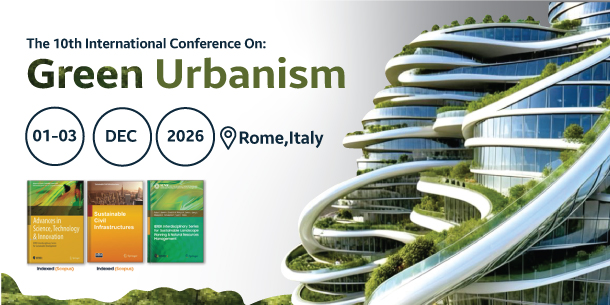
Green Urbanism (GU) -10th edition
Online Conference
22 Oct 2026 / 23 Oct 2026 read more

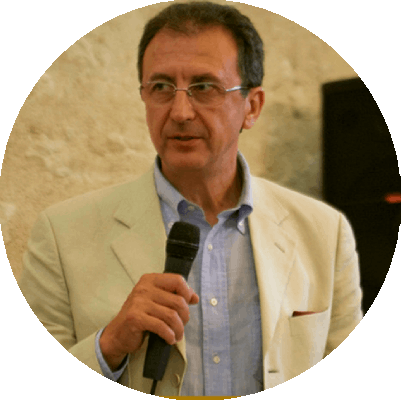
Full Professor in Environmental Design at Sapienza University of Rome, Department of Planning, Design, Technology of Architecture, Italy

Professor at the Urban Planning Department of Architecture, Polytechnic School University of Palermo, Italy.
Subscribe to our newsletter
Cities worldwide are confronting a dual challenge: intensifying climate vulnerability and rapid demographic change. In this context, sustainability can no longer be measured by limiting harm alone. It calls for a shift toward regeneration: urban systems that restore ecological balance, harness advanced technologies and sustain value across generations.
Meeting this challenge requires closer collaboration between architectural practice and regenerative innovation. By combining resource efficiency, circular economy principles and adaptive design with ecological restoration and actionable urban policy, systemic risks can become opportunities for resilient city-making.
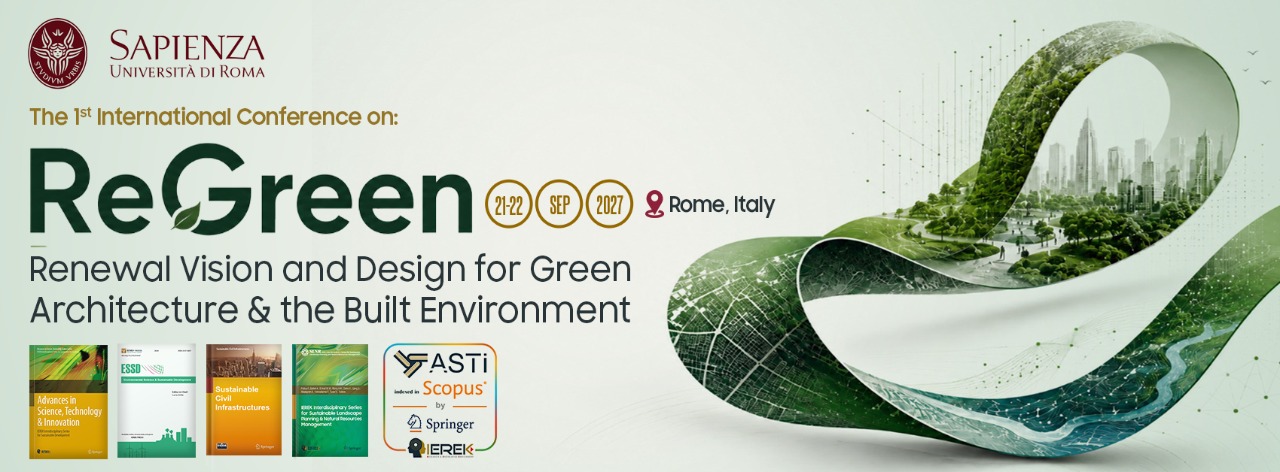
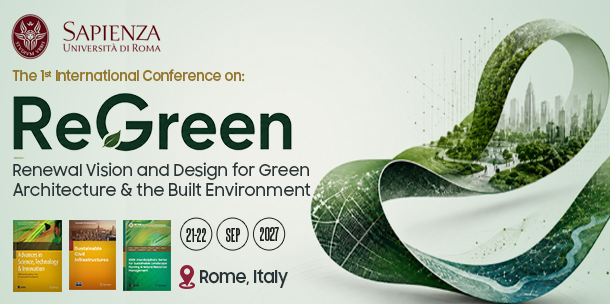
IEREK is proud to announce ReGreen: Renewal Vision and Design for Green Architecture and the Built Environment, in its 1st edition, hosted at the historic Sapienza University of Rome, from 21 to 22 September 2027.
This milestone event is uniting international researchers, architects, artists, and urban planners to advance the field of regenerative urban design. ReGreen is a premier international platform born from the strategic synthesis of IEREK's legacy forums on "Green Urbanism" and "Urban Regeneration and Sustainability." By merging these complementary disciplines, ReGreen serves as the definitive global confluence where macro-level urban strategy meets micro-level architectural innovation.
The energy and ecological transition, together with the growing adoption of circular economy principles, is reshaping the paradigms, strategies and tools for transforming the built environment. The progressive decarbonisation of production systems and human settlements, the reduction of natural resource consumption, and the need to address the impacts of climate change call for a fundamental rethinking of the processes involved in the design, construction, use, maintenance and end-of-life management of buildings. In this context, the circular economy moves beyond the linear model of production and consumption, promoting the preservation of the value embodied in the existing built environment, adaptive reuse, the recovery and valorisation of materials and components, the extension of building lifespans, and the integration of energy efficiency, renewable energy sources and reduced environmental impacts. Regeneration is therefore conceived as an integrated process in which technological innovation, architectural quality, environmental performance and resource circularity contribute to the creation of more resilient and sustainable environments.
The conference aims to explore the contribution of scientific research and design culture to innovative strategies for the energy and ecological transition of the built environment, with particular emphasis on environmental design, regeneration, climate adaptation and the circular economy. Contributions from keynote speaker Fabrizio Tucci will introduce a discussion on the prospects for decarbonisation, energy and environmental efficiency, and design innovation, in response to ongoing transformations and emerging sustainability requirements.
The conference will be structured around three thematic sessions:
1. Built Environment Regeneration, Heritage and Adaptive Reuse – focusing on the regeneration of the built environment, the enhancement of architectural heritage and adaptive reuse strategies. The session will explore approaches to extending building lifespans, preserving the value of existing resources, and integrating functional transformation, technological innovation and environmental sustainability.
2. Climate Adaptation, Resilience and Sustainable Buildings – addressing strategies for climate change adaptation and for enhancing the resilience of buildings and human settlements, with particular attention to reducing vulnerability, improving energy and environmental performance, and implementing nature-based solutions and low-impact technologies.
3. Environmental Design, Green Architecture and Circular Economy – exploring the methods and tools of environmental design and sustainable architecture, with particular emphasis on resource efficiency, design for durability, disassembly and reuse, the circularity of materials and building components, and the integration of renewable energy sources to optimise the performance of the built environment throughout its life cycle.
Through contributions from scholars, researchers and practitioners, the conference aims to strengthen the integration between research, technological innovation and design practice. Its objective is to develop strategies that reconcile decarbonisation, climate adaptation, the circular economy and architectural quality, recognising the existing built environment not merely as a field for intervention, but as a strategic resource for reducing material and energy consumption, minimising waste generation, and creating long-term environmental, social and economic value.
ReGreen aims to bridge historical preservation, technological advancement, and sustainable urban evolution. Our mission is to facilitate the exchange of knowledge, methodologies, and best practices among scholars and practitioners, offering actionable insights that empower urban planners, artists, and policymakers to lead the transition toward carbon-neutral and socially equitable urban futures.
Focusing on the regeneration of the built environment, architectural heritage conservation, and adaptive reuse strategies to extend building lifespans, preserve existing resources, and support sustainable urban transformation.
Part 1. Heritage Conservation and Adaptive Reuse
1.1. Architectural heritage conservation and heritage-led development
1.2. Adaptive reuse of buildings and historic districts
1.3. Post-industrial and brownfield regeneration
1.4. Cultural identity and heritage-sensitive development
1.5. Heritage assessment, documentation, and digital conservation
1.6. Architectural integrity and quality in heritage interventions
1.7. Climate-compatible conservation of historic buildings
Part 2. Urban Regeneration and Spatial Transformation
2.1. Urban regeneration and revitalization
2.2. Sustainable urban transformation and spatial planning
2.3. Urban morphology, compact cities, and mixed-use development
2.4. Existing building transformation and residential regeneration
2.5. Building life extension and management of building obsolescence
2.6. Post-occupancy evaluation of regenerated buildings and urban spaces
2.7. Urban mining and material recovery from existing buildings
2.8. Regeneration of vacant and underused buildings
Part 3. Sustainable Housing and Community Regeneration
3.1. Sustainable and affordable housing
3.2. Public space regeneration and community-oriented design
3.3. Participatory planning and community-led regeneration
3.4. Inclusive urban development and social equity
3.5. Housing retrofitting and residential neighborhood regeneration
3.6. Displacement, gentrification, and equitable regeneration
3.7. Social value assessment of urban and building regeneration
Part 4. Governance and Regeneration Strategies
4.1. Sustainable urban governance and policy frameworks
4.2. Public-private partnerships and economic models
4.3. Institutional coordination and implementation strategies
4.4. Regulations and incentives for building renovation and adaptive reuse
4.5. Regeneration impact assessment and long-term performance monitoring
4.6. Financing mechanisms for large-scale building renovation and urban regeneration
Addressing climate change adaptation and the resilience of buildings and human settlements, with emphasis on reducing vulnerability, improving environmental performance, and integrating nature-based solutions.
Part 5. Climate Adaptation and Risk Management
5.1. Climate-responsive urban and architectural design
5.2. Climate vulnerability assessment and disaster risk reduction
5.3. Urban heat mitigation and cooling strategies
5.4. Flood, drought, and water-stress management
5.5. Multi-hazard assessment and cascading climate risks
5.6. Climate projections and future-proofing the built environment
5.7. Compound climate extremes and cascading risks to buildings and infrastructure
Part 6. Resilient Buildings and Sustainable Housing
6.1. Low-carbon and climate-resilient housing
6.2. Building adaptation and energy renovation
6.3. Resilient infrastructure and critical urban systems
6.4. Thermal comfort and indoor environmental quality
6.5. Building resilience during extreme weather and service disruptions
6.6. Low-impact technologies for climate adaptation and building resilience
6.7. Climate-resilient retrofitting of existing buildings
6.8. Integrated climate resilience and low-carbon renovation pathways
6.9. Smart buildings, demand response, and grid integration
Part 7. Nature-Based Solutions and Urban Ecology
7.1. Blue-green infrastructure and nature-based solutions
7.2. Green roofs, urban forests, and ecological corridors
7.3. Biodiversity conservation and ecosystem restoration
7.4. Water-sensitive landscapes and urban ecosystem services
7.5. Performance assessment and maintenance of nature-based solutions
7.6. Urban soil restoration and ecological connectivity
7.7. Urban biodiversity restoration and ecosystem performance assessment
Part 8. Healthy, Inclusive and Resilient Communities
8.1. Environmental and climate justice
8.2. Vulnerable communities and just transitions
8.3. Community resilience and empowerment
8.4. Healthy buildings, human well-being, and access to green spaces
8.5. Heat-related health risks and climate-sensitive planning
8.6. Community-based adaptation and local climate knowledge
8.7. Indoor air quality and health impacts of building energy renovation
Exploring sustainable architectural design, resource efficiency, circular construction, low-impact materials, renewable energy, and innovative technologies that improve the environmental performance of the built environment throughout its life cycle.
Part 9. Green Architecture and Environmental Design
9.1. Regenerative and bioclimatic architecture
9.2. Passive solar design, natural ventilation, and biophilic design
9.3. Net-zero and net-positive buildings
9.4. High-performance building envelopes and energy optimization
9.5. Design for building adaptability and flexibility
9.6. Daylighting and integrated lighting design
9.7. Climate-responsive building design using future weather scenarios
Part 10. Circular Construction and Sustainable Materials
10.1. Circular economy in the built environment
10.2. Design for durability, disassembly, reuse, and repair
10.3. Recycled, reclaimed, bio-based, and low-carbon materials
10.4. Construction waste management and material recovery
10.5. Material passports, traceability, and circular material databases
10.6. Material reuse in existing buildings and renovation
10.7. Reversible building systems and circular component design
10.8. Bio-based construction materials and biogenic carbon assessment
Part 11. Energy, Water and Life-Cycle Performance
11.1. Renewable energy integration and decentralized energy systems
11.2. Embodied carbon and whole-life carbon assessment
11.3. Life-cycle assessment and life-cycle costing
11.4. Circular water systems and sustainable utility networks
11.5. Building energy retrofits and operational energy performance verification
11.6. Whole-life environmental assessment and resource efficiency
11.7. Carbon payback periods and environmental impacts of building renovation
Part 12. Digital Technologies and Smart Environmental Design
12.1. Artificial intelligence and generative design
12.2. Building Information Modelling (BIM) and digital twins
12.3. Smart building management and predictive maintenance
12.4. Environmental sensing, monitoring, and performance simulation
12.5. Data-driven environmental decision-making and emerging technologies
12.6. Digital documentation and assessment of existing buildings
12.7. Digital tools for circular construction and material tracking
12.8. Interoperability and data integration across building life cycles
12.9. AI-assisted building condition assessment and automated defect detection
12.10. Robotics and automation in selective building deconstruction and material recovery
| Title | Date |
|---|---|
| Abstract Submission Deadline (1st round) | 31 Jan 2027 |
| Last Notification for Abstract Acceptance & Approval to present | 10 Feb 2027 |
| Letter of Visa (for delegates who need visa entry) Payment required | 30 Jul 2027 |
| Early Payment Deadline | 15 Mar 2027 |
| Regular Payment Deadline | 15 May 2027 |
| Late Payment Deadline | 30 July 2027 |
| Full Paper Submission Deadline | 05 Aug 2027 |
| Notification of acceptance/ rejection of submitted paper | 25 Aug 2027 |
| Conference Program | 21 Sep 2027 |
| Conference Launch | 21 Oct 2027 |
Payments through the website are currently unavailable due to ongoing website enhancements. IEREK offers alternative payment methods, including bank transfer and secure third-party online payment links.
The registration fee does not cover accommodation or travel expenses. A list of accommodation options can be suggested by our team if available. Please contact [email protected] for inquiries.
We recommend that all authors take advantage of the benefits that IEREK offers, including various attendance types, publishing opportunities, and opportunities for discounts and waivers.
We are pleased to inform all applicants that they can use their previous publications to register for an IEREK membership, which offers a special discount.
IEREK offers a special discount to applicants from collaborative universities that have signed an MoU with IEREK to host or co-host one of its conferences.
IEREK also provides special discounts to authors from low and medium-income countries.
The disclosed fees are for the conference participation (Publication is free of charge, but only the conference participants can be considered for publishing in the conference proceedings).
Some of the disclosed conference fees may vary depending on the book series and/or journal(s) presented as a publication outlet, as we encourage submission to newly founded book series and/or journal(s) by presenting a discounted rate for the conference's fees.
IEREK offers many types of registrations that are diverse in registration fees; applicants can choose the type they are familiar with as follows:
Participants who are PhD holders, post-doctoral researchers, and universities’ affiliated professors and experts in the field.
Must provide proof of enrollment in a university by providing an enrollment certificate and/or a valid university ID (with issue/expiry date) etc.
Participants who are not affiliated with universities such as practitioners, policymakers, entrepreneurs, etc.
Have access to the event to enjoy the discussions, coffee breaks, and lunch as a co-author or audience.
IEREK Community members receive 25% off the Regular payment stage.
If you are a returning author, published researcher, institutional partner, or active contributor to IEREK activities, you may be eligible for exclusive Community benefits. Visit the IEREK Community Section to learn more and check your eligibility.
| Type of Registration | Early Payment Deadline 15 Mar 2027 |
Regular Payment Deadline 15 May 2027 |
Late Payment Deadline 15 July 2027 |
|---|---|---|---|
| Scopus indexed-ASTI Book by Springer or SUCI Book by Springer | |||
| Student / Early Career Researcher | 300 € | 350 € | 400 € |
| Academic | 350 € | 400 € | 450 € |
| Professional / Industry | 400 € | 450 € | 500 € |
| Co-author/ Audience | 150 € | 200 € | 250 € |
| SLNR Book by Springer | |||
| Student / Early Career Researcher | 250 € | 300 € | 350 € |
| Academic | |||
| Professional / Industry | |||
| Co-author/ Audience | 150 € | 200 € | 250 € |
| Open Access IEREK Press Journals | |||
| Student / Early Career Researcher | 200 € | 250 € | 300 € |
| Academic | 250 € | 300 € | 350 € |
| Professional / Industry | 300 € | 350 € | 400 € |
| Co-author/ Audience | 150 € | 200 € | 250 € |
IEREK offers various types of participation. Applicants can apply for in-person attendance to benefit fully from conference discussions and knowledge exchange.
IEREK also offers virtual attendance for authors to present their research papers online; however, we strongly encourage all applicants to attend the conference in person.
The physical fee covers:
* Each research paper should have one main author who should pay the full fee (Author fees) regardless of attendance. Co-authors, each, have their fees to pay to attend the event. This applies to online attendance as well as physical attendance.
* A research paper fee allows only one author, whether main or co-author, to attend the conference and receive only one conference kit. Extras can be requested for an additional fee.
| Type of Registration | Early Payment Deadline 15 Mar 2027 |
Regular Payment Deadline 15 May 2027 |
Late Payment Deadline 15 July 2027 |
|---|---|---|---|
| Scopus indexed-ASTI Book by Springer or SUCI Book by Springer | |||
| Student / Early Career Researcher | 250 € | 300 € | 350 € |
| Academic | 300 € | 350 € | 400 € |
| Professional / Industry | 350 € | 400 € | 450 € |
| Co-author/ Audience | 100 € | 150 € | 200 € |
| SLNR Book by Springer | |||
| Student / Early Career Researcher | 200 € | 250 € | 300 € |
| Academic | |||
| Professional / Industry | |||
| Co-author/ Audience | 100 € | 150 € | 200 € |
| Open Access IEREK Press Journals | |||
| Student / Early Career Researcher | 150 € | 200 € | 250 € |
| Academic | 200 € | 250 € | 300 € |
| Professional / Industry | 250 € | 300 € | 350 € |
| Co-author/ Audience | 100 € | 150 € | 200 € |
IEREK offers virtual attendance, providing authors with a unique link to join the conference sessions and present their papers as per the announced program.
The online fee covers:
* Each research paper should have one main author who should pay the full fee (Author fees) regardless of attendance.
* Co-authors, each, have their fees to pay to attend the event. This applies to online attendance as well as physical attendance.
* If an author is eligible for more than one discount, IEREK will apply only the highest discount. Discounts cannot be combined.
* Authors should contact the conference manager through this email [email protected] to consider the discount and waiving for all the above cases so that the conference manager can provide an exclusive invoice for each case.
Afghanistan, Algeria, Angola, Bangladesh, Benin, Bhutan, Bolivia, Burkina Faso, Burundi, Cabo Verde, Cambodia, Cameroon, Central African Republic, Chad, Comoros, Congo, Congo Dem. Rep., Côte d'Ivoire, Djibouti, Egypt, Eritrea, Eswatini, Ethiopia, Gambia, Ghana, Guinea, Guinea-Bissau, Haiti, Honduras, India, Iran, Jordan, Kenya, Kiribati, Kyrgyz Republic, Lao PDR, Lebanon, Lesotho, Liberia, Madagascar, Malawi, Mali, Mauritania, Micronesia, Mongolia, Morocco, Mozambique, Myanmar, Nepal, Nicaragua, Niger, Nigeria, Pakistan, Papua New Guinea, Philippines, Rwanda, Samoa, São Tomé and Principe, Senegal, Sierra Leone, Solomon Islands, Somalia, South Sudan, Sri Lanka, Sudan, Syria, Tajikistan, Tanzania, Timor-Leste, Togo, Tunisia, Uganda, Ukraine, Uzbekistan, Vanuatu, Vietnam, Yemen, Zambia, Zimbabwe

IEREK puts a lot of effort into expediting the peer review process to publish articles as quickly as possible. This requires prompt responses from all authors to the editors' comments, if any. Your swift response is highly appreciated to advance the production process and get your articles online. We prioritize the first author to respond as per our formula. The conference proceedings will be divided into multiple books, with the first one scheduled for publication within 6 months after the conference date. We encourage all authors to aim for publication in the first release.
Registration and financial transactions for this conference are managed through our strategic partners, working in close academic partnership with IEREK to ensure seamless delivery of conference services and publication standards.
Both entities work in close academic partnership with IEREK to ensure the highest standards of financial transparency, conference administration, and publication quality.

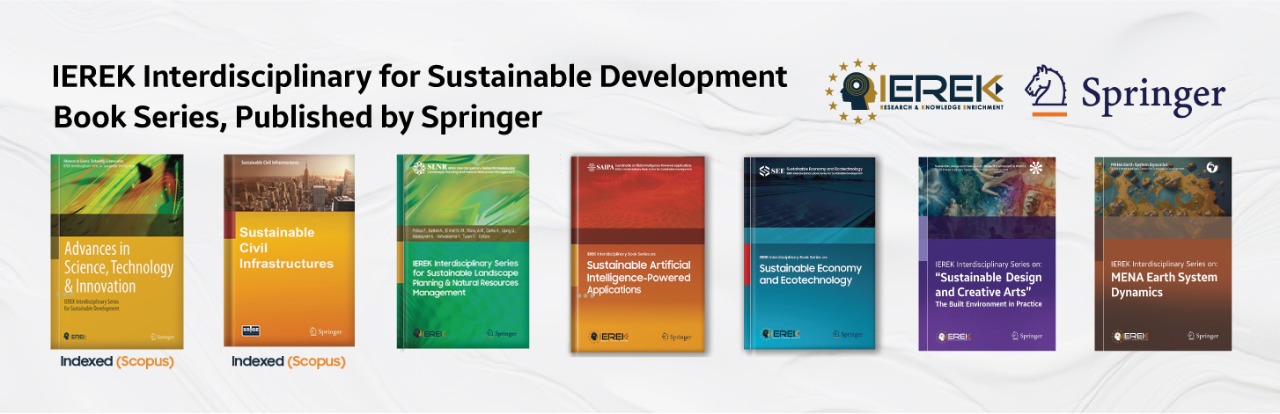
All accepted submissions to the conference, after a rigorous double-blinded peer-review process by the respective Editorial Board, will be published in one of the following:
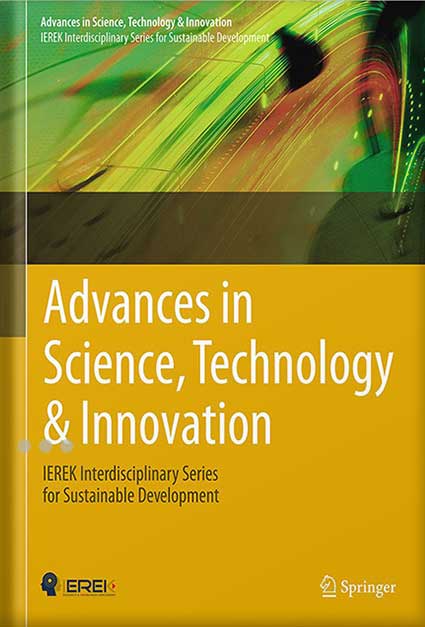
Advances in Science, Technology and Innovation (ASTI), an IEREK interdisciplinary book series published by Springer Nature. (SCOPUS indexed)
Publisher: Springer Nature (IEREK Interdisciplinary book series)
Indexing: SCOPUS indexed; some titles in Web of Science (ISI)
Focus: Emerging research in science, technology, and innovation for sustainable development, addressing UN SDGs.
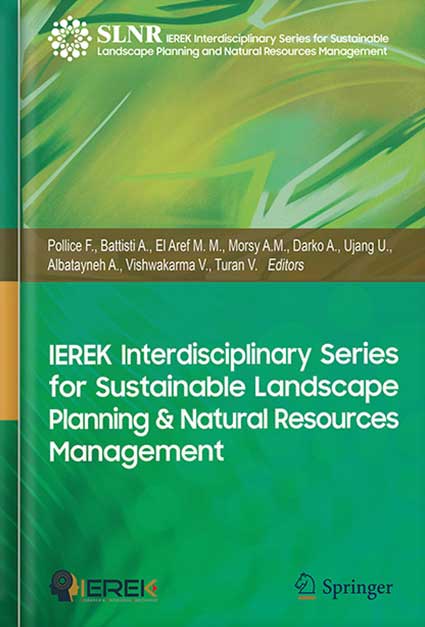
Publisher: Springer (Peer-reviewed book series)
Focus: Groundbreaking research at the intersection of sustainable landscape planning and natural resources management.
Key Areas: Landscape ecology, green urbanism, urban regeneration, land restoration, energy management, nature conservation, geosciences, civil engineering, and water management.
Internationally peer-reviewed, open access journals published by IEREK Press. Covering a wide range of disciplines including sustainability, architecture, engineering, and environmental sciences.
Journal on:
IEREK has an unyielding policy regarding plagiarism. We believe that copying/taking the ideas and work of other Authors without permission and credit is fraudulent. The Reviewing committee and IEREK employees have the authority to reject a paper during its reviewing process, based on the paper being subjected to either minor or major plagiarism.
Authors must refer to, and abide by, the following instructions in submitting their abstracts/ papers:
After abstract acceptance, you may be given the option to extend the abstract to publish your work in the conference proceedings in ASTI published by Springer Nature (indexed in Scopus/SCImago) (optional not obligatory).
This is not a prerequisite for presenting your work at the conference. Meaning, you can present your submitted abstract without intending to publish your work.
This process can only be initiated after payment completion and confirmation:
Registration
To help the organizers plan for inter-disciplinary dialogue, participants are requested to choose from the conference themes/ Topics upon registration.
They must also refer to, and abide by, the following instructions in registering and/ or submitting their contributions:
NOTE: If you are contributing as an Author of a submitted abstract (for publishing consideration and/or presentation), and regardless of attendance, the fee for the registration is the same. See and Conference Fees for more information.
Types of Participation
1. Attend/ Present in-person or Online and Publish in indexed Conference proceedings
The conference offers a Physical attendance option for your convenience. That said, participants will have a chance to present their abstract/research, on campus, and have their work considered for publication in the ASTI Series by Springer as part of the conference proceedings.
See Author Instructions and Conference Fees for more information.
2. Registration to publish in the proceedings without presenting/ attending
If your full paper is accepted, it may be published in the conference proceedings book in the Advances in Science, Technology & Innovation Book Series by Springer (indexed in Scopus) even if you are not attending the conference. In this case, the accepted work will not be included in the final conference program. See Author Instructions and Publishing Opportunities for more information.
3. Non-presenting participant
Non-presenting participants may also wish to attend the conference as Audience Members or Co-authors contributing to an already submitted abstract/ paper. See Conference Fees for more information.
Notes to consider:
* Attendance online and in-person are possible upon confirmation with the conference secretariat/ coordinator at [email protected] and following Conference Fees covered.
* The participation fee is uninform for all options presented above.
* For participants wishing to attend in-person, a visa invitation letter will be provided upon request, for which case a copy of your passport will be required. The invitation letter can only be provided after acceptance and full payment.
* Before planning your trip, be sure to check travel restrictions to the conference’s hosting country. Visit travel information and restrictions, and send in your questions if you have any to the conference coordinator at the email [email protected]
Attending a conference dramatically enhances both your professional and personal development. They help you sharpen the saw, meet and converse with industry experts, expand your resources and grow your professional network. IEREK Conference will help you:
1. Open Discussions: We bring together leading academic scientists, from different universities and countries, to exchange and share their experiences and research results.
2. Internationally Accredited Certificate: The participants are granted internationally recognized certificates acknowledged by IEREK, the University, and Partnering Organizations.
3. Publication: Selected high-quality manuscripts will be published, after peer review, in the Advances in Science, Technology & Innovation (ASTI) book series by Springer or by IEREK Press Journals, both of which are indexed in world-renowned databases.
4. Research Technologies: Conferences can expand your resources by providing a great opportunity to promote gathered information on new technologies related to your research.
5. Networking: You can engage with industry experts to discuss with them the very latest research projects they could be working on and increase your chances of collaboration in future projects.
6. Academic Reputation: Attending many conferences will make you a known figure in academic circles and an active member of the academic community.
7. Conference Abstracts Material: Delegates will receive the conference Abstracts book in a digital format.
|
Cancellation Policy |
Up to 60 days before the event |
Up to 50 days before the event |
Up to 40 days before the event |
39 days before the event |
|
Penalty |
20% |
50% |
70% |
100% |
EXCEPTION
A refund is not possible if
-An acceptance letter has been issued (Authors only)
-If the paper proceeds to the peer review process, a refund cannot be issued (Authors only)
-The proceedings of the event have been published (Authors only)
-A visa invitation letter has been issued (All participants)
Visa Rejection Cases
Reason and proof of rejection must be submitted. If the reason for rejection is due to an error on our part, the participant will be refunded their full fee with a deduction of a 20% administration fee.
Documents to be issued by IEREK to acquire a visa are as follows:
*Final Acceptance Letter (Authors only)
*Visa Invitation Letter
*Invoice/proof of payment
We encourage all authors and attendees to ensure their having acquired all documents (those applicable) mentioned.
If the reason for rejection is not related to any of the aforementioned and is an error on the participant’s part, the following will apply:
*Authors: may choose to let their co-author present his/her research on his/her behalf free of charge. If the author does not have a co-author, a member of the scientific committee shall present on the author’s behalf.
*Audience members/Registrants: will only be allowed to attend another similar event of their choosing that is organized by IEREK free of charge.
IEREK Community is a reflection of our appreciation for the scholars, institutions, and research groups who continuously contribute to the growth and excellence of IEREK’s academic network. Through exclusive rates and added privileges, we aim to make participation more accessible while strengthening long-term collaboration, research continuity, and institutional partnerships within our global community.
Eligible members of the IEREK Community receive a 25% discount during the Regular payment stage and may benefit from special discounts on other IEREK conferences.
The IEREK Community includes:
Previous attendees of IEREK conferences
Loyal authors who consistently participate in multiple editions of the same conference
Authors who have published in IEREK conference proceedings or journals
Researchers registering as a group submission
Faculty members and researchers from universities with current or past partnership agreements with IEREK
Universities and academic institutions located in the hosting country of the conference
Active authors who continuously support and engage with IEREK’s activities on social media (sharing, promoting, and contributing to community visibility)
Academics who support IEREK as moderators, keynote or guest speakers, reviewers, or editors
Authors should contact the conference manager at [email protected] to request consideration for discounts in any of the above cases.

Full Professor in Environmental Design at Sapienza University of Rome, Department of Planning, Design, Technology of Architecture, Italy

Professor at the Urban Planning Department of Architecture, Polytechnic School University of Palermo, Italy.
Subscribe to our newsletter
Join IEREK community