facebook
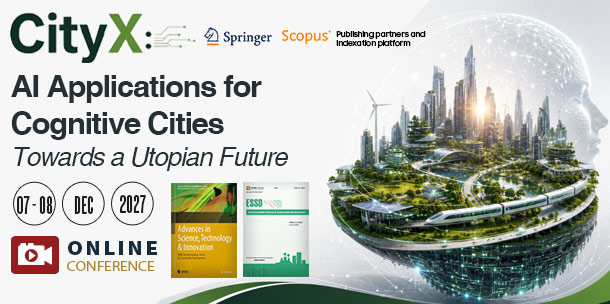
CityX: AI Applications for Cognitive Cities

Call For Abstracts

  • 07, Dec / 08, Dec 2027
  • Online Conference
Conference Email
[email protected]
Introduction

The rapid acceleration of artificial intelligence is fundamentally transforming how human societies conceptualize, design, inhabit, and govern the built environment. Moving decisively past legacy models of "smart cities"—which relied primarily on retrospective data logging and isolated automation—the paradigm of the Cognitive City embodies a living, thinking ecosystem capable of continuous learning, predictive environmental adaptation, and empathetic alignment with human life. Achieving a truly utopian urban future demands a radical, holistic scientific convergence. Artificial intelligence must seamlessly weave across architecture, spatial planning, cultural heritage, sacred environments, circular economies, climate resilience strategies, advanced precision medicine, adaptive education, intelligent transport logistics, and experiential leisure to build self-regenerating habitats that elevate human prosperity while strictly safeguarding planetary boundaries.

Organized by IEREK as an international online conference in direct strategic collaboration with its esteemed global network of partner universities, CityX: AI Applications for Cognitive Cities establishes an all-inclusive, cross-disciplinary platform. The conference bridges foundational scientific research with operational implementation by gathering architects, urban planners, climatologists, sustainability experts, economists, computer scientists, medical authorities, heritage conservators, and policy leaders. Hosted entirely in a dynamic online environment, CityX removes geographic constraints to foster rigorous peer review, institutional knowledge-sharing, and global research collaboration.

CityX approaches the cognitive city as an interconnected, metabolically balanced organism. By synthesizing generative architecture, vernacular wisdom, decarbonization analytics, closed-loop resource recovery, autonomous transportation, proactive public health, and human-centric governance, the conference provides an exhaustive exploration of urban intelligence. Participants will investigate how machine learning, cognitive digital twins, autonomous systems, circular economics, and ethical computational frameworks work in harmony to establish resilient, zero-waste, and socially cohesive communities where technology directly enriches the human experience.

Conference Topics
  • 1. Cognitive Architecture, Generative Design & Intelligent Structures

    1.1. Generative AI and Algorithmic Form-Finding in Structural and Architectural Design.
    1.2. AI-Driven Responsive Building Envelopes, Kinetic Facades, and Climate Adaptation.
    1.3. Machine Learning for Low-Carbon Construction, Circular Materials, and Embodied Energy Optimization.
    1.4. Cognitive Human-Building Interaction (HBI) and Immersive Spatial Computing in Interior Architecture.
    1.5. Automated Building Information Modeling (BIM) and Robotic Construction Workflows.
    1.6. Parametric Structural Optimization and Bio-Inspired Computational Engineering.

  • 2. Heritage as Future: Sacred Spaces, Adaptive Envelopes & Scarf Architecture

    2.1. AI-Driven Heritage Preservation and Generative Vernacularism for Future-Proof Cities.
    2.2. Sacred and Religious Architecture in the Cognitive Era: Acoustics, Light, and Atmospheric Intelligence.
    2.3. Scarf Architecture and Responsive Fluid Envelopes: Draped Kinetic Skins and Shading Systems.
    2.4. Historic BIM (H-BIM), Machine Vision, and Digital Twins for Monument Conservation.
    2.5. Algorithmic Adaptive Reuse: Repurposing Historical Buildings into Cognitive Community Hubs.
    2.6. Sacred Geometries, Computational Proportions, and Pattern Generation in Modern Sanctuaries.

  • 3. Urban Planning, Smart Mobility, Transportation & Travel Logistics

    3.1. Predictive Urban Growth Modeling and Geo-AI in Resilient Master Planning.
    3.2. Multimodal Autonomous Transportation Networks and Intelligent Traffic Flow Optimization.
    3.3. Computational Urbanism for 15-Minute Cities, Walkability, and Spatial Accessibility.
    3.4. Autonomous Public Transit, Micro-Mobility Systems, and Dynamic Fleet Routing.
    3.5. Cognitive Travel Networks, Seamless Cross-Border Logistics, and Intelligent Airport Hubs.
    3.6. AI for Urban Aviation, Unmanned Aerial Systems (UAS), and Air-Ground Transit Corridors.

  • 4. Climate Change Adaptation, Environmental Sustainability & Ecological Habitats

    4.1. AI and Machine Learning for Urban Microclimate Regulation and Heat Island Mitigation.
    4.2. Predictive Climate Risk Modeling, Extreme Weather Forecasting, and Urban Resilience.
    4.3. Cognitive Nature-Based Solutions (NBS) and Algorithmic Blue-Green Ecological Infrastructure.
    4.4. AI-Powered Environmental Monitoring, Real-Time Carbon Accounting, and Air Quality Sensing.
    4.5. Machine Learning in Urban Water Security, Hydrological Forecasting, and Flood Mitigation.
    4.6. Urban Biome Monitoring, Environmental Pathogen Detection, and Biodiversity Regeneration.

  • 5. Circular Economy, Recycling Systems, Smart Production & Industry 5.0

    5.1. AI-Driven Circular Economy Frameworks and Closed-Loop Urban Metabolism Modeling.
    5.2. Automated Waste Sorting, AI-Powered Recycling Robotics, and Material Recovery Facilities.
    5.3. Industry 5.0, Human-Robot Collaborative Manufacturing, and Localized Urban Production.
    5.4. Spatial Econometrics, Dynamic Land Valuation, and Algorithmic Real Estate Markets.
    5.5. Blockchain and AI Integration for Transparent Municipal Procurement and Supply Chains.
    5.6. AI-Managed Material Passports, Industrial Symbiosis, and Lifecycle Asset Tracking.

  • 6. Autonomous Governance, Municipal Management & Deep Technology

    6.1. Cognitive City Digital Twins for Predictive Municipal Operations and Public Services.
    6.2. Deep Learning for Decentralized Smart Grids, Renewable Energy Forecasting, and Storage.
    6.3. Algorithmic Decision-Support Systems, Civic Policy Simulation, and Urban Dashboards.
    6.4. Cyber-Physical Infrastructure Security, Urban Data Sovereignty, and Privacy-Preserving AI.
    6.5. Algorithmic Ethics, Automated Public Administration, and Citizen Rights in Digital Governance.
    6.6. AI-Driven Precision Agriculture, Vertical Farming, and Local Urban Food Security Systems.

  • 7. Precision Medicine, Healthcare Systems & Public Well-Being

    7.1. AI for Urban Epidemiology, Disease Vector Tracking, and Public Health Surveillance.
    7.2. Cognitive Smart Hospitals, Autonomous Clinical Triage, and Decentralized Telehealth Hubs.
    7.3. Neuro-Architecture and AI-Powered Biometric Sensing for Mental Health and Well-Being.
    7.4. Ambient Assisted Living (AAL) and Care Robotics for Aging and Vulnerable Populations.
    7.5. Predictive Occupational Health and Bio-Responsive Workplace Environments.
    7.6. Machine Learning for Urban Sanitation, Bio-Waste Management, and Hospital Logistics.

  • 8. Cognitive Education, Tourism, Entertainment & Inclusive Society

    8.1. AI-Powered Personalized Learning Environments and Cognitive Classrooms in Smart Districts.
    8.2. Smart Tourism Ecosystems, AI Destination Management, and Sustainable Visitor Flow Control.
    8.3. Immersive Entertainment, Spatial Audio-Visual Media, and Extended Reality (XR) in Public Spaces.
    8.4. Interactive Urban Leisure, AI Gamification of Public Parks, and Community Well-Being.
    8.5. AI-Curated Museums, Digital Archives, and Intelligent Cultural Heritage Platforms.
    8.6. Algorithmic Social Inclusion, Universal Digital Accessibility, and Participatory Civic Co-Design.


Registration & Fees

General Instructions

  1. Payment Note: 

    Payments through the website are currently unavailable due to ongoing website enhancements. IEREK offers alternative payment methods, including bank transfer and secure third-party online payment links.

  2. Expenses:

    The registration fee does not cover accommodation or travel expenses. A list of accommodation options can be suggested by our team if available. Please contact [email protected] for inquiries.

  3. Benefits:

    We recommend that all authors take advantage of the benefits that IEREK offers, including various attendance types, publishing opportunities, and opportunities for discounts and waivers.

  4. Membership:

    We are pleased to inform all applicants that they can use their previous publications to register for an IEREK membership, which offers a special discount.

  5. Collaborative Discounts:

    IEREK offers a special discount to applicants from collaborative universities that have signed an MoU with IEREK to host or co-host one of its conferences.

  6. Income-Based Discounts

    IEREK also provides special discounts to authors from low and medium-income countries.

  7. Publication Accessibility:

    The disclosed fees are for the conference participation (Publication is free of charge, but only the conference participants can be considered for publishing in the conference proceedings).

  8. Book Series/ Journal(s) Discounts:

    Some of the disclosed conference fees may vary depending on the book series and/or journal(s) presented as a publication outlet, as we encourage submission to newly founded book series and/or journal(s) by presenting a discounted rate for the conference's fees.

Types of Applications, Attendance, and Registration

IEREK offers many types of registrations that are diverse in registration fees; applicants can choose the type they are familiar with as follows:

  1. Academic:

    Participants who are PhD holders, post-doctoral researchers, and universities’ affiliated professors and experts in the field.

  2. Students:

    Must provide proof of enrollment in a university by providing an enrollment certificate and/or a valid university ID (with issue/expiry date) etc.

  3. Professionals:

    Participants who are not affiliated with universities such as practitioners, policymakers, entrepreneurs, etc.

  4. Companions/Co-authors:

    Have access to the event to enjoy the discussions, coffee breaks, and lunch as a co-author or audience.

IEREK Community

IEREK Community members receive 25% off the Regular payment stage.

If you are a returning author, published researcher, institutional partner, or active contributor to IEREK activities, you may be eligible for exclusive Community benefits. Visit the IEREK Community Section to learn more and check your eligibility.

Online Attendance

Type of Registration Early Payment Deadline
10 Jun 2027
Regular Payment Deadline
10 Aug 2027
Late Payment Deadline
10 Oct 2027
Scopus indexed-ASTI Book by Springer
Student / Early Career Researcher 250 € 300 € 350 €
Academic 300 € 350 € 400 €
Professional / Industry 350 € 400 € 450 €
Co-author/ Audience 100 € 150 € 200 €
SAIPA Book by Springer
Student / Early Career Researcher 200 € 250 € 300 €
Academic
Professional / Industry
Co-author/ Audience 100 € 150 € 200 €
Open Access IEREK Press Journals
Student / Early Career Researcher 150 € 200 € 250 €
Academic 200 € 250 € 300 €
Professional / Industry 250 € 300 € 350 €
Co-author/ Audience 100 € 150 € 200 €

IEREK offers virtual attendance, providing authors with a unique link to join the conference sessions and present their papers as per the announced program.

The online fee covers:

  • IEREK Participation/Contribution soft copy Certificate.
  • Preliminary Acceptance Letter.
  • Consideration for publication in the IEREK-Springer interdisciplinary series (ASTI series by Springer) or IEREK Press, or any special issues available according to the type of registration in the table above.
  • Access to conference recordings.

* Each research paper should have one main author who should pay the full fee (Author fees) regardless of attendance.

* Co-authors, each, have their fees to pay to attend the event. This applies to online attendance as well as physical attendance.

Discounts and Waiving Opportunities

    1. 15%: Participants who come from co-partner universities who have already signed an MOU with IEREK can receive a 15% discount. Authors should mention the key person who signed the agreement with IEREK. You are welcome to inquire if your university has an agreement with IEREK or not yet.
    2. 15%: Participants affiliated with universities in the hosting country on the regular registration fee.
    3. 20%: Waiving with 20% from the announced fees for low-income countries according to the World Bank classification mentioned in the document below. (applicable to the regular payment stage)
    4. 25%: If multiple abstracts are submitted by the same first author to the conference, a 25% discount is applied to each additional submission according to the deadline for payments.

* If an author is eligible for more than one discount, IEREK will apply only the highest discount. Discounts cannot be combined.

* Authors should contact the conference manager through this email [email protected] to consider the discount and waiving for all the above cases so that the conference manager can provide an exclusive invoice for each case.

Proof of capability to get the discount:

  • A copy of a student enrollment card for 2026 is essential.
  • Proof of affiliation to the partnering university is to be provided.
  • Proof of previous publication through IEREK conferences. 
  • A copy of passport for authors from low-income countries. Added below is the list of low and middle-income countries according to the World Bank classification.

Countries List

Afghanistan, Algeria, Angola, Bangladesh, Benin, Bhutan, Bolivia, Burkina Faso, Burundi, Cabo Verde, Cambodia, Cameroon, Central African Republic, Chad, Comoros, Congo, Congo Dem. Rep., Côte d'Ivoire, Djibouti, Egypt, Eritrea, Eswatini, Ethiopia, Gambia, Ghana, Guinea, Guinea-Bissau, Haiti, Honduras, India, Iran, Jordan, Kenya, Kiribati, Kyrgyz Republic, Lao PDR, Lebanon, Lesotho, Liberia, Madagascar, Malawi, Mali, Mauritania, Micronesia, Mongolia, Morocco, Mozambique, Myanmar, Nepal, Nicaragua, Niger, Nigeria, Pakistan, Papua New Guinea, Philippines, Rwanda, Samoa, São Tomé and Principe, Senegal, Sierra Leone, Solomon Islands, Somalia, South Sudan, Sri Lanka, Sudan, Syria, Tajikistan, Tanzania, Timor-Leste, Togo, Tunisia, Uganda, Ukraine, Uzbekistan, Vanuatu, Vietnam, Yemen, Zambia, Zimbabwe
Publication Period

IEREK puts a lot of effort into expediting the peer review process to publish articles as quickly as possible. This requires prompt responses from all authors to the editors' comments, if any. Your swift response is highly appreciated to advance the production process and get your articles online. We prioritize the first author to respond as per our formula. The conference proceedings will be divided into multiple books, with the first one scheduled for publication within 6 months after the conference date. We encourage all authors to aim for publication in the first release.

Possibilities for Extra Fees

  1. Authors may request that their kits be delivered, for an additional fee decided by the courier, and upon request. Alternatively, authors located in Egypt can pick them up from IEREK headquarters in Alexandria.
  2. Additional Conference Kit (Excluding Delivery). *Contact us for a quotation on shipping fees.
  3. Gala Dinner, social programs, and other activities.

💳 Payment & Administration

Registration and financial transactions for this conference are managed through our strategic partners, working in close academic partnership with IEREK to ensure seamless delivery of conference services and publication standards.

iDirect

iDirect

Publishing Direct Conferences CO. LLC

COEUS

COEUS

Strategic Financial Partner

Both entities work in close academic partnership with IEREK to ensure the highest standards of financial transparency, conference administration, and publication quality.

Important Dates
Title Date
Abstract Submission Deadline  15 Sep 2027
Last Notification for Abstract Acceptance & Approval to present 30 Sep 2027
Early Payment Deadline 10 Jun 2027
Regular Payment Deadline 10 Aug 2027
Late Payment Deadline 10 Oct 2027
Extended Abstract / Short Paper Submission Deadline 10 Oct 2027
Notification of acceptance/ rejection of submitted extended abstract/ short paper 20 Oct 2027
Conference Program 08 Nov 2027
Conference Launch 08 Dec 2027


Publishing Opportunities
Conference Banner

📚 Springer Series

All accepted submissions to the conference, after a rigorous double-blinded peer-review process by the respective Editorial Board, will be published in one of the following:

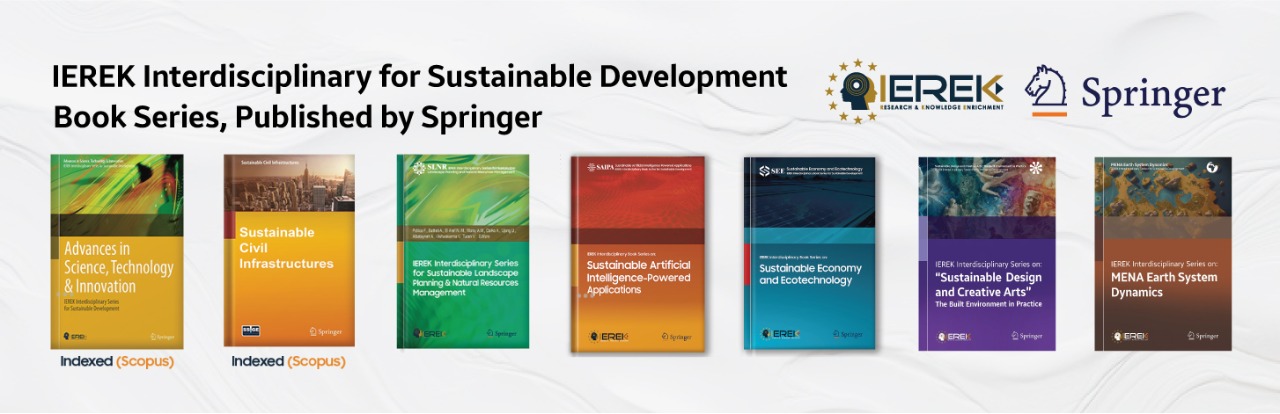
Advances in Science, Technology, and Innovation (ASTI)

Advances in Science, Technology and Innovation (ASTI), an IEREK interdisciplinary book series published by Springer Nature. (SCOPUS indexed)

Publisher: Springer Nature (IEREK Interdisciplinary book series)

Indexing: SCOPUS indexed; some titles in Web of Science (ISI)

Focus: Emerging research in science, technology, and innovation for sustainable development, addressing UN SDGs.

saipa

Sustainable Artificial Intelligence-Powered Applications (SAIPA)

Publisher: Springer (Peer-reviewed book series)

Focus: Advancing interdisciplinary research and applications of artificial intelligence to support sustainability and the achievement of global development goals.

Key Areas: Artificial intelligence; sustainable development; machine learning; smart cities; renewable energy; precision agriculture; environmental monitoring; climate modeling; Internet of Things (IoT).

📰 IEREK Press Journals

Internationally peer-reviewed, open access journals published by IEREK Press. Covering a wide range of disciplines including sustainability, architecture, engineering, and environmental sciences.

Journal on: 

  • Environmental Science & Sustainable Development (ESSD)
  • The Proceedings of the Academic Research Community on Social and Behavioral Sciences (ARChive-SR)
  • Proceedings of Science and Technology (Resourceedings)
  • BAHETH International Journal.
Authors' Instructions

IEREK has an unyielding policy regarding plagiarism. We believe that copying/taking the ideas and work of other Authors without permission and credit is fraudulent. The Reviewing committee and IEREK employees have the authority to reject a paper during its reviewing process, based on the paper being subjected to either minor or major plagiarism.

Authors must refer to, and abide by, the following instructions in submitting their abstracts/ papers:

Step 1: Abstract Submission Process

  • The author should prepare and submit an Abstract of at least 150 – 300 words through the website.
  • The abstract should be concise and clearly state the proposed research study's purpose, results, and conclusions.
  • The author should select the most relevant topic for the paper from the corresponding conference topics.
  • The author can use/download an Abstract Writing Template prior to submission
  • To submit your abstract, you first need to (1) click on the “Register” button on the conference page, (2) click on “Submit Now” and:
    • Select the Topic in which you are making the submission
    • Insert the title of your study in the "Paper Title" section
    • Insert the full abstract in the "Abstract" section/upload a file in the .pdf, .doc, .docm, or .docx format
    • Add in writing 3 – 5 keywords that define the field, subfield, topic, and research area covered by the article to help other researchers understand and find your work.
    • Provide the names, affiliations, and E-mails of all authors/ co-authors involved
    • Confirm your submission by ticking having read the instructions and “submit Abstract”

Step 2.1: Abstract Acceptance

  • After acceptance of your abstract of at least (150 – 300 words), you will receive a proforma invoice and specific instructions to complete the payment online or by bank transfer (See Conference Fees) to confirm your participation,
  • Once your abstract has been accepted, please refer to the important dates tab and carefully review the announced dates to avoid late payment, as late payment comes at an extra charge (early bird/regular/late).
  • After successfully completing payment, you will be issued upon request with the following:
    • A signed/ stamped abstract acceptance letter
    • Please note that acceptance of participation, abstract submission, and paper submissions all have different deadlines. To stay up to date and avoid paying extra fees, or delaying your paper, please carefully review the important dates tab.
    • Receipt of Payment/ Payment Invoice
    • Visa Invitation Letter, if needed
  • After abstract acceptance, you may be given the option to extend the abstract to publish your work in the conference proceedings in ASTI published by Springer Nature (indexed in Scopus/SCImago) (optional not obligatory).

    This is not a prerequisite for presenting your work at the conference. Meaning, you can present your submitted abstract without intending to publish your work.

Step 2.2: Full Paper Submission

  • Your submitted paper should be 6+ pages long and submitted before the paper submission deadline, in English, and fit within one of the conference topics.
  • Papers should be a minimum of 6 pages and contain 4,000 words, excluding references.
    Authors should support their research and clarify their ideas using various explanatory methods, such as figures, equations, and diagrams.
  • The paper should follow the research paper structure as follows: Abstract (+keywords), Introduction, problem statement, and study aim, Review of the Literature, Methodology, results and conclusion/ discussion, References list using the Paper Writing Template.
  • The submission should be made following the same procedure followed for the abstract or sent to the conference email.
  • Here: Authors may need more pages than the allotted maximum of 6 to insert figures, tables, appendixes, etc. In this case, they can submit regular papers (max. 12 pages) with the same fixed fee. For a detailed outline of the fees, please refer to the payment table in the conference fees tab.
  • The conference does welcome Arabic submissions (with abstracts written in the english language), which will only be considered for publication in BAHETH by IEREK Press.

يمكنك تقديم بحثك باللغة العربية (مع كتابة الملخص باللغة الأنجليزية)، وسيتم نشرها بعد المراجعة في مجلة باحث (مجلة علمية محكمة تنشر أبحاثا أكاديمية في مجالات الهندسة والتكنولوجيا)

Step 3: Rigorous Peer Review Process (double-blind)

This process can only be initiated after payment completion and confirmation:

  • If submitted, the paper will be preliminarily checked (iThenticate plagiarism/ similarity screening Software, readability, and scope) and it will be peer-reviewed. If similarity issues are detected, the following will apply:
    • % from all sources: 10-15%
    • % from one source: 3-5%
    • Higher than 30% (all sources): Reject completely
    • Lower than 30% (all sources): Ask for revision to decrease the similarities
  • IEREK has an unyielding policy regarding plagiarism. We believe that copying/ taking the ideas and work of other Authors without permission and credit is fraudulent. The Reviewing committee and IEREK employees have the authority to reject a paper during its reviewing process, on the basis of the paper being subjected to either minor or major plagiarism.
  • Each paper/ chapter is evaluated by a minimum of two reviewers, after which a final decision by the responsible Editor is made. There is no maximum to the number of times a paper can be reviewed, depending on the quality of the submission.
  • If your paper is accepted by the Editors for publishing with comments/ requested modifications, our Editors (publishing department) will contact you once a decision is made and you will be asked to revise and correct it. After resubmission, it will be re-checked. Note: There may be more than one round of peer review and the decision rests with the editors of the title. Missed deadlines may result in complete exclusion/ rejection from the final publication.
  • If your paper is accepted for publishing without edits/ comments, the corresponding author will be contacted to provide the final version of their chapters/ papers following Springer Guidelines and sign the Springer consent-to-publish (CTP) form to authorize publication in the conference proceedings.
  • A back-and-forth process: modifications will be sent back to the responsible Editor/ Series Editor and another round of evaluation conducted where needed. Participants/ Authors should regularly check their emails (Junk/ Spam folders).
  • If you are not interested in publishing an extended abstract in the proceedings in ASTI by Springer Nature, please inform the conference support ([email protected]).

Step 4: Extended paper 

  • After the conference, the authors of the best papers will be invited to submit an extended version of their research, 8 – 12+ pages in length, (optional) of their papers for publishing in an edited volume to be published by Springer Nature.
  • Publishing your paper (i.e., extended abstract) in the conference proceedings does not prevent the submission of the full version for publishing consideration after the conference if the similarity percentages (SR%) in Step 3 are taken into account.
Participants’ Instructions

Registration

To help the organizers plan for inter-disciplinary dialogue, participants are requested to choose from the conference themes/ Topics upon registration.

They must also refer to, and abide by, the following instructions in registering and submitting their abstracts/ papers:

Types of Participation

1. Attend/ Present Virtually and Publish in Conference proceedings

Organized from the comfort of your own home, the conference offers a virtual attendance option for your convenience. That said, participants will have a chance to present their abstract/research, online, and have their work considered for publication in the proceedings.

Virtual presenters are required to submit an abstract and extend this abstract following the “author instructions” below and before the deadline (see Important Dates). At least one author must pay the registration fee (see Registration & Fees).

For any reason, authors may wish to submit pre-recorded video presentations no later than 15 days prior to the conference. Alternatively, they may wish to record a voice-over PowerPoint presentation for submission to the conference organizers.

 2. Non-presenting participant

Non-presenting participants may also wish to attend the conference as Audience Members or Co-authors contributing to an already submitted abstract/ paper.

Benefits Of Attending

Attending a conference dramatically enhances both your professional and personal development. They help you sharpen the saw, meet and converse with industry experts, expand your resources and grow your professional network. IEREK Conference will help you:

1. Open Discussions: We bring together leading academic scientists, from different universities and countries, to exchange and share their experiences and research results.

2. Internationally Accredited Certificate: The participants are granted internationally recognized certificates acknowledged by IEREK, the University, and Partnering Organizations.

3. Publication: Selected high-quality manuscripts will be published, after peer review, in the Advances in Science, Technology & Innovation (ASTI) book series by Springer or by IEREK Press Journals, both of which are indexed in world-renowned databases.

4. Research Technologies: Conferences can expand your resources by providing a great opportunity to promote gathered information on new technologies related to your research.

5. Networking: You can engage with industry experts to discuss with them the very latest research projects they could be working on and increase your chances of collaboration in future projects.

6. Academic Reputation: Attending many conferences will make you a known figure in academic circles and an active member of the academic community.

7. Conference Abstracts Material: Delegates will receive the conference Abstracts book in a digital format on a CD.

Flyer & Poster

Click here to download the Flyer & Poster.

Refund Policy

A.Online Attendance

Delegates in any event who cancel their registration due to special circumstances will receive refunds according to the following:

Cancellation policy 

Up to 60 days before the event

59 days before the event

Penalty

20%

100%

A refund is not possible if

- An acceptance letter has been issued (Authors only)

- The proceedings of the event have been published (Authors only)

- A submitted manuscript is rejected by the editorial board after going through peer review.

IEREK Community

IEREK Community is a reflection of our appreciation for the scholars, institutions, and research groups who continuously contribute to the growth and excellence of IEREK’s academic network. Through exclusive rates and added privileges, we aim to make participation more accessible while strengthening long-term collaboration, research continuity, and institutional partnerships within our global community.

Eligible members of the IEREK Community receive a 25% discount during the Regular payment stage and may benefit from special discounts on other IEREK conferences.

The IEREK Community includes:

  • Previous attendees of IEREK conferences

  • Loyal authors who consistently participate in multiple editions of the same conference

  • Authors who have published in IEREK conference proceedings or journals

  • Researchers registering as a group submission

  • Faculty members and researchers from universities with current or past partnership agreements with IEREK

  • Universities and academic institutions located in the hosting country of the conference

  • Active authors who continuously support and engage with IEREK’s activities on social media (sharing, promoting, and contributing to community visibility)

  • Academics who support IEREK as moderators, keynote or guest speakers, reviewers, or editors

Authors should contact the conference manager at [email protected] to request consideration for discounts in any of the above cases.

Partners