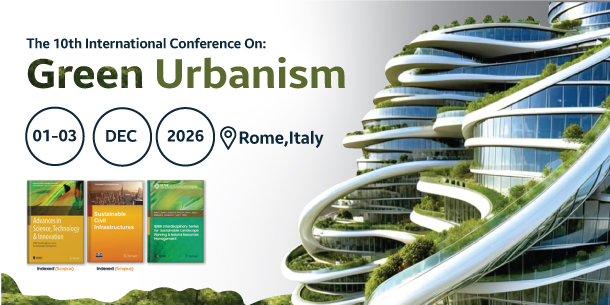
Green Urbanism (GU) -10th edition
Online Conference
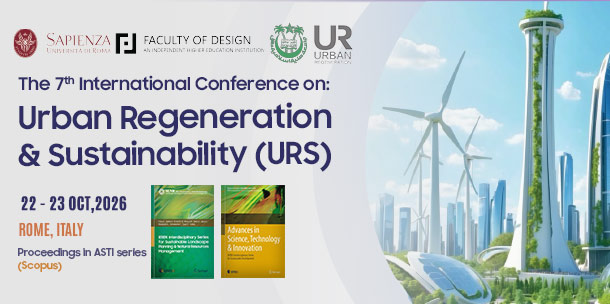
22 Oct 2026 / 23 Oct 2026 read more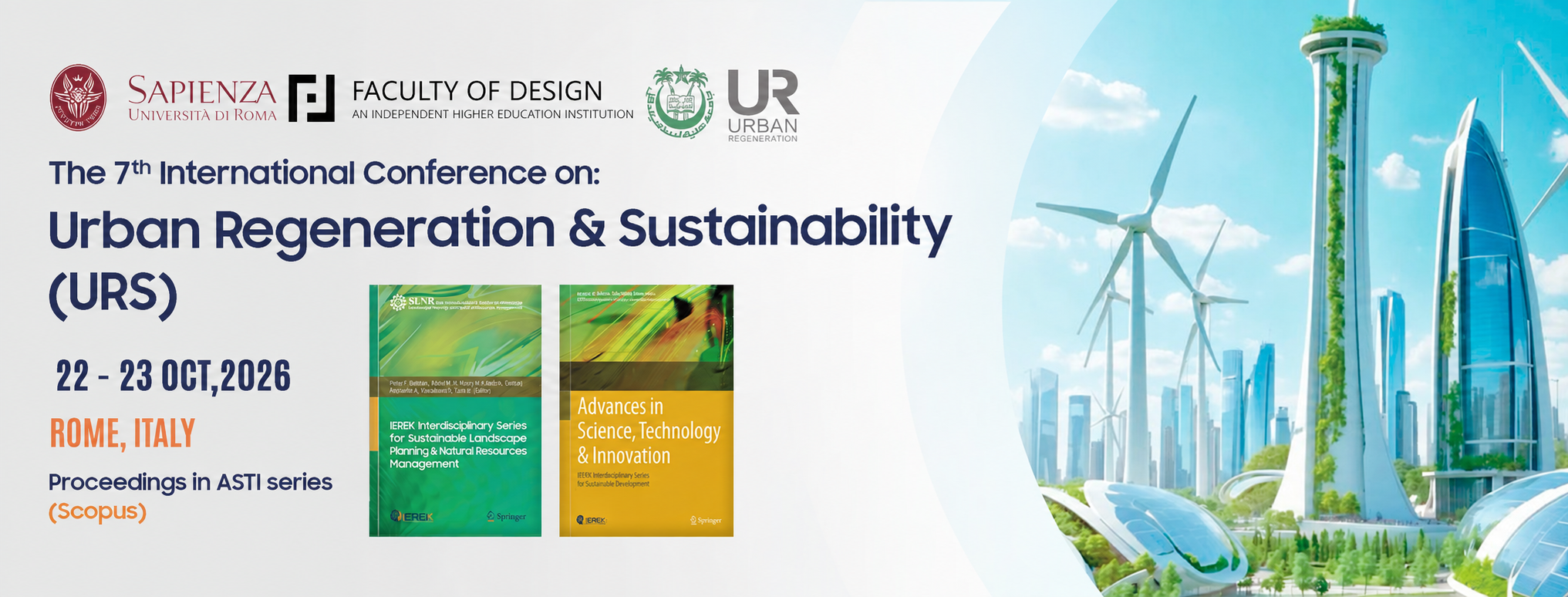
Conference Coordinator
[email protected]
(+20) 3 5763827 | (+20) 3 5763828
(+20)1000028021
Professor at the Urban Planning Department of Architecture, Polytechnic School University of Palermo, Italy.
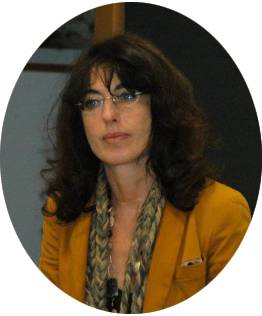
Associate Professor in City and Regional Planning at the Departmnet of Planning, Design, Architectural Technology Sapienza University of Rome, Italy.

Prof. Nada Rožmanec Matičič
The acting dean and founder of the Faculty of Design.

Prof. Nisar Khan
Professor in the Department of Architecture at Jamia Millia Islamia, New Delhi.
Subscribe to our newsletter
The Seventh Edition of the Urban Regeneration and Sustainability (URS) conference collectively explores foundational principles of sustainable urbanism, the intricate integration of smart technologies, adaptive reuse of existing infrastructure, the profound importance of heritage preservation, and the critical role of community engagement in urban transformation. These discussions that the conference aims to provoke revolve around understanding the multifaceted nature of urban sustainability and the imperative for resilient urban environments.
Urban areas worldwide face additional pressure from rapid urbanization, leading to strained public services, deteriorating living conditions, and increased susceptibility to environmental degradation. The escalating frequency and intensity of climate-related events further intensify these challenges, demanding a critical reassessment of existing strategies for the planning, development, and upkeep of urban ecosystems. Without proactive and sustainable interventions, urban areas risk becoming hubs of pollution, social fragmentation, and economic instability, undermining the very quality of life they are meant to provide.
This edition of URS will move beyond conventional approaches to sustainability, embracing a more dynamic, integrated, and actively regenerative vision for urban futures. We acknowledge the significant strides made in understanding urban resilience, green infrastructure, and circular economy principles in previous URS gatherings, and now seek to explore their deeper, more interconnected applications for a holistic urban ecology.
In order to effectively tackle these urgent and evolving challenges, it is essential to employ a holistic framework that incorporates principles of sustainability, resilience, and social inclusiveness within the paradigms of urban development strategies. The 7th edition of the "Urban Regeneration and Sustainability" (URS) conference functions as a platform for academics, urban planners, architects, policymakers, and industry experts to disseminate the latest knowledge, showcase innovative solutions, and engage in critical discourse. Through comprehensive discussions that build on our collective knowledge and push the frontiers of urban innovation, URS 2026 aims to profoundly advance the global discourse on urban regeneration. URS’s ultimate goal is to contribute significantly to shaping resilient, thriving, and equitable urban environments that are prepared for the complexities of the 21st century and beyond.
The main theme of focus of URS 2026 is "Adaptive Urban Ecologies: Reshaping Cities for a Resilient and Regenerative Future." This overarching theme is explored through the twelve interconnected topics, each designed to push the boundaries of current thinking and practice in urban regeneration.
This topic explores fundamental theoretical frameworks and the evolving nature of urban regeneration. It delves into the core principles of sustainability, resilience, and social equity, examining how these should guide mixed-use planning, compact city development, and the sensitive handling of informal settlements and cultural heritage.
Focusing on environmental integration, this topic covers the incorporation of nature-based solutions, circular economy principles, and data-driven decision-making into urban planning. It addresses policy alignment, climate adaptation strategies, and effective funding mechanisms to ensure long-term environmental viability in regeneration projects.
This theme investigates advanced techniques for transforming existing structures, including high-performance materials, renewable energy integration, and smart building technologies. It emphasizes biophilic design, passive strategies for microclimate enhancement, and lifecycle assessments to minimize embodied carbon in redeveloped spaces.
This topic explores the crucial role of cultural heritage as a catalyst for dynamic urban regeneration. It examines strategies for integrating historical preservation into urban renewal, adaptive reuse of heritage buildings, managing conflicts between old and new, and engaging communities in safeguarding cultural identities.
This theme focuses on developing green and efficient mobility solutions within regenerating urban areas. It covers advancements in energy-efficient public transit, smart transportation systems, the role of micromobility, sustainable road design, and policies that promote walkability and low-emission urban movement.
This topic addresses the revitalization of public spaces to enhance urban livability and community engagement. It explores urban greenery, biodiversity conservation, water-sensitive design, smart enhancements, accessibility for all, tactical urbanism, and the creation of multi-functional spaces for social resilience.
This theme explores cutting-edge digital tools and technologies revolutionizing urban planning and management. It includes IoT-based monitoring, AI-driven decision support systems, AR/VR applications, digital twins for urban modeling, blockchain in governance, big data analytics, and automation in sustainable infrastructure projects.
This topic critically examines the multifaceted obstacles to successful urban regeneration. It covers socioeconomic displacement, legal and regulatory hurdles, financial constraints, environmental pollution, governance complexities, public resistance, and the inherent tensions between short-term gains and long-term sustainability.
This theme investigates the crucial frameworks and participatory approaches necessary for effective urban regeneration. It emphasizes citizen participation, public-private partnerships, smart city policy frameworks, and community-led initiatives, along with strengthening institutional capacities and advocacy for sustainable urban policies.
This topic delves into advanced techniques for revitalizing contaminated brownfield sites. It covers innovative site investigation, detection of emerging contaminants, sustainable remediation technologies, novel construction methods on challenging ground, integration of ecology and green infrastructure, and leveraging digital tools for risk management.
This theme explores the vital role of enhancing biodiversity within urban environments and active strategies for ecological restoration. It looks at how cities can become havens for diverse species and contribute to broader ecological health through design, habitat creation, and community involvement.
This theme addresses the imperative of equitable urban development, ensuring that regeneration truly benefits all residents and rectifies historical injustices. It focuses on fostering social justice, inclusivity, affordable housing strategies, and shared prosperity in urban transformations for a fair and just city.
| Title | Date |
|---|---|
| Abstract Submission Deadline | 10 Aug 2026 |
| Last Notification for Abstract Acceptance & Approval to present | 25 Aug 2026 |
| Letter of Visa (for delegates who need visa entry) Payment required | 10 Jul 2026 |
| Early Payment Deadline | 10 May 2026 |
| Regular Payment Deadline | 15 Jul 2026 |
| Late Payment Deadline | 10 Sep 2026 |
| Full Paper Submission Deadline | 01 Sep 2026 |
| Notification of acceptance/ rejection of submitted paper | 10 Sep 2026 |
| Conference Program | 22 Sep 2026 |
| Conference Launch | 22 Oct 2026 |
Payments through the website are currently unavailable due to ongoing website enhancements. IEREK offers alternative payment methods, including bank transfer and secure third-party online payment links.
The registration fee does not cover accommodation or travel expenses. A list of accommodation options can be suggested by our team if available. Please contact [email protected] for inquiries.
We recommend that all authors take advantage of the benefits that IEREK offers, including various attendance types, publishing opportunities, and opportunities for discounts and waivers.
We are pleased to inform all applicants that they can use their previous publications to register for an IEREK membership, which offers a special discount.
IEREK offers a special discount to applicants from collaborative universities that have signed an MoU with IEREK to host or co-host one of its conferences.
IEREK also provides special discounts to authors from low and medium-income countries.
The disclosed fees are for the conference participation (Publication is free of charge, but only the conference participants can be considered for publishing in the conference proceedings).
Some of the disclosed conference fees may vary depending on the book series and/or journal(s) presented as a publication outlet, as we encourage submission to newly founded book series and/or journal(s) by presenting a discounted rate for the conference's fees.
IEREK offers many types of registrations that are diverse in registration fees; applicants can choose the type they are familiar with as follows:
Participants who are PhD holders, post-doctoral researchers, and universities’ affiliated professors and experts in the field.
Must provide proof of enrollment in a university by providing an enrollment certificate and/or a valid university ID (with issue/expiry date) etc.
Participants who are not affiliated with universities such as practitioners, policymakers, entrepreneurs, etc.
Have access to the event to enjoy the discussions, coffee breaks, and lunch as a co-author or audience.
IEREK Community members receive 25% off the Regular payment stage.
If you are a returning author, published researcher, institutional partner, or active contributor to IEREK activities, you may be eligible for exclusive Community benefits. Visit the IEREK Community Section to learn more and check your eligibility.
| Type of Registration | Early Payment Deadline 10 May 2026 |
Regular Payment Deadline 15 Jul 2026 |
Late Payment Deadline 10 Sep 2026 |
|---|---|---|---|
| Scopus indexed-ASTI Book by Springer | |||
| Student / Early Career Researcher | 300 € | 350 € | 400 € |
| Academic | 350 € | 400 € | 450 € |
| Professional / Industry | 400 € | 450 € | 500 € |
| Co-author/ Audience | 150 € | 200 € | 250 € |
| SLNR Book by Springer | |||
| Student / Early Career Researcher | 250 € | 300 € | 350 € |
| Academic | |||
| Professional / Industry | |||
| Co-author/ Audience | 150 € | 200 € | 250 € |
| Open Access IEREK Press Journals | |||
| Student / Early Career Researcher | 200 € | 250 € | 300 € |
| Academic | 250 € | 300 € | 350 € |
| Professional / Industry | 300 € | 350 € | 400 € |
| Co-author/ Audience | 150 € | 200 € | 250 € |
IEREK offers various types of participation. Applicants can apply for in-person attendance to benefit fully from conference discussions and knowledge exchange.
IEREK also offers virtual attendance for authors to present their research papers online; however, we strongly encourage all applicants to attend the conference in person.
The physical fee covers:
* Each research paper should have one main author who should pay the full fee (Author fees) regardless of attendance. Co-authors, each, have their fees to pay to attend the event. This applies to online attendance as well as physical attendance.
* A research paper fee allows only one author, whether main or co-author, to attend the conference and receive only one conference kit. Extras can be requested for an additional fee.
| Type of Registration | Early Payment Deadline 10 May 2026 |
Regular Payment Deadline 15 Jul 2026 |
Late Payment Deadline 10 Sep 2026 |
|---|---|---|---|
| Scopus indexed-ASTI Book by Springer or SUCI Book by Springer | |||
| Student / Early Career Researcher | 250 € | 300 € | 350 € |
| Academic | 300 € | 350 € | 400 € |
| Professional / Industry | 350 € | 400 € | 450 € |
| Co-author/ Audience | 100 € | 150 € | 200 € |
| SLNR Book by Springer | |||
| Student / Early Career Researcher | 200 € | 250 € | 300 € |
| Academic | |||
| Professional / Industry | |||
| Co-author/ Audience | 100 € | 150 € | 200 € |
| Open Access IEREK Press Journals | |||
| Student / Early Career Researcher | 150 € | 200 € | 250 € |
| Academic | 200 € | 250 € | 300 € |
| Professional / Industry | 250 € | 300 € | 350 € |
| Co-author/ Audience | 100 € | 150 € | 200 € |
IEREK offers virtual attendance, providing authors with a unique link to join the conference sessions and present their papers as per the announced program.
The online fee covers:
* Each research paper should have one main author who should pay the full fee (Author fees) regardless of attendance.
* Co-authors, each, have their fees to pay to attend the event. This applies to online attendance as well as physical attendance.
* If an author is eligible for more than one discount, IEREK will apply only the highest discount. Discounts cannot be combined.
* Authors should contact the conference manager through this email [email protected] to consider the discount and waiving for all the above cases so that the conference manager can provide an exclusive invoice for each case.
Afghanistan, Algeria, Angola, Bangladesh, Benin, Bhutan, Bolivia, Burkina Faso, Burundi, Cabo Verde, Cambodia, Cameroon, Central African Republic, Chad, Comoros, Congo, Congo Dem. Rep., Côte d'Ivoire, Djibouti, Egypt, Eritrea, Eswatini, Ethiopia, Gambia, Ghana, Guinea, Guinea-Bissau, Haiti, Honduras, India, Iran, Jordan, Kenya, Kiribati, Kyrgyz Republic, Lao PDR, Lebanon, Lesotho, Liberia, Madagascar, Malawi, Mali, Mauritania, Micronesia, Mongolia, Morocco, Mozambique, Myanmar, Nepal, Nicaragua, Niger, Nigeria, Pakistan, Papua New Guinea, Philippines, Rwanda, Samoa, São Tomé and Principe, Senegal, Sierra Leone, Solomon Islands, Somalia, South Sudan, Sri Lanka, Sudan, Syria, Tajikistan, Tanzania, Timor-Leste, Togo, Tunisia, Uganda, Ukraine, Uzbekistan, Vanuatu, Vietnam, Yemen, Zambia, Zimbabwe
IEREK puts a lot of effort into expediting the peer review process to publish articles as quickly as possible. This requires prompt responses from all authors to the editors' comments, if any. Your swift response is highly appreciated to advance the production process and get your articles online. We prioritize the first author to respond as per our formula. The conference proceedings will be divided into multiple books, with the first one scheduled for publication within 6 months after the conference date. We encourage all authors to aim for publication in the first release.
Registration and financial transactions for this conference are managed through our strategic partners, working in close academic partnership with IEREK to ensure seamless delivery of conference services and publication standards.


Both entities work in close academic partnership with IEREK to ensure the highest standards of financial transparency, conference administration, and publication quality.
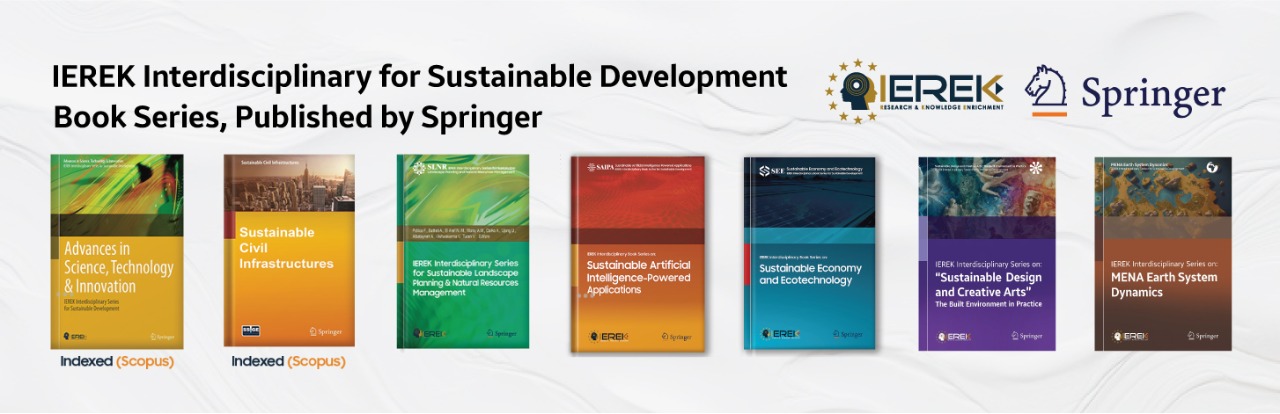
All accepted submissions to the conference, after a rigorous double-blinded peer-review process by the respective Editorial Board, will be published in one of the following:
Advances in Science, Technology and Innovation (ASTI), an IEREK interdisciplinary book series published by Springer Nature. (SCOPUS indexed)
Publisher: Springer Nature (IEREK Interdisciplinary book series)
Indexing: SCOPUS indexed; some titles in Web of Science (ISI)
Focus: Emerging research in science, technology, and innovation for sustainable development, addressing UN SDGs.
Publisher: Springer (Peer-reviewed book series)
Focus: Groundbreaking research at the intersection of sustainable landscape planning and natural resources management.
Key Areas: Landscape ecology, green urbanism, urban regeneration, land restoration, energy management, nature conservation, geosciences, civil engineering, and water management.
Internationally peer-reviewed, open access journals published by IEREK Press. Covering a wide range of disciplines including sustainability, architecture, engineering, and environmental sciences.
Journal on:
IEREK has an unyielding policy regarding plagiarism. We believe that copying/taking the ideas and work of other Authors without permission and credit is fraudulent. The Reviewing committee and IEREK employees have the authority to reject a paper during its reviewing process, based on the paper being subjected to either minor or major plagiarism.
Authors must refer to, and abide by, the following instructions in submitting their abstracts/ papers:
This is not a prerequisite for presenting your work at the conference. Meaning, you can present your submitted abstract without intending to publish your work.
This process can only be initiated after payment completion and confirmation:
Registration
To help the organizers plan for inter-disciplinary dialogue, participants are requested to choose from the conference themes/ Topics upon registration.
They must also refer to, and abide by, the following instructions in registering and/ or submitting their contributions:
NOTE: If you are contributing as an Author of a submitted abstract (for publishing consideration and/or presentation), and regardless of attendance, the fee for the registration is the same. See and Conference Fees for more information.
Types of Participation
1. Attend/ Present in-person or Online and Publish in indexed Conference proceedings
The conference offers a Physical attendance option for your convenience. That said, participants will have a chance to present their abstract/research, on campus, and have their work considered for publication in the ASTI Series by Springer as part of the conference proceedings.
See Author Instructions and Conference Fees for more information.
2. Registration to publish in the proceedings without presenting/ attending
If your full paper is accepted, it may be published in the conference proceedings book in the Advances in Science, Technology & Innovation Book Series by Springer (indexed in Scopus) even if you are not attending the conference. In this case, the accepted work will not be included in the final conference program. See Author Instructions and Publishing Opportunities for more information.
3. Non-presenting participant
Non-presenting participants may also wish to attend the conference as Audience Members or Co-authors contributing to an already submitted abstract/ paper. See Conference Fees for more information.
Notes to consider:
* Attendance online and in-person are possible upon confirmation with the conference secretariat/ coordinator at [email protected] and following Conference Fees covered.
* The participation fee is uninform for all options presented above.
* For participants wishing to attend in-person, a visa invitation letter will be provided upon request, for which case a copy of your passport will be required. The invitation letter can only be provided after acceptance and full payment.
* Before planning your trip, be sure to check travel restrictions to the conference’s hosting country. Visit travel information and restrictions, and send in your questions if you have any to the conference coordinator at the email [email protected]


Rome stands as one of the finest and oldest cities in the world. The history of Rome spans over 2500 years and it has been a centre of power, politics, culture and development since its inception. Creation of the city is steeped in legend and mythology and there are various different accounts of how this majestic place was built. Various Roman emperors and Casers have ruled mighty Rome and this is the place where the colossal Roman Empire grew from.
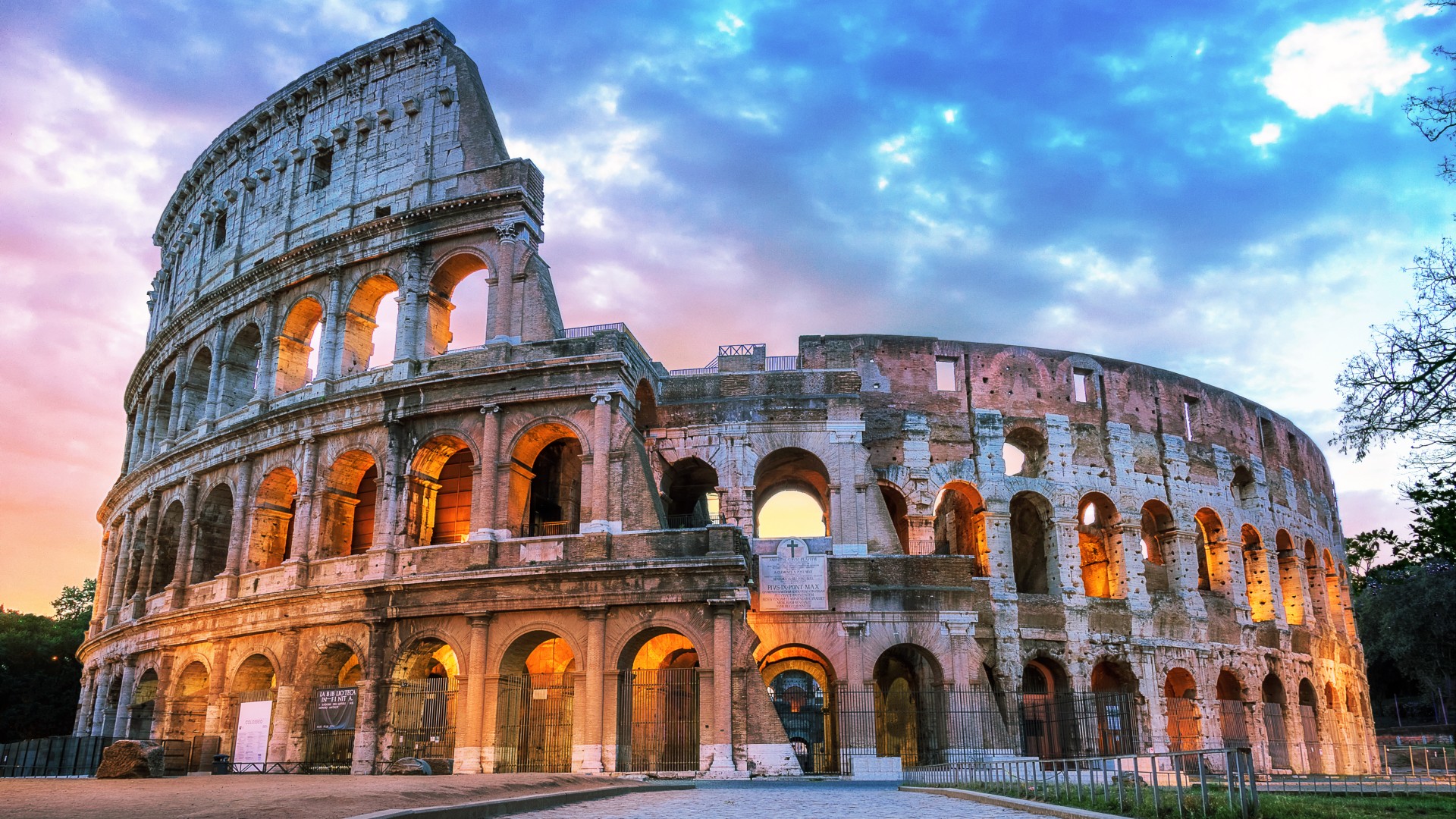
This mighty structure is one of the most renowned and iconic landmarks in the world and a trip to Rome would not be complete without visiting the Colosseum.
Also known as the Flavian Amphitheatre, the Colosseum was constructed between 70-80 AD and at its peak was estimated to hold 80,000 spectators.

Rome holds a small country within a country – The Vatican.
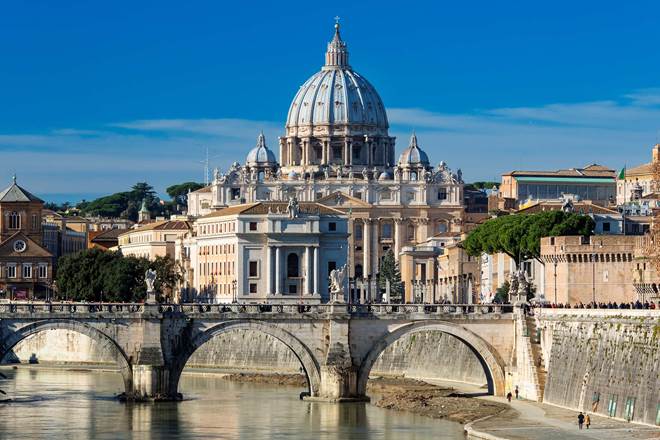
This independent state is one of the most important religious sites in the world and St. Peter’s Square is an iconic place where many significant events have taken place.
Located at the front of the Vatican state, the square is actually circular and is framed by two huge sets of colonnades – Standing on these columns are beautiful statues of various religious figures and previous popes.
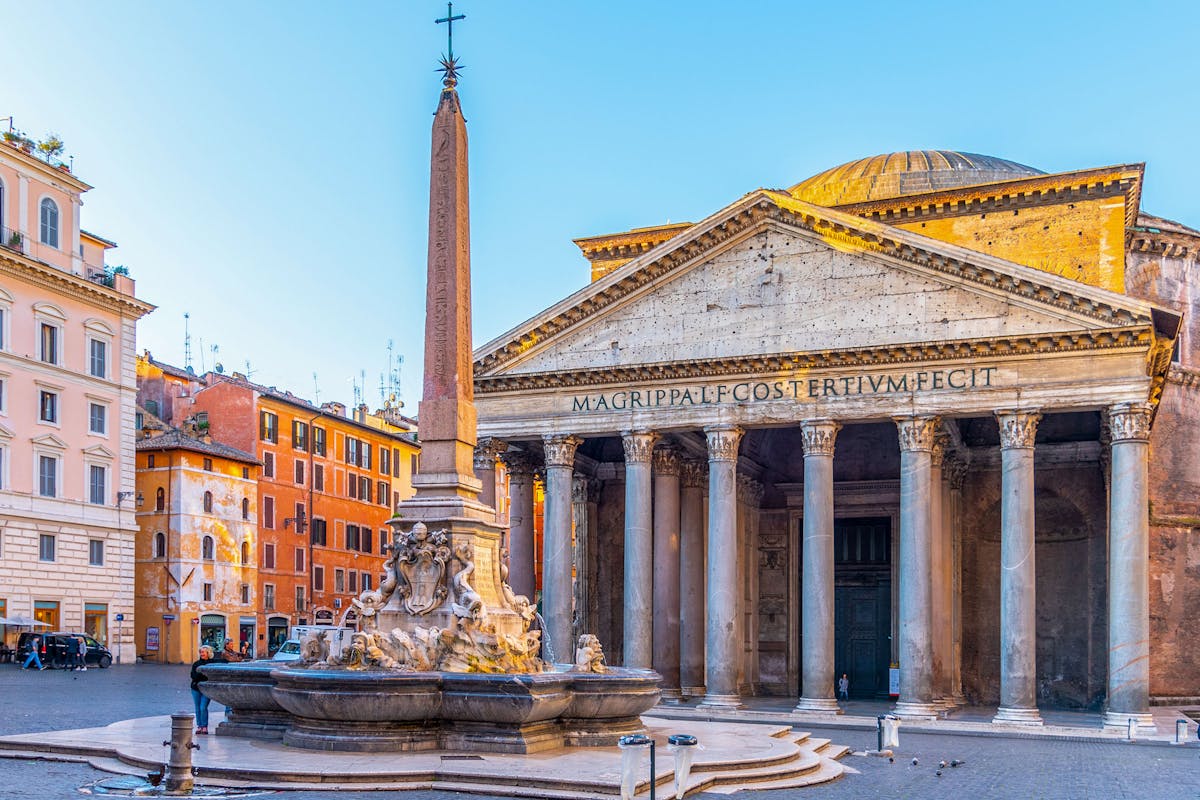
The mighty Pantheon stands as one of the best preserved ancient Roman buildings in the world and is one of Rome’s most famous attractions.
Constructed in 118 AD by emperor Hadrian, the building that stands today was actually built on the site where an earlier temple stood that was commissioned by Agrippa.
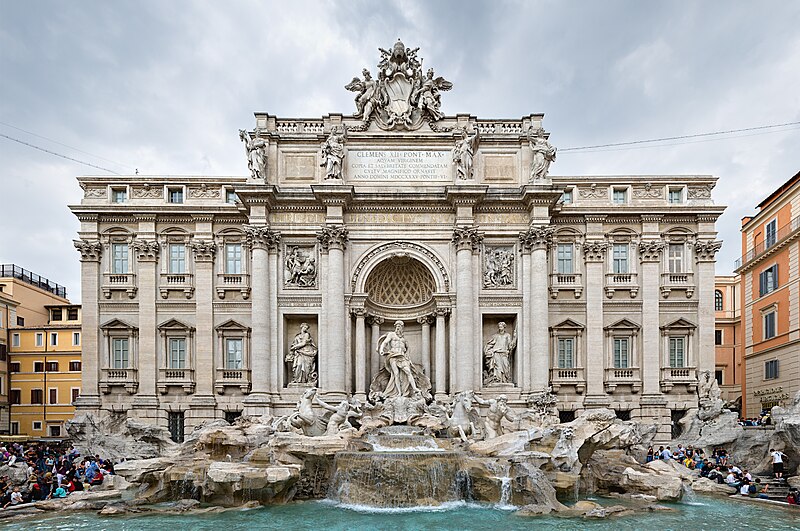
There are not many other fountains in the world as lavishly decorated and sculptured as the Trevi fountain.
Constructed in 1762 by Nicola Salvi, the fountain pays tribute to the Roman God Oceanus who can be seen riding his chariot pulled by Tritons and taming several Hippocamps.
The detail of the sculptures is simply wonderful and the whole facade and fountain are a true work of art.
Part of the Vatican museum complex, the Sistine Chapel is one of the most renowned religious chapels in the world and has a stunning amount of detail and iconography.
Situated in the Apostolic Palace in the Vatican City, the Sistine Chapel was extensively restored in the 1400’s and the place where the papal enclave takes place – It is here that a new pope is selected.
The Sistine Chapel is particularly famous for its extensive and detailed decorations including the Last Judgement fresco by Michelangelo and the ceiling artwork.
Sapienza University of Rome Founded in 1303, Sapienza is the oldest university in Rome and the largest in Europe. Its mission is to contribute to the development of a knowledge society through research, excellence, quality education and international cooperation.
Take: Leonardo Express train → Roma Termini Railway Station (~32 minutes)
Then: Metro Line B → Policlinico or Castro Pretorio
Walk to Sapienza University of Rome: 6–10 minutes
If arriving by train into Rome:
Arrive at: Roma Termini Railway Station
Then:
Walk: 6–10 minutes to Sapienza University of Rome
Walk: Short walk to campus entrance
Take A91 highway → Rome city center (35–45 minutes)
Take Via Appia Nuova → central Rome (25–35 minutes)
Drop off at: Sapienza University of Rome (Piazzale Aldo Moro)

Debora Anelli is a tenure-track researcher and lecturer in Appraisal and Valuation at Sapienza University of Rome. Her research focuses on the economic evaluation of urban and territorial transformations, integrating real estate analysis, financial feasibility, spatial indicators and multi-criteria decision methods. Her work examines how regeneration processes generate and distribute economic, social and environmental value across places and stakeholders, with particular attention to urban vulnerability, ESG assessment, adaptive reuse and sustainable investment strategies.

Francesco Sica, PhD, is Assistant Professor in Appraisal and Valuation at Sapienza University of Rome. His work focuses on sustainable urban and territorial regeneration, integrating Nature-based Solutions (NBS), ecosystem services valuation, and multi-criteria decision support systems for place-based planning. His research addresses the economic assessment of NBS, environmental-economic accounting of natural capital, real estate valuation, and decarbonization pathways for the built environment. He is actively involved in COST Actions and European networks on NBS and climate adaptation and contributes as an expert to the EKLIPSE science-policy mechanism on biodiversity and ecosystem services.
Prof. Ferdinando Trapani, Professor at the Urban Planning Department of Architecture, Polytechnic School University of Palermo, Italy.
Prof. Simona Colajanni, Department of Architecture, Polytechnic School University of Palermo, Italy.
Prof. Annalisa Contato, Department of Architecture, Polytechnic School University of Palermo, Italy.
Prof. Michele Anzalone, Department of Architecture, Polytechnic School University of Palermo, Italy.
Prof. Luisa Lombardo, Department of Architecture, Polytechnic School University of Palermo, Italy.
Attending a conference dramatically enhances both your professional and personal development. They help you sharpen the saw, meet and converse with industry experts, expand your resources and grow your professional network. IEREK Conference will help you:
1. Open Discussions: We bring together leading academic scientists, from different universities and countries, to exchange and share their experiences and research results.
2. Internationally Accredited Certificate: The participants are granted internationally recognized certificates acknowledged by IEREK, the University, and Partnering Organizations.
3. Publication: Selected high-quality manuscripts will be published, after peer review, in the Advances in Science, Technology & Innovation (ASTI) book series by Springer or by IEREK Press Journals, both of which are indexed in world-renowned databases.
4. Research Technologies: Conferences can expand your resources by providing a great opportunity to promote gathered information on new technologies related to your research.
5. Networking: You can engage with industry experts to discuss with them the very latest research projects they could be working on and increase your chances of collaboration in future projects.
6. Academic Reputation: Attending many conferences will make you a known figure in academic circles and an active member of the academic community.
7. Conference Abstracts Material: Delegates will receive the conference Abstracts book in a digital format.
*IMPORTANT: Please note that minor changes could take place and the program will be updated accordingly. All participants should regularly check the program until the event launch.
For IEREK's Previous Publications, Please Click here
- Urban Regeneration and Sustainability (URS) – 1st Edition held in London, UK in October 2018.

- Urban Regeneration and Sustainability (URS) – 2nd Edition held in London, UK in October 2020.
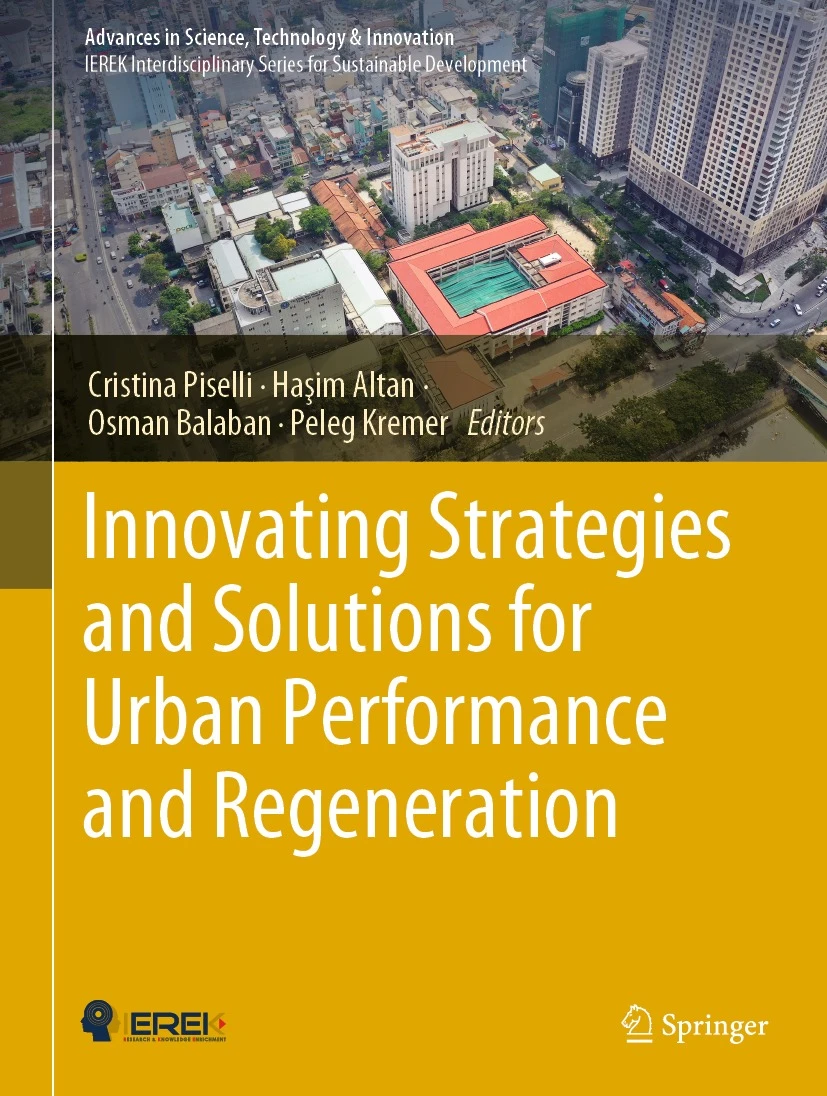
- Urban Regeneration and Sustainability (URS) – 3rd Edition held with Barleti University, Albania in December 2022.
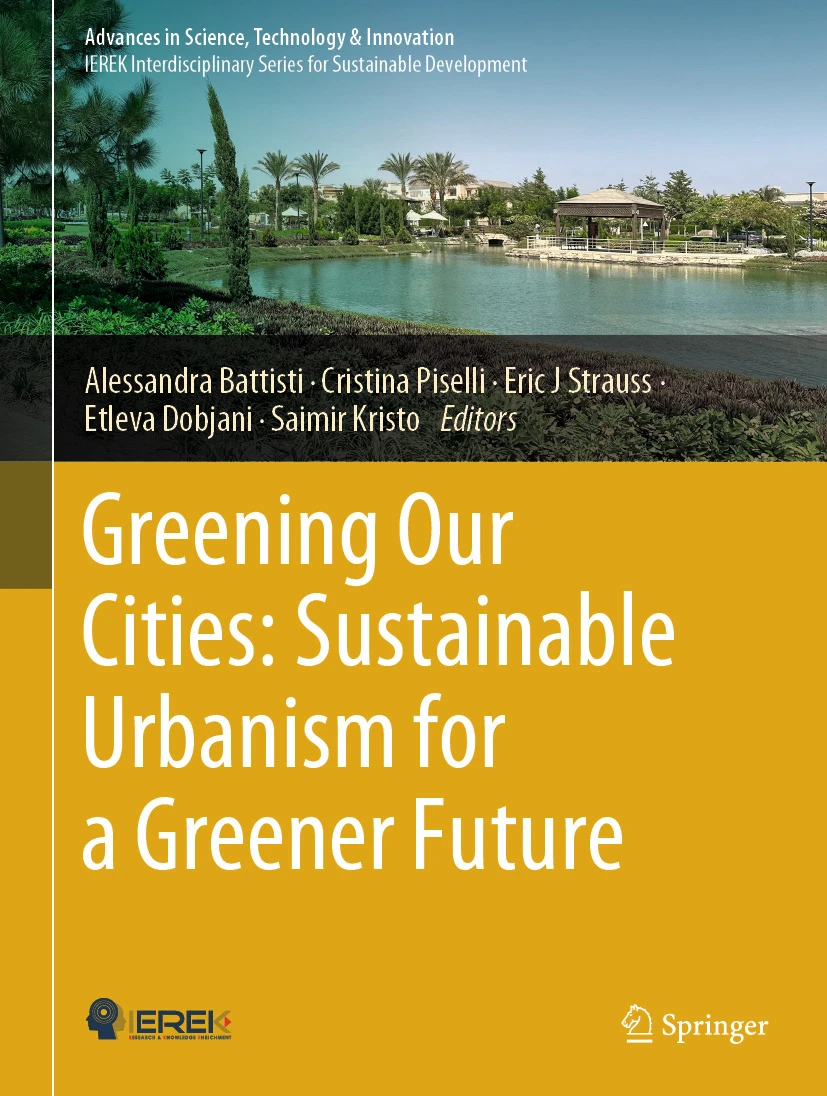
- Urban Regeneration and Sustainability (URS) – 4th Edition held with the Department of Architecture, Polytechnic School University of Palermo, Italy. in December 2023.
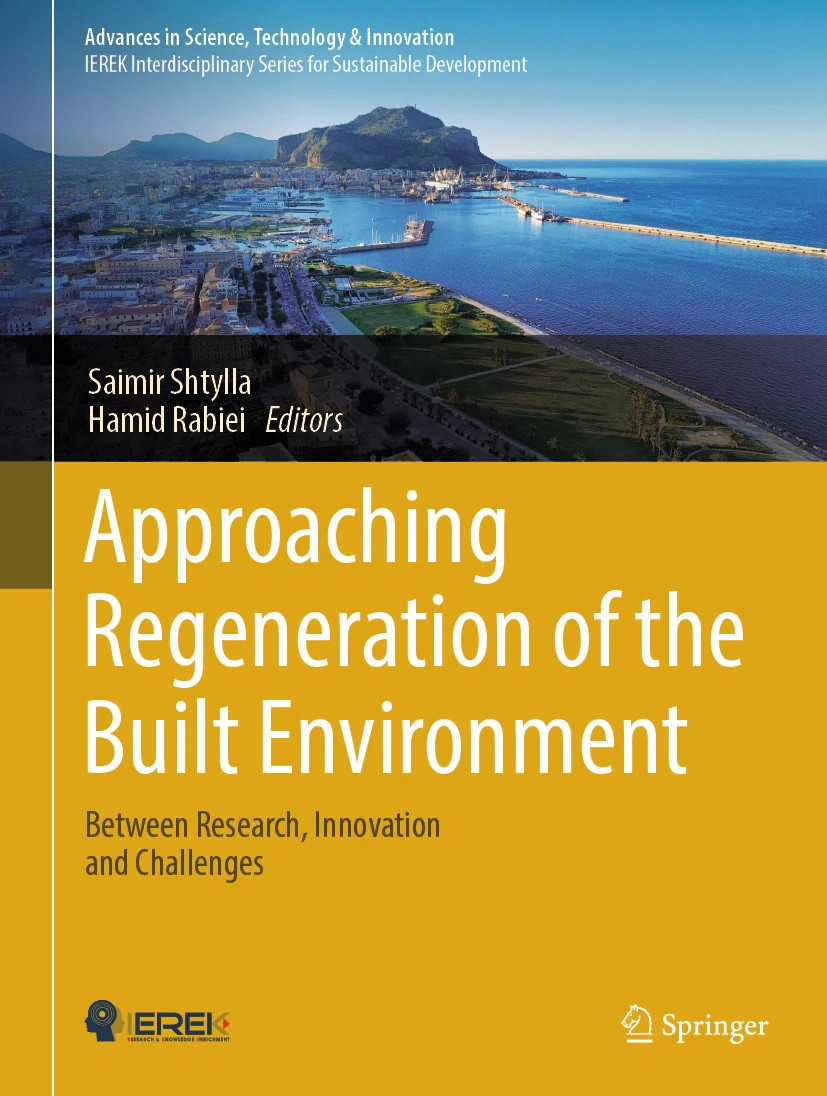
- Urban Regeneration and Sustainability (URS) – 5th Edition held with the Department of Architecture, Polytechnic School University of Palermo, Italy. in September 2024.
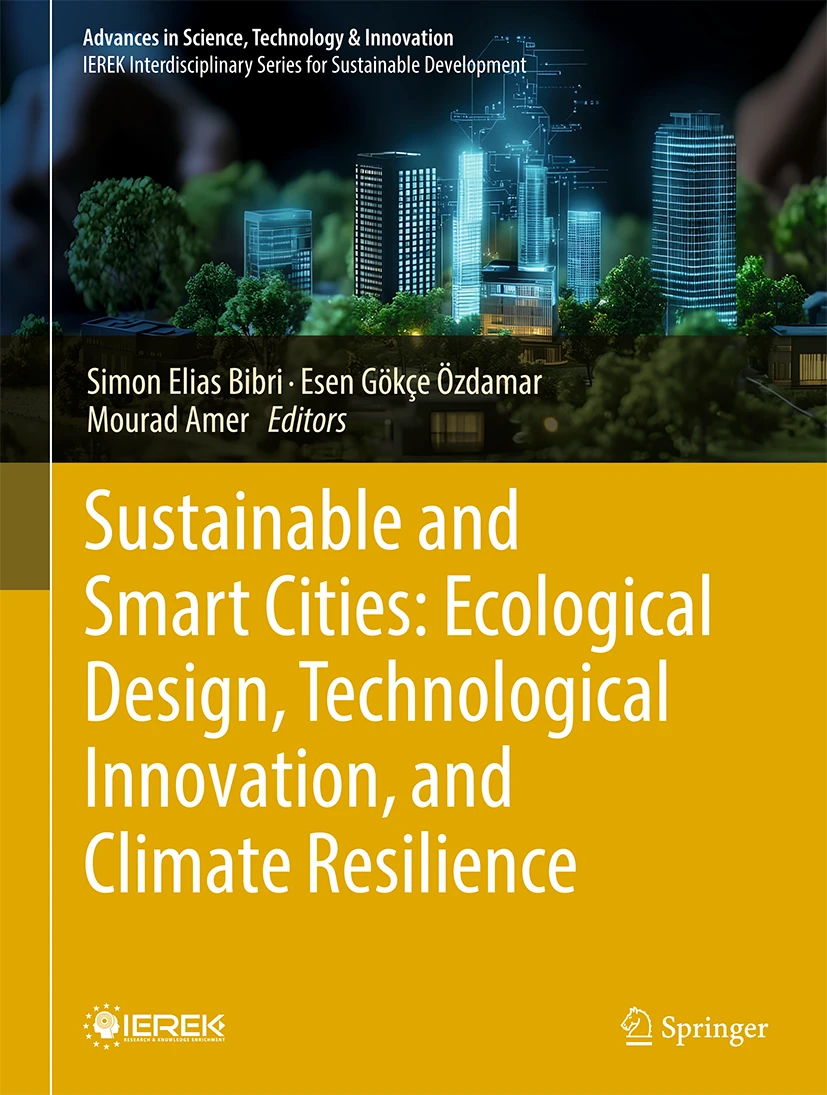
- For participants who need Entry Visas to the country where the conference will be held, IEREK will issue the corresponding invitation letter for accepted applicants to facilitate visa issuance.
- Please notice that we will endeavor to assist you in obtaining a visa but the responsibility is yours and the decision rests solely with the appropriate Embassy.
Invitation Letter Issuance Process
1- In case the participant is an author who has submitted a research paper to the conference, it must get accepted by the Scientific Committee
2- Required participation fees must be paid
3- The participant should send the following information to the conference's official email:
* A clear copy of passport
* Passport number
* Full name as written in your passport.
* Date of Issuing and Expiration
* Date of Birth
* Email address of the nearest Embassy/Consulate to you
* Mobile Number including country code
4- Conference coordinator will issue the needful invitation letter and send a copy to the participant's email, in addition to another one to the corresponding email address of embassy/consulate
5- The participant should print out the invitation letter along with all other required documents by the embassy/consulate and apply for VISA
|
Cancellation Policy |
Up to 60 days before the event |
Up to 50 days before the event |
Up to 40 days before the event |
39 days before the event |
|
Penalty |
20% |
50% |
70% |
100% |
EXCEPTION
A refund is not possible if
-An acceptance letter has been issued (Authors only)
-If the paper proceeds to the peer review process, a refund cannot be issued (Authors only)
-The proceedings of the event have been published (Authors only)
-A visa invitation letter has been issued (All participants)
Visa Rejection Cases
Reason and proof of rejection must be submitted. If the reason for rejection is due to an error on our part, the participant will be refunded their full fee with a deduction of a 20% administration fee.
Documents to be issued by IEREK to acquire a visa are as follows:
*Final Acceptance Letter (Authors only)
*Visa Invitation Letter
*Invoice/proof of payment
We encourage all authors and attendees to ensure their having acquired all documents (those applicable) mentioned.
If the reason for rejection is not related to any of the aforementioned and is an error on the participant’s part, the following will apply:
*Authors: may choose to let their co-author present his/her research on his/her behalf free of charge. If the author does not have a co-author, a member of the scientific committee shall present on the author’s behalf.
*Audience members/Registrants: will only be allowed to attend another similar event of their choosing that is organized by IEREK free of charge.
IEREK Community is a reflection of our appreciation for the scholars, institutions, and research groups who continuously contribute to the growth and excellence of IEREK’s academic network. Through exclusive rates and added privileges, we aim to make participation more accessible while strengthening long-term collaboration, research continuity, and institutional partnerships within our global community.
Eligible members of the IEREK Community receive a 25% discount during the Regular payment stage and may benefit from special discounts on other IEREK conferences.
The IEREK Community includes:
Previous attendees of IEREK conferences
Loyal authors who consistently participate in multiple editions of the same conference
Authors who have published in IEREK conference proceedings or journals
Researchers registering as a group submission
Faculty members and researchers from universities with current or past partnership agreements with IEREK
Universities and academic institutions located in the hosting country of the conference
Active authors who continuously support and engage with IEREK’s activities on social media (sharing, promoting, and contributing to community visibility)
Academics who support IEREK as moderators, keynote or guest speakers, reviewers, or editors
Authors should contact the conference manager at [email protected] to request consideration for discounts in any of the above cases.











Conference Coordinator
[email protected]
(+20) 3 5763827 | (+20) 3 5763828
(+20)1000028021
Professor at the Urban Planning Department of Architecture, Polytechnic School University of Palermo, Italy.
Associate Professor in City and Regional Planning at the Departmnet of Planning, Design, Architectural Technology Sapienza University of Rome, Italy.
Prof. Nada Rožmanec Matičič
The acting dean and founder of the Faculty of Design.
Prof. Nisar Khan
Professor in the Department of Architecture at Jamia Millia Islamia, New Delhi.
Subscribe to our newsletter
Join IEREK community