Sustainable Creative Art: ...
Online Conference
10 Nov 2026 / 12 Nov 2026 read more
Amira Nassar
Conference Coordinator
[email protected]
(+20) 3 5763827 | (+20) 3 5763828
(+20)1000028021
Subscribe to our newsletter
The Mediterranean basin is undergoing a profound spatial and ecological transformation, balancing rapid urbanization and economic pressures with the imperative to preserve its rich natural and cultural heritage. As the region adapts to contemporary challenges such as climate change, demographic shifts, and tourism expansion, practitioners and scholars face the complex task of harmonizing modern infrastructure with historical identity.
The current era of Mediterranean development is defined by a shift toward smart, resilient, and adaptive frameworks, where the objective is to protect fragile coastal ecosystems, revitalize historical urban cores, and increase sustainable regional growth. This movement requires a sophisticated synthesis of ecological stewardship, advanced spatial analytics, and community-driven policies to manage the dynamic landscapes of the Mediterranean.
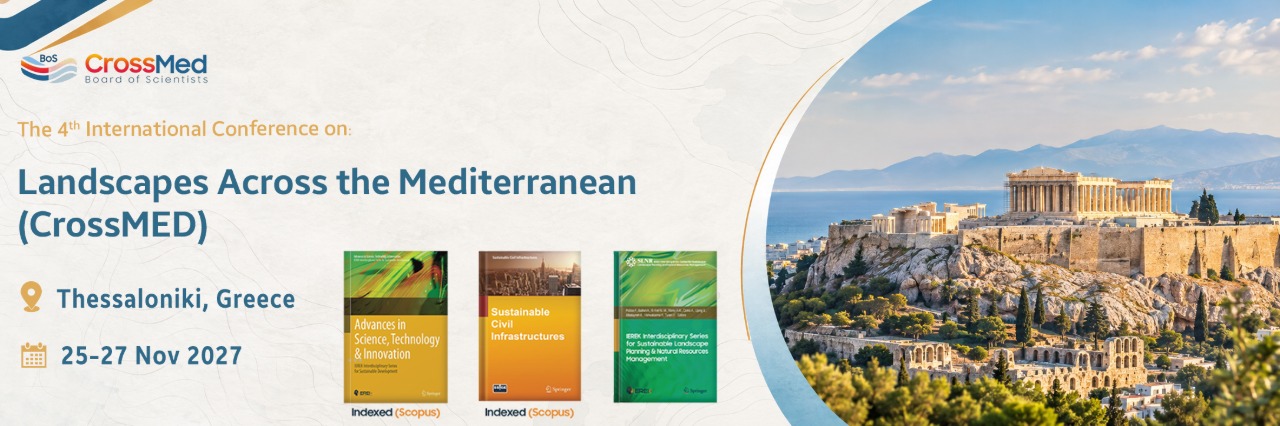
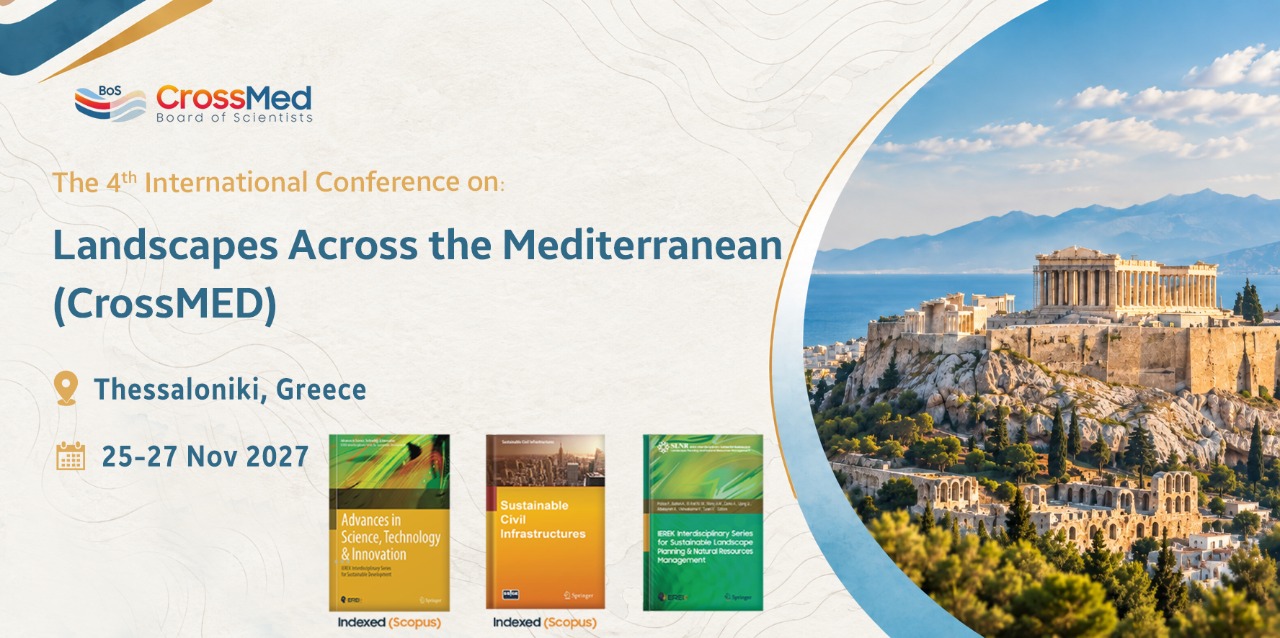
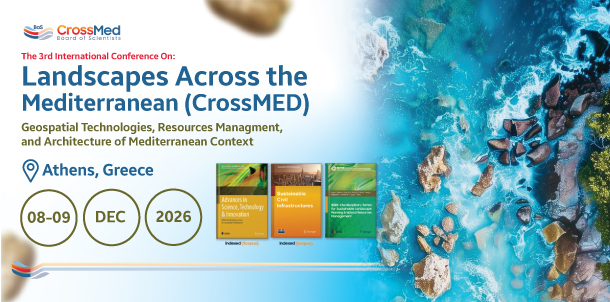
In response to these systemic shifts, the 4th edition of the Landscapes Across the Mediterranean (CrossMED) conference, taking place in Thessaloniki, Greece, serves as a global forum for redefining the future of Mediterranean spaces. By integrating advanced territorial policies with regenerative design strategies, CrossMED provides a definitive platform where academic research, policy expertise, and local stewardship converge. This edition emphasizes actionable, future-proof solutions to foster a resilient, inclusive, and culturally vibrant Mediterranean basin.
Conference Scope
CrossMED functions as a premier international hub for the convergence of diverse academic, corporate, and entrepreneurial expertise. It brings together urban planners, architects, landscape designers, environmental scientists, and policymakers to foster multidisciplinary research that addresses the urgent need to redesign regional frameworks in a rapidly evolving Mediterranean context.
Statement of Purpose
This conference aims to provide a comprehensive, interdisciplinary forum that bridges the gap between historical landscape preservation and modern infrastructural evolution. Our mission is to facilitate the exchange of knowledge, methodologies, and best practices among scholars and regional practitioners. By examining the synergy between ecological resilience and economic integration, we aim to offer actionable insights that empower urban leaders, strategists, and designers to lead the transition toward a sustainable, healthy, and environmentally resilient Mediterranean market.
1.1. Regional Architectural Typologies Responding to Mediterranean Climates.
1.2. Vernacular Building Techniques and Modern Sustainable Adaptation.
1.3. Integration of Contemporary Design Within Historic Urban Fabrics.
1.4. Material Authenticity and Local Sourcing in Mediterranean Construction.
1.5. Passive Energy Strategies Inspired by Traditional Mediterranean Architecture.
1.6. Microclimate Control and Thermal Comfort in Built Spaces.
1.7. Architectural Identity and Cultural Continuity Across Coastal Regions.
1.8. Innovative Structural Engineering for Mediterranean Seismic Zones.
2.1. Conservation Strategies for Archaeological Sites and Historic Gardens.
2.2. Urban Archaeology and the Management of Historic City Centers.
2.3. Digital Documentation and 3D Reconstruction of Cultural Heritage.
2.4. Adaptive Reuse of Industrial and Architectural Heritage.
2.5. Safeguarding Intangible Cultural Heritage Tied to Historic Landscapes.
2.6. Community-Led Conservation Models for Endangered Cultural Sites.
2.7. Risk Assessment and Climate Vulnerability Mapping for Heritage.
2.8. Legislative Frameworks Governing Historical Landscape Protection.
3.1. Integration of Smart Infrastructure Within Fragile Ecosystems.
3.2. Nature-Based Solutions for Urban Stormwater and Flood Management.
3.3. Smart Mobility Systems and Low-Impact Transportation Networks.
3.4. Energy-Efficient Public Lighting and Grid Integration in Cities.
3.5. Circular Economy Principles in Regional Infrastructure Projects.
3.6. Digital Twins and IoT Applications for Urban Landscape Monitoring.
3.7. Mitigation of Urban Heat Island Effects Through Green Infrastructure.
3.8. Resilient Utility Networks Supporting Coastal and Inland Communities.
4.1. Integrated Coastal Zone Management (ICZM) Methodologies.
4.2. Sea-Level Rise Adaptation and Coastal Defence Strategies.
4.3. Protection and Restoration of Marine and Terrestrial Ecotones.
4.4. Sustainable Waterfront Development and Public Access Optimization.
4.5. Port Logistics and Ecological Preservation in Coastal Cities.
4.6. Management of Coastal Erosion and Sediment Dynamics.
4.7. Water Scarcity as a Mediterranean Crisis: Security, Conflict, and Desalination.
4.8. Ecotourism Planning in Sensitive Coastal Habitats.
5.1. Biodiversity Conservation Across Mediterranean Biomes.
5.2. Wildfire Seasons and Landscape Recovery in a Warming Mediterranean.
5.3. Drought Resilience and Water-Wise Landscape Design.
5.4. Ecosystem Services Valuation in Regional Spatial Planning.
5.5. Climate Change Mitigation Through Carbon-Sequestration Landscapes.
5.6. Restoration Ecology Practices for Degraded Agricultural Lands.
5.7. Invasive Species Management and Habitat Protection.
5.8. Adaptive Governance Models for Environmental Crises.
6.1. Therapeutic Landscapes and Access to Nature for Public Health.
6.2. Biophilic Design Principles in Mediterranean Community Spaces.
6.3. Social Equity and Public Space Distribution in Urban Areas.
6.4. Soundscapes and Sensory Experiences in Cultural Landscapes.
6.5. Agricultural Landscapes as Cultural and Community Assets.
6.6. Participatory Planning Processes Enhancing Citizen Well-Being.
6.7. Preservation of Rural Traditions and Agritourism Landscapes.
6.8. Psychological Connections Between Communities and Local Environments.
7.1. Cross-Border Spatial Planning and Regional Cooperation Policies.
7.2. Land-Use Optimization and Containment of Urban Sprawl.
7.3. Decentralized Governance Models for Sustainable Regional Growth.
7.4. Regulatory Instruments for Environmental Impact Assessment.
7.5. Public-Private Partnerships in Regional Development Initiatives.
7.6. Multi-Level Policy Integration for Climate Adaptation.
7.7. Strategic Spatial Planning for Polycentric Metropolitan Regions.
7.8. Fiscal Incentives for Sustainable Private Sector Development.
8.1. Sustainable Tourism Management Models for Heritage Destinations.
8.2. Economic Diversification Strategies for Coastal and Rural Regions.
8.3. Green Investments and Financing Mechanisms for Urban Renewal.
8.4. Overtourism Backlash: Rethinking Mediterranean Cities After the Tourist Caps.
8.5. Agri-Food Economies and Short Supply Chains in Regional Growth.
8.6. Cultural Industries as Drivers of Local Economic Development.
8.7. Cross-Mediterranean Trade Networks and Economic Synergy.
8.8. Measuring the Socio-Economic ROI of Sustainable Infrastructure.
9.1. Exploring Contents and Forms of Axiological Reform in Landscapes.
9.2. Ethical Dimensions of Land Appropriation and Spatial Justice.
9.3. Philosophical Perspectives on Human-Nature Relationships in the Basin.
9.4. Aesthetic Value Shifts in Contemporary Mediterranean Design.
9.5. Re-evaluating Cultural Narratives Through Landscape Transformation.
9.6. Ethics of Resource Distribution and Environmental Justice.
9.7. Value Systems Guiding Heritage Preservation and Innovation.
9.8. Decolonizing Spatial Theories within Mediterranean Contexts.
10.1. Preservation of Traditional Terraced Farming Systems.
10.2. Agroforestry Practices for Sustainable Mediterranean Slopes.
10.3. Water Management and Traditional Irrigation Systems in Agriculture.
10.4. Agro-Biodiversity Conservation and Native Crop Protection.
10.5. Rural-Urban Linkages in Local Food Supply Chains.
10.6. Landscape Aesthetics of Mediterranean Vineyards and Olive Groves.
10.7. Climate Adaptation Strategies for Vulnerable Rural Communities.
10.8. Socio-Economic Viability of Small-Scale Farming.
11.1. Geographic Information Systems (GIS) for Predictive Environmental Modeling.
11.2. Remote Sensing and Satellite Tracking for Land Cover Changes.
11.3. Parametric Design Approaches for Complex Topographies.
11.4. Big Data Analytics for Visitor Flow and Tourism Management.
11.5. Virtual Reality (VR) Simulations for Public Consultation and Design.
11.6. Building Information Modeling (BIM) for Infrastructure Integration.
11.7. Automated Environmental Impact Assessments Using AI.
11.8. Open-Source Spatial Data Sharing Across Regional Platforms.
12.1. Extreme Weather Preparedness in Coastal and Mountain Areas.
12.2. Flash Flood Modeling and Watershed Management Systems.
12.3. Soil Conservation and Desertification Reversal Techniques.
12.4. Urban and Rural Heat Stress Mitigation Frameworks.
12.5. Renewable Energy Integration in Fragile Natural Landscapes.
12.6. Post-Disaster Reconstruction and Community Recovery Protocols.
12.7. Carbon Neutrality Targets in Regional Urban Planning.
12.8. Ecosystem-Based Adaptation (EbA) Strategies for Vulnerable Zones.
13.1. Co-Design Methodologies Involving Local Communities in Planning.
13.2. Accessibility and Universal Design in Historic Urban Centers.
13.3. Public Space Distribution and Social Cohesion in Cities.
13.4. Gender-Inclusive Design in Mediterranean Urban Environments.
13.5. Youth Engagement and Grassroots Urbanism Initiatives.
13.6. Mitigating Gentrification Pressures in Historic Neighborhoods.
13.7. Cultural Diversity Integration in Public Realm Design.
13.8. Community-Based Monitoring of Local Environmental Quality.

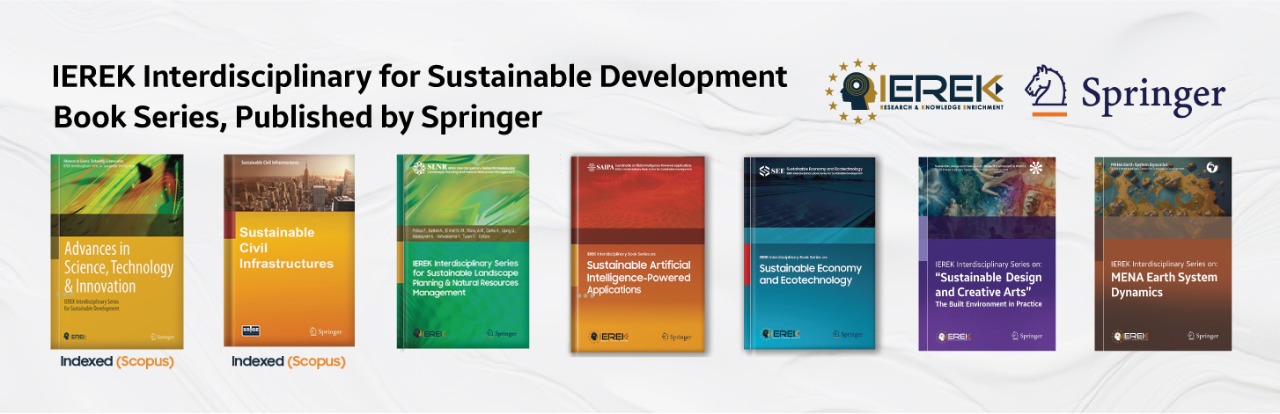
All accepted submissions to the conference, after a rigorous double-blinded peer-review process by the respective Editorial Board, will be published in one of the following:
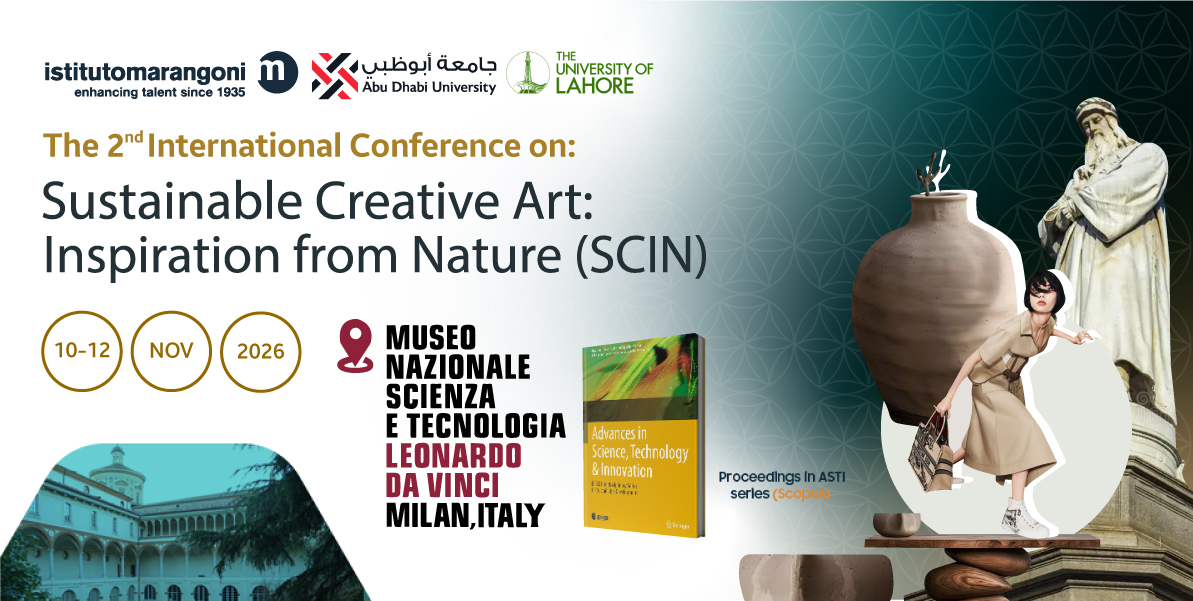
Advances in Science, Technology and Innovation (ASTI), an IEREK interdisciplinary book series published by Springer Nature. (SCOPUS indexed)
Publisher: Springer Nature (IEREK Interdisciplinary book series)
Indexing: SCOPUS indexed; some titles in Web of Science (ISI)
Focus: Emerging research in science, technology, and innovation for sustainable development, addressing UN SDGs.
Publisher: Springer (Peer-reviewed book series)
Indexing: EI Compendex, SCImago, SCOPUS, zbMATH
Focus: Sustainable engineering materials and designs for civil infrastructures, addressing impacts of weather extremes and improving well-being.

Focus: Environmental and developmental challenges in the MENA region.
Key Areas: Earth Systems Science, Geotechnics, and Geoinformatics specific to MENA.
Goal: Publish scientific breakthroughs and innovative solutions for a sustainable MENA Future.
Publisher: Springer (Peer-reviewed book series)
Focus: Groundbreaking research at the intersection of sustainable landscape planning and natural resources management.
Key Areas: Landscape ecology, green urbanism, urban regeneration, land restoration, energy management, nature conservation, geosciences, civil engineering, and water management.
Internationally peer-reviewed, open access journals published by IEREK Press. Covering a wide range of disciplines including sustainability, architecture, engineering, and environmental sciences.
Journal on:
| Title | Date |
|---|---|
| Abstract Submission Deadline | 15 July 2027 |
| Last Notification for Abstract Acceptance & Approval to present | 30 July 2027 |
| Letter of Visa (for delegates who need visa entry) Payment required | 30 Aug 2027 |
| Early Payment Deadline | 30 June 2027 |
| Regular Payment Deadline | 10 Aug 2027 |
| Late Payment Deadline | 30 Sep 2027 |
| Full Paper Submission Deadline | 25 Oct 2027 |
| Notification of acceptance/ rejection of the submitted full paper | 30 Oct 2027 |
| Conference Program | 25 Oct 2027 |
| Conference Launch | 25 Nov 2027 |
Payments through the website are currently unavailable due to ongoing website enhancements. IEREK offers alternative payment methods, including bank transfer and secure third-party online payment links.
The registration fee does not cover accommodation or travel expenses. A list of accommodation options can be suggested by our team if available. Please contact [email protected] for inquiries.
We recommend that all authors take advantage of the benefits that IEREK offers, including various attendance types, publishing opportunities, and opportunities for discounts and waivers.
We are pleased to inform all applicants that they can use their previous publications to register for an IEREK membership, which offers a special discount.
IEREK offers a special discount to applicants from collaborative universities that have signed an MoU with IEREK to host or co-host one of its conferences.
IEREK also provides special discounts to authors from low and medium-income countries.
The disclosed fees are for the conference participation (Publication is free of charge, but only the conference participants can be considered for publishing in the conference proceedings).
Some of the disclosed conference fees may vary depending on the book series and/or journal(s) presented as a publication outlet, as we encourage submission to newly founded book series and/or journal(s) by presenting a discounted rate for the conference's fees.
IEREK offers many types of registrations that are diverse in registration fees; applicants can choose the type they are familiar with as follows:
Participants who are PhD holders, post-doctoral researchers, and universities’ affiliated professors and experts in the field.
Must provide proof of enrollment in a university by providing an enrollment certificate and/or a valid university ID (with issue/expiry date) etc.
Participants who are not affiliated with universities such as practitioners, policymakers, entrepreneurs, etc.
Have access to the event to enjoy the discussions, coffee breaks, and lunch as a co-author or audience.
IEREK Community members receive 25% off the Regular payment stage.
If you are a returning author, published researcher, institutional partner, or active contributor to IEREK activities, you may be eligible for exclusive Community benefits. Visit the IEREK Community Section to learn more and check your eligibility.
| Type of Registration | Early Payment Deadline 30 June 2026 |
Regular Payment Deadline 30 Aug 2026 |
Late Payment Deadline 30 Sep 2026 |
|---|---|---|---|
| Scopus indexed-ASTI Book by Springer or SUCI Book by Springer | |||
| Student | 300 € | 350 € | 400 € |
| Academic | 350 € | 400 € | 450 € |
| Professional | 400 € | 450 € | 500 € |
| Co-author/ Audience | 150 € | 200 € | 250 € |
| SLNR Book by Springer | |||
| Student | 250 € | 300 € | 350 € |
| Academic | |||
| Professional | |||
| Co-author/ Audience | 150 € | 200 € | 250 € |
| Open Access IEREK Press Journals | |||
| Student | 250 € | 300 € | 350 € |
| Academic | 300 € | 350 € | 400 € |
| Professional | 350 € | 400 € | 450 € |
| Co-author/ Audience | 150 € | 200 € | 250 € |
Special Discount for Egyptian Participants
To support and encourage the active involvement of the local academic and professional community, IEREK, offers a special discounted registration fee (excluding VAT) for Egyptian participants attending the conference in person.
| Type of Registration | Early Payment Deadline 30 June 2026 |
Regular Payment Deadline 30 Aug 2026 |
Late Payment Deadline 30 Sep 2026 |
|---|---|---|---|
| Authors | 12000 EGP | 14000 EGP | 16000 EGP |
| Co-authors / Audience | 8000 EGP | 10000 EGP | 12000 EGP |
The registration fee does not cover accommodation or travel expenses. A list of accommodation options can only be suggested by our team if available. Contact [email protected] to inquire.
IEREK offers various types of participation. Applicants can apply for in-person attendance to benefit fully from conference discussions and knowledge exchange.
IEREK also offers virtual attendance for authors to present their research papers online; however, we strongly encourage all applicants to attend the conference in person.
The physical fee covers:
* Each research paper should have one main author who should pay the full fee (Author fees) regardless of attendance. Co-authors, each, have their fees to pay to attend the event. This applies to online attendance as well as physical attendance.
* A research paper fee allows only one author, whether main or co-author, to attend the conference and receive only one conference kit. Extras can be requested for an additional fee.
| Type of Registration | Early Payment Deadline 30 June 2026 |
Regular Payment Deadline 30 Aug 2026 |
Late Payment Deadline 30 Sep 2026 |
|---|---|---|---|
| Scopus indexed-ASTI Book by Springer or SUCI Book by Springer | |||
| Student | 250 € | 300 € | 350 € |
| Academic | 300 € | 350 € | 400 € |
| Professional | 350 € | 400 € | 450 € |
| Co-author/ Audience | 100 € | 150 € | 200 € |
| SLNR Book by Springer | |||
| Student | 200 € | 250 € | 300 € |
| Academic | |||
| Professional | |||
| Co-author/ Audience | 100 € | 150 € | 200 € |
| Open Access IEREK Press Journals | |||
| Student | 200 € | 250 € | 300 € |
| Academic | 250 € | 300 € | 350 € |
| Professional | 300 € | 350 € | 400 € |
| Co-author/ Audience | 100 € | 150 € | 200 € |
IEREK offers virtual attendance, providing authors with a unique link to join the conference sessions and present their papers as per the announced program.
The online fee covers:
* Each research paper should have one main author who should pay the full fee (Author fees) regardless of attendance.
* Co-authors, each, have their fees to pay to attend the event. This applies to online attendance as well as physical attendance.
* If an author is eligible for more than one discount, IEREK will apply only the highest discount. Discounts cannot be combined.
* Authors should contact the conference manager through this email [email protected] to consider the discount and waiving for all the above cases so that the conference manager can provide an exclusive invoice for each case.
Afghanistan, Algeria, Angola, Bangladesh, Benin, Bhutan, Bolivia, Burkina Faso, Burundi, Cabo Verde, Cambodia, Cameroon, Central African Republic, Chad, Comoros, Congo, Congo Dem. Rep., Côte d'Ivoire, Djibouti, Egypt, Eritrea, Eswatini, Ethiopia, Gambia, Ghana, Guinea, Guinea-Bissau, Haiti, Honduras, India, Iran, Jordan, Kenya, Kiribati, Kyrgyz Republic, Lao PDR, Lebanon, Lesotho, Liberia, Madagascar, Malawi, Mali, Mauritania, Micronesia, Mongolia, Morocco, Mozambique, Myanmar, Nepal, Nicaragua, Niger, Nigeria, Pakistan, Papua New Guinea, Philippines, Rwanda, Samoa, São Tomé and Principe, Senegal, Sierra Leone, Solomon Islands, Somalia, South Sudan, Sri Lanka, Sudan, Syria, Tajikistan, Tanzania, Timor-Leste, Togo, Tunisia, Uganda, Ukraine, Uzbekistan, Vanuatu, Vietnam, Yemen, Zambia, Zimbabwe

IEREK puts a lot of effort into expediting the peer review process to publish articles as quickly as possible. This requires prompt responses from all authors to the editors' comments, if any. Your swift response is highly appreciated to advance the production process and get your articles online. We prioritize the first author to respond as per our formula. The conference proceedings will be divided into multiple books, with the first one scheduled for publication within 6 months after the conference date. We encourage all authors to aim for publication in the first release.
Registration and financial transactions for this conference are managed through our strategic partners, working in close academic partnership with IEREK to ensure seamless delivery of conference services and publication standards.
Both entities work in close academic partnership with IEREK to ensure the highest standards of financial transparency, conference administration, and publication quality.
IEREK has an unyielding policy regarding plagiarism. We believe that copying/taking the ideas and work of other Authors without permission and credit is fraudulent. The Reviewing committee and IEREK employees have the authority to reject a paper during its reviewing process, based on the paper being subjected to either minor or major plagiarism.
Authors must refer to, and abide by, the following instructions in submitting their abstracts/ papers:
After abstract acceptance, you may be given the option to extend the abstract to publish your work in the conference proceedings in ASTI published by Springer Nature (indexed in Scopus/SCImago) (optional not obligatory).
This is not a prerequisite for presenting your work at the conference. Meaning, you can present your submitted abstract without intending to publish your work.
This process can only be initiated after payment completion and confirmation:
Registration
To help the organizers plan for inter-disciplinary dialogue, participants are requested to choose from the conference themes/ Topics upon registration.
They must also refer to, and abide by, the following instructions in registering and/ or submitting their contributions:
NOTE: If you are contributing as an Author of a submitted abstract (for publishing consideration and/or presentation), and regardless of attendance, the fee for the registration is the same. See and Conference Fees for more information.
Types of Participation
1. Attend/ Present in-person or Online and Publish in indexed Conference proceedings
The conference offers a Physical attendance option for your convenience. That said, participants will have a chance to present their abstract/research, on campus, and have their work considered for publication in the ASTI Series by Springer as part of the conference proceedings.
See Author Instructions and Conference Fees for more information.
2. Non-presenting participant
Non-presenting participants may also wish to attend the conference as Audience Members or Co-authors contributing to an already submitted abstract/ paper. See Conference Fees for more information.
Notes to consider:
* Attendance online and in-person are possible upon confirmation with the conference secretariat/ coordinator at [email protected] and following Conference Fees covered.
* The participation fee is uninform for all options presented above.
* For participants wishing to attend in-person, a visa invitation letter will be provided upon request, for which case a copy of your passport will be required. The invitation letter can only be provided after acceptance and full payment.
* Before planning your trip, be sure to check travel restrictions to the conference’s hosting country. Visit travel information and restrictions, and send in your questions if you have any to the conference coordinator at the email [email protected]
Attending a conference dramatically enhances both your professional and personal development. They help you sharpen the saw, meet and converse with industry experts, expand your resources and grow your professional network. IEREK Conference will help you:
1. Open Discussions: We bring together leading academic scientists, from different universities and countries, to exchange and share their experiences and research results.
2. Internationally Accredited Certificate: The participants are granted internationally recognized certificates acknowledged by IEREK, the University, and Partnering Organizations.
3. Publication: Selected high-quality manuscripts will be published, after peer review, in the Advances in Science, Technology & Innovation (ASTI) book series by Springer or by IEREK Press Journals, both of which are indexed in world-renowned databases.
4. Research Technologies: Conferences can expand your resources by providing a great opportunity to promote gathered information on new technologies related to your research.
5. Networking: You can engage with industry experts to discuss with them the very latest research projects they could be working on and increase your chances of collaboration in future projects.
6. Academic Reputation: Attending many conferences will make you a known figure in academic circles and an active member of the academic community.
7. Conference Abstracts Material: Delegates will receive the conference Abstracts book in a digital format.
|
Cancellation Policy |
Up to 60 days before the event |
Up to 50 days before the event |
Up to 40 days before the event |
39 days before the event |
|
Penalty |
20% |
50% |
70% |
100% |
EXCEPTION
A refund is not possible if
-An acceptance letter has been issued (Authors only)
-The proceedings of the event have been published (Authors only)
-A Visa invitation letter has been issued (All Participants)
Visa Rejection Cases
Reason and proof of rejection must be submitted. If the reason for rejection is due to an error on our part, the participant will be refunded their full fee with a deduction of a 20% administration fee.
Documents to be issued by IEREK to acquire a visa are as follows:
*Final Acceptance Letter (Authors only)
*Visa Invitation Letter
*Invoice/proof of payment
We encourage all authors and attendees to ensure their having acquired all documents (those applicable) mentioned.
If the reason for rejection is not related to any of the aforementioned and is an error on the participant’s part, the following will apply:
*Authors: may choose to let their co-author present his/her research on his/her behalf free of charge. If the author does not have a co-author, a member of the scientific committee shall present on the author’s behalf.
*Audience members/Registrants: will only be allowed to attend another similar event of their choosing that is organized by IEREK free of charge.
Amira Nassar
Conference Coordinator
[email protected]
(+20) 3 5763827 | (+20) 3 5763828
(+20)1000028021
Subscribe to our newsletter
Join IEREK community