


Sustainable Creative Art: ...
Online Conference
10 Nov 2026 / 12 Nov 2026 read more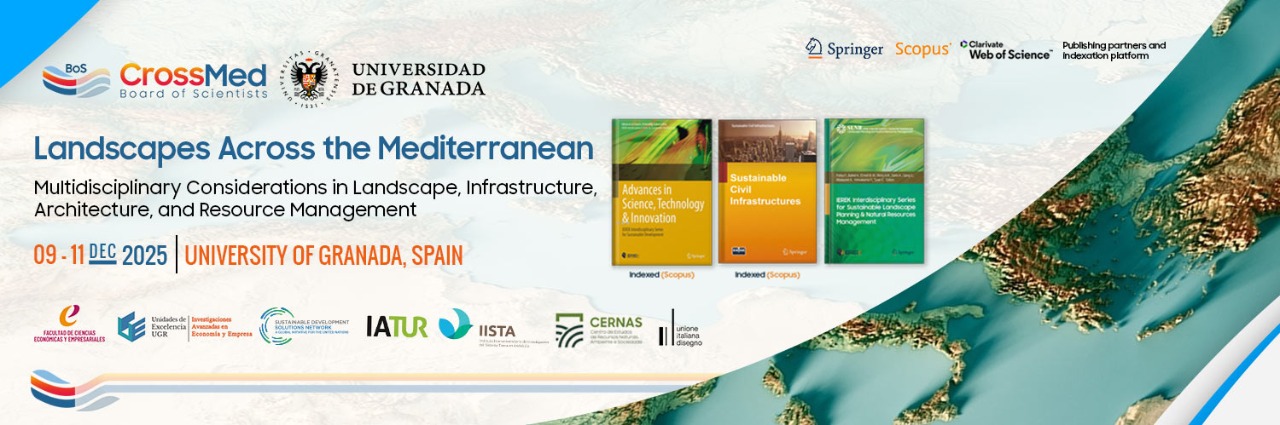

Associate Professor
Department of Applied Economics at the University of Granada, Spain

Amira Nassar
Conference Coordinator
[email protected]
(+20) 3 5763827 | (+20) 3 5763828
(+20)1000028021
Subscribe to our newsletter
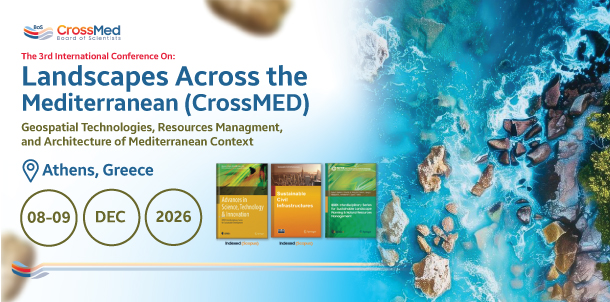
Captivating Mediterranean cities are hot spots for tourist endeavors. The Landscapes Across the Mediterranean (CrossMED) 2nd Edition Conference aims to integrate culture, landscape design, and architecture to highlight the sustainable approaches in urban design and environmental health. Discussions integrate the celebration of Mediterranean cities, inspired by their urban physics and urban agriculture, and how artificial intelligence can turn around the topic of sustainable development and economy.
The participants will have a chance to engage in discussions, presentations, and workshops led by experts in their respective fields. The conference focuses on landscape with enriching topics on Architecture Landscape, the impact of climate change on Mediterranean landscapes, the role of landscapes in cultural heritage preservation, economic development, sustainable energy solutions, the intersection of environmental and socio-economic challenges in the region, and interesting applications of artificial intelligence in these contexts.
IEREK is proud to announce that this conference will be held in cooperation with the University of Granada. It is prominently built on a rich historical background and has reached a high rank among the world’s universities. However, this partnership is only the start of an invitation to universities and organizations worldwide for collaboration as co-hosts, with a common vision of sharing knowledge among academia, industry professionals, policymakers, and environmental sponsors to find positive change and create a more sustainable world.
Conference Scope
Landscapes Across the Mediterranean (CrossMED) discusses the intricate connections between these landscapes' natural environment, cultural heritage, and sustainability. It examines the different aspects of landscapes, including their ecological, historical, social, and economic dimensions. Through presentations, discussions, and workshops, participants will engage in conversations, exchange knowledge, share research, and develop collaborative social connections that will contribute to the sustainable management and preservation of these landscapes for future generations.
Statement of Purpose
IEREK aims to bring together experts from multiple fields, such as geography, archaeology, ecology, anthropology, and urban planning. Landscapes Across the Mediterranean (CrossMED) serves as a platform for interdisciplinary dialogue and collaboration, primarily focusing on deepening the understanding of the relationship between landscapes and human interactions within the Mediterranean region. The conference seeks to generate innovative ideas and practical solutions for sustainable development and conservation by exploring the cultural, ecological, and historical dimensions of these landscapes. Ultimately, the vision of the conference is to contribute to creating a global network of professionals dedicated to protecting and enhancing these unique and invaluable landscapes.
1.1 Design Principles for Mediterranean Landscapes.
1.2 Use of Native Plants in Mediterranean Landscape Architecture.
1.3 Integration of Water Features in Sustainable Mediterranean Landscape Design.
1.4 Sustainable Materials and Construction Practices.
1.5 Role of Landscape Architecture in Enhancing Urban Resilience.
1.6 Case Studies of Successful Mediterranean Landscape Projects.
1.7 Climate-responsive Design in Mediterranean Architecture.
1.8 Mediterranean Courtyard and Garden Traditions in Modern Design.
1.9 Preservation of Historical Landscape Elements in Urban Development.
1.10 Renewable Energy Integration in Mediterranean Landscape Architecture.
2.1 Coastal Erosion and Climate Change Impacts.
2.2 Habitat Conservation in Marine and Coastal Areas.
2.3 Sustainable Urbanization in Coastal Regions.
2.4 Economic and Social Opportunities in Coastal Communities.
2.5 Integrated Coastal Zone Management Practices.
2.6 Monitoring and Modeling Coastal Ecosystem Dynamics.
2.7 Strategies for Enhancing Coastal Settlement Resilience.
2.8 Policy Innovations for Sustainable Coastal Management.
2.9 Nature-based Approaches to Coastal Protection and Management.
2.10 Role of Tourism in Shaping Coastal Sustainability.
3.1 Understanding the Evolution and Characteristics of Cultural Landscapes.
3.2 Cultural Landscapes and their Role in Shaping Regional Identity.
3.3 Preservation Techniques for Culturally Significant Landscapes.
3.4 Integration of Cultural Landscapes into Urban and Rural Planning.
3.5 The Role of Traditional Knowledge in Cultural Landscape Conservation.
3.6 Cultural Landscapes as a Medium for Artistic and Architectural Inspiration.
3.7 The Role of Cultural Landscapes in Tourism Development.
3.8 Ecological and Cultural Contributions of Landscapes.
3.9 Urbanization Impacts on Cultural and Ecological Landscapes.
3.10 Adaptive Reuse of Cultural Landscapes in Modern Contexts.
4.1 Assessing Ecosystem Vulnerabilities to Climate Change.
4.2 Adaptive Management Techniques for Resilient Landscapes.
4.3 Climate Adaptation Policies for Sustainable Landscapes.
4.4 Disaster Risk Reduction in Urban and Rural Landscapes.
4.5 Enhancing Ecological Connectivity in Fragmented Ecosystems.
4.6 Citizen Science Contributions to Resilience Studies.
4.7 Sustainable Energy Transitions in Mediterranean Landscapes.
4.8 Climate Change Impact on Mediterranean Landscapes.
4.9 Design and Planning for Ecologically Resilient Landscapes.
4.10 Green Connectivity: Nature-based Strategies for Enhancing Infrastructure.
5.1 Socioeconomic Inequalities and Poverty in All Its Forms.
5.2 Labor Market Dynamics and Unemployment Trends.
5.3 Migration Patterns and Labor Market Effects.
5.4 Refugee Crisis and Economic Impact.
5.5 Sustainability Challenges in Welfare Systems and Social Services.
5.6 Economic Consequences of Environmental Regulations.
5.7 International Relations and Trade Dynamics.
5.8 Renewable Energy Initiatives and Economic Effects.
5.9 Economic Integration and Regional Cooperation.
5.10 Economic Consequences of Political Instability.
6.1 Preservation of Archaeological Landscapes.
6.2 Revitalizing Historic Urban Cores through Sustainable Development.
6.3 Adaptive Reuse of Heritage Sites for Modern Functions.
6.4 Documentation and Digitization of Historic Landscapes.
6.5 Managing Conflicts between Development and Preservation.
6.6 Indigenous Knowledge in Heritage Conservation Practices.
6.7 Conservation of Rural Heritage and Vernacular Architecture.
6.8 Risk Assessment for Heritage Sites in Disaster-prone Areas.
6.9 Economic Benefits of Preserving Urban Heritage.
6.10 Cultural Tourism’s Impact on Historical Landscapes.
7.1 Collaborative Governance for Shared Landscapes.
7.2 Impact of Border Policies on Rural and Urban Development.
7.3 Cross-border Cultural and Environmental Initiatives.
7.4 Developing Shared Natural Resource Management Strategies.
7.5 Challenges of Political Boundaries in Landscape Conservation.
7.6 Regional Trade Policies and their Environmental Implications.
7.7 Transboundary Efforts for Biodiversity Conservation.
7.8 Community Partnerships in Cross-Border Regions.
7.9 Role of International Organizations in Territorial Policies.
7.10 Participatory Approaches in Cross-Border Policy Development.
8.1 Strategies for Habitat Restoration in Degraded Landscapes.
8.2 Biodiversity Conservation in Urban and Rural Settings.
8.3 Ecological Restoration in Post-Industrial Areas.
8.4 Rewilding as a Tool for Ecological Recovery.
8.5 Sustainable and Resilient Interventions in Landscape Conservation and Restoration.
8.6 Challenges in Wetland Conservation and Restoration.
8.7 Monitoring and Evaluation in Landscape Conservation and Restoration.
8.8 Social, Economic, and Political Dimensions of Landscape Conservation.
8.9 Funding Strategies for Landscape Conservation and Restoration.
8.10 Capacity Building and Training for Sustainable Landscape Restoration.
9.1 Importance of Green Spaces for Urban Health.
9.2 Strategies for Multifunctional Urban Landscapes.
9.3 Role of Public Art and Cultural Expression.
9.4 Community Involvement in Open Space Design.
9.5 Methods for Enhancing Biodiversity in Urban Areas.
9.6 Case Studies of Successful Urban Open Space Transformations.
9.7 Urban Resilience and Climate Adaptation in Open Space Planning.
9.8 Green Infrastructure and Water Management in Urban Spaces.
9.9 Equity and Accessibility in the Design of Public Spaces.
9.10 Smart Technologies for Monitoring and Managing Open Spaces.
10.1 Landscape Design for the Integration of Renewable Energy Solutions.
10.2 Visual Impact Assessments of Renewable Energy Installations.
10.3 Solar Farms and Agricultural Land Coexistence.
10.4 Wind Energy and Wildlife Conservation Challenges.
10.5 Community Energy Projects and Shared Ownership Models.
10.6 Regulatory Frameworks for Sustainable Renewable Energy Development.
10.7 Geothermal Energy Potential and Environmental Considerations.
10.8 Renewable Energy Implementation in Urban Development Plans.
10.9 Technological Advancements in Renewable Energy Generation and Storage.
10.10 Public Perceptions of Renewable Energy Landscapes.
11.1 Land-use Planning for Urban-Rural Connectivity.
11.2 Agroforestry and its Role in Ecosystem Services.
11.3 Urban Green Spaces for Biodiversity and Recreation.
11.4 Land Degradation and Soil Restoration Techniques.
11.5 Sustainable Ecosystem Services: Policies and Practices.
11.6 Integrating Environmental Sustainability in Land-Use Decision-Making.
11.7 Conflicts and Synergies Between Renewable Energy and Land Use.
11.8 Nature Reserves and Protected Area Management.
11.9 Assessment of Ecosystem Services in Land Use Planning.
11.10 Sustainable Agricultural Practices and Land Management.
12.1 Rural Development and Depopulation Policies.
12.2 Regional Economic Disparities.
12.3 Economic and Social Cohesion of the Territories.
12.4 Knowledge Economy and Geography of Innovation.
12.5 Globalization and Territory.
12.6 Territorial Statistical Information.
12.7 Advances in Methods for Territorial Analysis.
12.8 Governance and Impact of Territorial Policies.
12.9 Urban and Spatial Planning and Housing.
12.10 New Tools for Territorial Policies and Planning.
13.1 Environmental and Social Impacts of Tourism.
13.2 Heritage Tourism Policies for Sustainable Economic Growth.
13.3 Digital Innovations in Heritage Tourism.
13.4 Community Involvement in Sustainable Tourism Initiatives.
13.5 AI and VR in Mediterranean Heritage and Landscape Tourism.
13.6 Smart Destinations: ICT and Data Analysis in the Tourism Sector.
13.7 Impact of Global Crises on the Tourism Sector.
13.8 Ecotourism as a Tool for Heritage Conservation.
13.9 Cultural Exchange and Intercultural Dialogue Through Tourism.
13.10 Leisure and Tourism in Protected Natural Areas.
13.11 Tourism Growth Management for Cultural and Natural Heritage Protection.
13.12 Post-Pandemic Strategies for Sustainable Tourism in Mediterranean Landscapes.
14.1 Urban and Agricultural Landscape Design.
14.2 Challenges of Peri-Urban Agriculture.
14.3 Vertical Farming and Urban Agriculture Innovations.
14.4 Resilience in Urban and Agricultural Landscapes.
14.5 Water Efficiency Strategies in Agricultural Landscapes.
14.6 Soil Health Management in Urban Agricultural Areas.
14.7 Social Equity in Urban and Agricultural Landscapes.
14.8 Agricultural Landscapes and Technology.
14.9 Policy Development for Urban-Agriculture Coexistence.
14.10 The Role of Agroecology in Sustainable Urban-Rural Interfaces.
15.1 Comprehensive Approaches to Water Resource Management.
15.2 Addressing Water Scarcity in Arid Regions.
15.3 Climate Change Impacts on Water Resources.
15.4 Innovative Technologies in Water Management.
15.5 River Basin Restoration and Sustainable Water Management.
15.6 Innovations in Wastewater Treatment and Reuse.
15.7 Wetlands Restoration for Water Resource Sustainability.
15.8 Cross-border Collaboration for Water Resource Management.
15.9 Sustainable Irrigation Practices for Agriculture.
15.10 Governance and Policy Reforms for Water Sustainability.
Exploring Eco-Economics Strategies for Sustainable Growth and Environmental Health
16.1 Sustainable Strategies for a Healthier Mediterranean.
16.2 Impact of Eco-Technology on Local Economies.
16.3 The Economic Effects of Climate Change on Business and Quality of Life.
16.4 Economic Policies and Financial Strategies for a Green Transition.
16.5 Sustainable Development Strategies for Economic Growth.
16.6 Cost-Benefit Analysis in Public Programs: Environmental Impact.
16.7 Growth of the Tourism Sector and Respect for Ecosystems.
16.8 How Green Finance is Shaping the Future of Investments.
16.9 Eco-Entrepreneurship Strategies for Promoting Sustainable Innovation.
16.10 Effective Strategies for Sustainable Consumption and Production.
16.11 Behavioural Economics and Social Change for Environmental Sustainability.
16.12 Circular Economy Practices in Mediterranean Regions.
Integrating AI and Sustainability: Pioneering Innovations for a Greener Future
17.1 Innovative AI Solutions for a Sustainable Mediterranean.
17.2 Utilizing AI Technology for Biodiversity Conservation and Ecosystem Protection.
17.3 AI Solutions for Enhanced Renewable Energy Management and Efficiency.
17.4 The Future of Smart Cities.
17.5 AI for Management in the Tourism Sector.
17.6 The Future of Climate Mitigation: Advanced AI Solutions.
17.7 Sustainable Food Production and the Role of AI Innovations in Agriculture.
17.8 Sustainable Healthcare Innovations Through AI Technology.
17.9 AI-Driven Water Resource Management for the Mediterranean.
17.10 AI in Marine Conservation: Protecting the Mediterranean Ecosystem.
17.11 Ethical AI for Sustainability: Balancing Innovation and Responsibility.
17.12 AI for Circular Economy Implementation.
17.13 AI-Powered Urban Mobility: Towards Carbon-Neutral Transport Systems.
17.14 Predictive Analytics for Natural Disaster Management.
17.15 Socio-Cultural Impacts of AI-Driven Sustainability in the Mediterranean.
17.16 AI in Heritage Preservation: Safeguarding Mediterranean Landscapes and Cultures.
17.17 Conscious Driving: AI for Sustainable Road Safety and Autonomous Vehicles.
| Title | Date |
|---|---|
| Abstract Submission Deadline (LAST Round) | 15 Sep 2025 |
| Last Notification for Abstract Acceptance & Approval to present | 25 Sep 2025 |
| Letter of Visa (for delegates who need visa entry) *payment required | 30 Aug 2025 |
| Early Payment Deadline | 10 July 2025 |
| Regular Payment Deadline | 20 Sep 2025 |
| Extended Abstract / Short Paper Submission Deadline | 30 Oct 2025 |
| Notification of acceptance/ rejection of submitted extended abstract/ short paper | 10 Nov 2025 |
| Late Payment Deadline | 30 Oct 2025 |
| Conference Program | 09 Nov 2025 |
| Conference Launch | 09 Dec 2025 |
IEREK has an unyielding policy regarding plagiarism. We believe that copying/taking the ideas and work of other Authors without permission and credit is fraudulent. The Reviewing committee and IEREK employees have the authority to reject a paper during its reviewing process, based on the paper being subjected to either minor or major plagiarism.
Authors must refer to, and abide by, the following instructions in submitting their abstracts/ papers:
This is not a prerequisite for presenting your work at the conference. Meaning, you can present your submitted abstract without intending to publish your work.
This process can only be initiated after payment completion and confirmation:
Registration
To help the organizers plan for inter-disciplinary dialogue, participants are requested to choose from the conference themes/ Topics upon registration.
They must also refer to, and abide by, the following instructions in registering and/ or submitting their contributions:
NOTE: If you are contributing as an Author of a submitted abstract (for publishing consideration and/or presentation), and regardless of attendance, the fee for the registration is the same. See and Conference Fees for more information.
Types of Participation
1. Attend/ Present in-person or Online and Publish in indexed Conference proceedings
The conference offers a Physical attendance option for your convenience. That said, participants will have a chance to present their abstract/research, on campus, and have their work considered for publication in the ASTI Series by Springer as part of the conference proceedings.
See Author Instructions and Conference Fees for more information.
2. Registration to publish in the proceedings without presenting/ attending
If your full paper is accepted, it may be published in the conference proceedings book in the Advances in Science, Technology & Innovation Book Series by Springer (indexed in Scopus) even if you are not attending the conference. In this case, the accepted work will not be included in the final conference program. See Author Instructions and Publishing Opportunities for more information.
3. Non-presenting participant
Non-presenting participants may also wish to attend the conference as Audience Members or Co-authors contributing to an already submitted abstract/ paper. See Conference Fees for more information.
Notes to consider:
* Attendance online and in-person are possible upon confirmation with the conference secretariat/ coordinator at [email protected] and following Conference Fees covered.
* The participation fee is uninform for all options presented above.
* For participants wishing to attend in-person, a visa invitation letter will be provided upon request, for which case a copy of your passport will be required. The invitation letter can only be provided after acceptance and full payment.
* Before planning your trip, be sure to check travel restrictions to the conference’s hosting country. Visit travel information and restrictions, and send in your questions if you have any to the conference coordinator at the email [email protected]
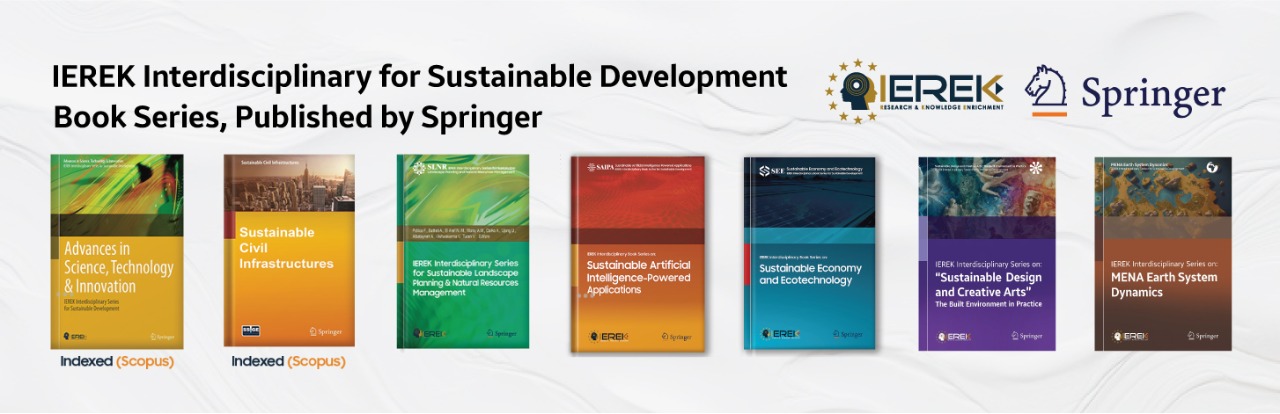
All accepted submissions to the conference, after a rigorous double-blinded peer-review process by the respective Editorial Board, will be published in one of the following:
Advances in Science, Technology and Innovation (ASTI), an IEREK interdisciplinary book series published by Springer Nature. (SCOPUS indexed)
Publisher: Springer Nature (IEREK Interdisciplinary book series)
Indexing: SCOPUS indexed; some titles in Web of Science (ISI)
Focus: Emerging research in science, technology, and innovation for sustainable development, addressing UN SDGs.
Publisher: Springer (Peer-reviewed book series)
Indexing: EI Compendex, SCImago, SCOPUS, zbMATH
Focus: Sustainable engineering materials and designs for civil infrastructures, addressing impacts of weather extremes and improving well-being.
Focus: Environmental and developmental challenges in the MENA region.
Key Areas: Earth Systems Science, Geotechnics, and Geoinformatics specific to MENA.
Goal: Publish scientific breakthroughs and innovative solutions for a sustainable MENA Future.
Publisher: Springer (Peer-reviewed book series)
Focus: Advancing research and practical solutions at the intersection of economy, technology, and environmental sustainability.
Key Areas: Sustainable economy, ecotechnology, circular economy, sustainable business, green finance, environmental preservation, sustainable mobility, sustainable marketing, urban sustainability, ecological management, and socio-economic development.
**This publication option is offered exclusively to all participants in Special Session 1: Sustainable Economy and Eco-Technology.
Publisher: Springer (Peer-reviewed book series)
Focus: Advancing interdisciplinary research and applications of artificial intelligence to support sustainability and the achievement of global development goals.
Key Areas: Artificial intelligence; sustainable development; machine learning; smart cities; renewable energy; precision agriculture; environmental monitoring; climate modeling; Internet of Things (IoT).
**This publication option is offered exclusively to all participants in Special Session 2: Sustainable AI-Powered Applications.
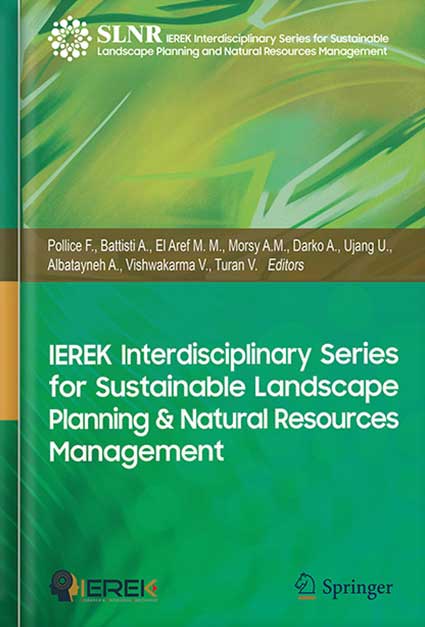
Publisher: Springer (Peer-reviewed book series)
Focus: Groundbreaking research at the intersection of sustainable landscape planning and natural resources management.
Key Areas: Landscape ecology, green urbanism, urban regeneration, land restoration, energy management, nature conservation, geosciences, civil engineering, and water management.

Journal: Social Indicators Research: An International and Interdisciplinary Journal for Quality-of-Life Measurement
Special Issue: "Promoting Sustainable Development to Improve the Quality of Life in the Mediterranean Region: Innovative Methods and Applications" (Q1 Scopus Indexed, JCR)
Publisher: Springer Nature
Focus: Advancing sustainable development through innovative approaches that address the region’s complex environmental, social, and economic challenges.
Guest Editors:

Journal: International Journal of Environmental Studies
Special Issue: Selected best papers will be published in a special issue of the International Journal of Environmental Studies (Q2 Scopus Indexed).
Publisher: Taylor & Francis
Focus: To advance critical and innovative research on environmental science, policy, education, planning, and cultural studies.
Internationally peer-reviewed, open access journals published by IEREK Press. Covering a wide range of disciplines including sustainability, architecture, engineering, and environmental sciences.
Journal on:
The registration fee does not cover accommodation or travel expenses. A list of accommodation options can be suggested by our team if available. Please contact [email protected] for inquiries.
We recommend that all authors take advantage of the benefits that IEREK offers, including various attendance types, publishing opportunities, and opportunities for discounts and waivers.
We are pleased to inform all applicants that they can use their previous publications to register for an IEREK membership, which offers a special discount.
IEREK offers a special discount to applicants from collaborative universities that have signed an MoU with IEREK to host or co-host one of its conferences.
IEREK also provides special discounts to authors from low and medium-income countries.
The disclosed fees are for the conference participation (Publication is free of charge, but only the conference participants can be considered for publishing in the conference proceedings).
Some of the disclosed conference fees may vary depending on the book series and/or journal(s) presented as a publication outlet, as we encourage submission to newly founded book series and/or journal(s) by presenting a discounted rate for conferences’ fees
IEREK offers many alternative venues for publication. All accepted submissions to the conference, after a rigorous double-blinded peer-review process by the respective and highly-distinguished Editorial Board, will be published through one of the following venues:
Selected papers (according to the preference of the author) will be published in one of the Scopus-indexed or Web of Science-indexed book series or through related journal special issues. See the publishing opportunities section.
Accepted papers (according to the preference of the author) will be published through the Springer book series or through a special issue in one of the IEREK press open-access Journals.
IEREK offers many types of registrations that are diverse in registration fees; applicants can choose the type they are familiar with as follows:
Participants who are PhD holders, post-doctoral researchers, and universities’ affiliated professors and experts in the field.
Must provide proof of enrollment in a university by providing an enrollment certificate and/or a valid university ID (with issue/expiry date) etc.
Participants who are not affiliated with universities such as practitioners, policymakers, entrepreneurs, etc.
Have access to the event to enjoy the discussions, coffee breaks, and lunch as a co-author or audience.
An author may need to attend the conference for presentation only to present a research idea without publication or full paper submission; the fee in this case will be decreased.
| Type of Registration | Early Payment Deadline 10 July 2025 |
Regular Payment Deadline 20 Sep 2025 |
Late Payment Deadline 30 Oct 2025 |
|---|---|---|---|
| Scopus indexed-ASTI Book or SUCI Book by Springer | |||
| Student | 350 € | 400 € | 450 € |
| Academic | 400 € | 450 € | 500 € |
| Professional | 450 € | 500 € | 550 € |
| Co-author/ Audience | 200 € | 250 € | 300 € |
| SLNR Book by Springer or SAIPA Book by Springer or SEE Book by Springer | |||
| Student | 300 € | 350 € | 400 € |
| Academic | |||
| Professional | |||
| Co-author/ Audience | 200 € | 250 € | 300 € |
| Open Access IEREK Press Journals | |||
| Student | 250 € | 300 € | 350 € |
| Academic | 300 € | 350 € | 400 € |
| Professional | 350 € | 400 € | 450 € |
| Co-author/ Audience | 200 € | 250 € | 300 € |
IEREK offers various types of participation. Applicants can apply for in-person attendance to benefit fully from conference discussions and knowledge exchange.
IEREK also offers virtual attendance for authors to present their research papers online; however, we strongly encourage all applicants to attend the conference in person.
Type 1:
Through IEREK – Springer Nature Interdisciplinary book series “Advances in Science, Technology, and Innovation” (ASTI). See previous publication here.
Type 2:
Through IEREK – Springer Nature Interdisciplinary book series “Sustainable Landscape Planning, and Natural Resources Management” (SLNR). See previous publication here.
The physical fee covers:
* Each research paper should have one main author who should pay the full fee (Author fees) regardless of attendance. Co-authors, each, have their fees to pay to attend the event. This applies to online attendance as well as physical attendance.
* A research paper fee allows only one author, whether main or co-author, to attend the conference and receive only one conference kit. Extras can be requested for an additional fee.
| Type of Registration | Early Payment Deadline 10 July 2025 |
Regular Payment Deadline 20 Sep 2025 |
Late Payment Deadline 30 Oct 2025 |
|---|---|---|---|
| Scopus indexed-ASTI Book or SUCI Book by Springer | |||
| Student | 300 € | 350 € | 400 € |
| Academic | 350 € | 400 € | 450 € |
| Professional | 400 € | 450 € | 500 € |
| Co-author/ Audience | 100 € | 150 € | 200 € |
| SLNR Book by Springer or SAIPA Book by Springer or SEE Book by Springer | |||
| Student | 250 € | 300 € | 350 € |
| Academic | |||
| Professional | |||
| Co-author/ Audience | 100 € | 150 € | 200 € |
| Open Access IEREK Press Journals | |||
| Student | 200 € | 250 € | 300 € |
| Academic | 250 € | 300 € | 350 € |
| Professional | 300 € | 350 € | 400 € |
| Co-author/ Audience | 100 € | 150 € | 200 € |
IEREK offers virtual attendance, providing authors with a unique link to join the conference sessions and present their papers as per the announced program.
IEREK is dedicated to optimizing the benefits for each delegate so, similar to physical attendance, when it comes to virtual attendance IEREK also provides two venues for publication, which are:
Type 3:
Online attendance + Publication through Scopus and Web of Science indexation Through IEREK – Springer Nature Interdisciplinary book series “Advances in Science, Technology, and Innovation” ASTI, see previous publications here! here.
Online attendance + Publication through Scopus, Web of Science (SCImago), EI Compendex, zbMATH indexation Through Springer Nature Interdisciplinary book series, “Sustainable Civil Infrastructure” see previous publication here! here.
Type 4:
Online attendance + Publication through Springer Nature's new book series (to be indexed in Scopus soon). Through IEREK – Springer Nature Interdisciplinary book series” Sustainable Landscape Planning, and Natural Resources Management” SLNR.
Online attendance + Publication through Open-access IEREK press Journals, (to be indexed soon in Web of Science and afterward in Scopus).
The online fee covers:
* Each research paper should have one main author who should pay the full fee (Author fees) regardless of attendance.
* Co-authors, each, have their fees to pay to attend the event. This applies to online attendance as well as physical attendance.
* Participants can use only one type of discount opportunity, which meets their preferences.
* Authors should contact the conference manager through this email [email protected] to consider the discount and waiving for all the above cases so that the conference manager can provide an exclusive invoice for each case.
| Afghanistan, Algeria, Angola, Bangladesh, Benin, Bhutan, Bolivia, Burkina Faso, Burundi, Cabo Verde, Cambodia, Cameroon, Central African Republic, Chad, Comoros, Congo, Congo Dem. Rep., Côte d'Ivoire, Djibouti, Egypt, Eritrea, Eswatini, Ethiopia, Gambia, Ghana, Guinea, Guinea-Bissau, Haiti, Honduras, India, Iran, Jordan, Kenya, Kiribati, Kyrgyz Republic, Lao PDR, Lebanon, Lesotho, Liberia, Madagascar, Malawi, Mali, Mauritania, Micronesia, Mongolia, Morocco, Mozambique, Myanmar, Nepal, Nicaragua, Niger, Nigeria, Pakistan, Papua New Guinea, Philippines, Rwanda, Samoa, São Tomé and Principe, Senegal, Sierra Leone, Solomon Islands, Somalia, South Sudan, Sri Lanka, Sudan, Syria, Tajikistan, Tanzania, Timor-Leste, Togo, Tunisia, Uganda, Ukraine, Uzbekistan, Vanuatu, Vietnam, Yemen, Zambia, Zimbabwe |
iDirect is a new and efficient platform that allows direct submissions of research papers across various fields of science. iDirect accepts and covers all fields of science, not only those related to a particular conference. Individual authors are encouraged to submit their research discussing new ideas and presenting solutions to everyday problems that fall under numerous scientific themes. The iDirect platform is integrated into the peer review system for online conferences. You can publish your work through iDirect without the need to attend the conference or adhere to any submission deadlines. iDirect accepts a wide range of disciplines, eliminating the need to align with the conference's specific theme or scope. Based on the scope of your research, we will identify the most relevant proceedings for publication. The editor will schedule a discussion with you to review your presentation before proceeding to the peer-review process. Learn more here!
IEREK puts a lot of effort into expediting the peer review process to publish articles as quickly as possible. This requires prompt responses from all authors to the editors' comments, if any. Your swift response is highly appreciated to advance the production process and get your articles online. We prioritize the first author to respond as per our formula. The conference proceedings will be divided into multiple books, with the first one scheduled for publication within 6 months after the conference date. We encourage all authors to aim for publication in the first release.
For participants who need Entry Visas to the country where the conference will be held, IEREK will issue the corresponding invitation letter for accepted applicants to facilitate visa issuance. Please notice that we will attempt to assist you in obtaining a visa but the responsibility is yours and the decision rests solely with the appropriate Embassy. For the requirements of issuing a visa letter please read more here!
Eco-economics, sustainable growth, and environmental health are three pillars of a thriving future. Eco-economics explores how our economic activities impact the environment and emphasizes the importance of creating systems that support both. Eco-economics encourages practices that protect our planet.
This relationship's heart is environmental health—an essential foundation for human well-being and economic success. When ecological systems experience detrimental impacts from pollution, climate change, or a decline in biodiversity, the resultant economic repercussions can be significant, culminating in heightened healthcare expenditures and a reduction in overall productivity By emphasizing the implementation of eco-economic strategies, we not only protect our ecological systems but also establish a foundation for sustainable development. Collectively, these principles formulate a robust framework that guarantees the simultaneous flourishing of our economic and ecological systems, ultimately culminating in a resilient and prosperous future for all stakeholders involved.
This special session is purposed to the investigation of eco-economics and sustainable innovations. it has become increasingly imperative to identify a harmonious equilibrium that facilitates economic advancement while simultaneously prioritizing the stewardship of our environment. In an age characterized by the critical interplay between economic expansion and ecological integrity, this session seeks to investigate the intricate associations that shape our methodologies toward sustainability.
Join us on this collaborative journey toward a sustainable future, where economic growth and ecological health work hand in hand. Your insights and contributions are crucial as we strive to build a world that balances prosperity with sustainability.
Scope
The session " Exploring Eco-Economics: Strategies for Sustainable Growth and Environmental Health" brings together scholars, researchers, and professionals from multiple fields to explore and discuss the different eco-economics strategies and practices to protect our planet. By investigating how economic practices impact the environment and, conversely, how a healthy environment contributes to economic success, the session seeks to promote the adoption of eco-economic strategies that prioritize sustainability while facilitating growth. The objective is to confront critical issues including environmental degradation, anthropogenic climate modification, and the decline of biodiversity, underscoring the imperative for a holistic strategy toward sustainability.
Statement of Purpose
The session aims to bring stakeholders, researchers, policymakers, and practitioners to collaborate, share insights, and discuss best practices in achieving sustainable economic development. Participants will be motivated to contribute to actionable solutions that harmonize economic prosperity with ecological health, inspiring a collaborative journey toward a resilient future for all. Ultimately, the session aims to cultivate an in-depth comprehension of the methodologies for constructing systems that facilitate both economic advancement and ecological preservation, thereby establishing the foundation for a thriving and sustainable future.
Topics:
Publication:
All accepted submissions to the conference from this special session, after a rigorous double-blinded peer-review process by the respective and a highly-extinguished Editorial Board, will be published in one of the following:
 Sustainable Economy and Ecotechnology (SEE), an IEREK Interdisciplinary book series published by Springer Nature.
 In a world confronting uncommon natural difficulties, the combination of artificial intelligence with renewable energy and resource management is truly revolutionary. Tackling the force of AI can empower imaginative arrangements that further develop sustainability and safeguard the planet for people in the future.
Artificial intelligence (AI) is revolutionizing our approach to urgent global challenges by its incorporation with renewable energy, sustainable resource management, and environmental conservation. AI further develops environmentally friendly power frameworks by developing energy creation estimates through AI calculations that dissect climate information, prompting further developed lattice the board and expanded energy productivity.
Additionally, AI supports the transition to a circular economy by streamlining recycling processes and identifying materials to reuse. In environmental protection, AI tools such as satellite imagery and drones enable critical monitoring of ecosystems and biodiversity, providing valuable insights for effective strategies.
Welcome to this special session, where we meet at the exciting crossroads of artificial intelligence, sustainability, environmental science, and engineering. The session aims to facilitate collaborative efforts and enhance the exchange of knowledge among specialists and scholars engaged in addressing some of the most urgent global issues.
In this session, we will investigate the potential of artificial intelligence to augment efficiency and sustainability across various sectors. Our discussions will include innovative applications in renewable energy, sustainable resource management, and environmental protection such as ecosystem monitoring and biodiversity tracking.
Join us in the endeavor to cultivate a future characterized by enhanced resilience and sustainability through the strategic application of artificial intelligence to facilitate significant transformations.
Scope
The session "Integrating AI and Sustainability: Pioneering Innovations for a Greener Future" brings together scholars, researchers, and professionals across various fields to examine the role of artificial intelligence in addressing critical environmental challenges and enhancing sustainability. By exploring the integration of AI with renewable energy systems, sustainable resource management, and environmental protection, the session aims to promote innovative solutions that drive efficiency and foster a greener future. This examination will explore critical challenges including climate change, environmental pollution, and the degradation of biodiversity, highlighting the significance of utilizing technological advancements to establish sustainable methodologies.
Statement of Purpose
The session aims to bring stakeholders, researchers, policymakers, and practitioners together to exchange ideas and insights on the application of AI in sustainability efforts. Participants will be encouraged to contribute actionable solutions that enhance resource management, optimize renewable energy, and improve environmental monitoring, thereby driving meaningful change. Ultimately, the session aspires to foster a complete understanding of how AI can be harnessed to support sustainable development, encouraging partnerships that pave the way for a resilient and environmentally healthy future for all.
Topics:
Publication:
All accepted submissions to the conference from this special session, after a rigorous double-blinded peer-review process by the respective and a highly-extinguished Editorial Board, will be published in one of the following:
Sustainable Artificial Intelligence-Powered Applications, an IEREK Interdisciplinary book series published by Springer Nature. 
Full Professor of Economic Statistics at the Department of Economics and Statistics of the University of Siena, Italy.

Vice-Rector of Internationalization and International Relations of Mediterranea University of Reggio Calabria (Italy). Full Professor of Representation at the Department of Architecture and Design.
Research Director Université Paris Cité & CNRS (UMR 7086), ITODYS Lab

Professor in Regional Economic and Tourism Development at the Department of Economics, Aristotle University of Thessaloniki (AUTh), Greece
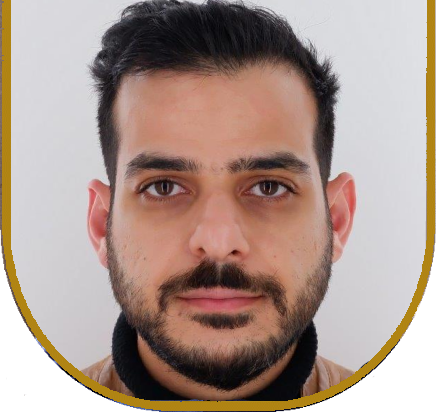
Lecturer & BAS third-year leader, School of Architecture, Interior and Landscape Architecture, Unitec Institute of Technology, Auckland, New Zealand.
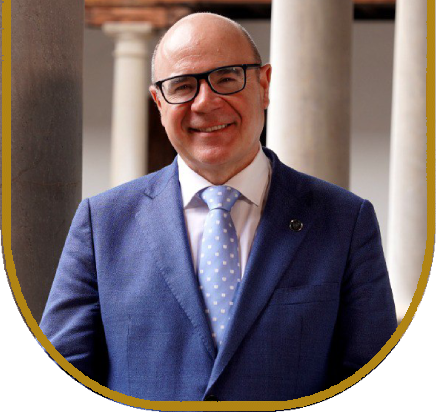
Rector of the University of Granada (Spain). Full Professor of Philosophy of Law.

Vice-Rector for Outreach, Heritage and Institutional Relations at the University of Granada (Spain). Full Professor of Prehistory.
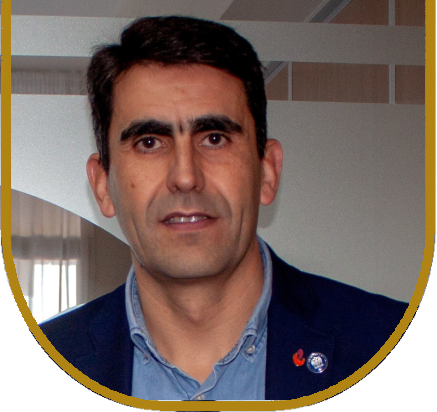
Dean of the Faculty of Economics and Business Administration at the University of Granada (Spain). Full Professor of Marketing and Market Research.
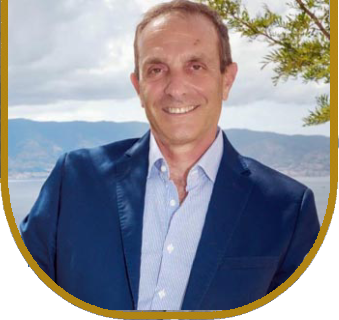
Rector of the Mediterranea University of Reggio Calabria (Italy). Full Professor of Agricultural Mechanics at the Department of Agriculture.
Vice-Rector of Internationalization and International Relations of Mediterranea University of Reggio Calabria (Italy). Full Professor of Representation at the Department of Architecture and Design.

Vice-Rector for Sustainable Campus and Living Lab of Politecnico di Torino (Italy). Full professor in Urban Planning Evaluation and Project Appraisal of Politecnico di Torino. Chair of Sustainable Development Solutions Network Italia.
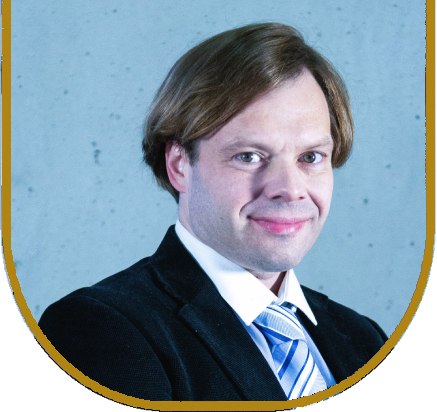
Associate Professor, Dept. of Applied Economics at the University of Granada (Spain)
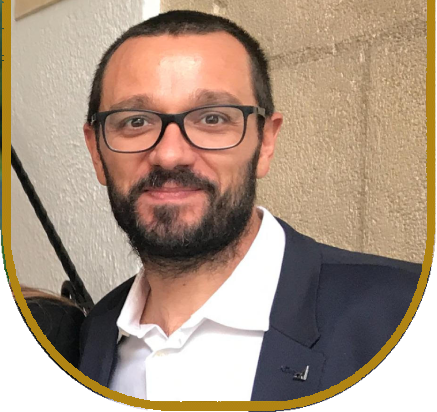
Associate Professor, Dept. of Business Management II at the University of Granada (Spain)
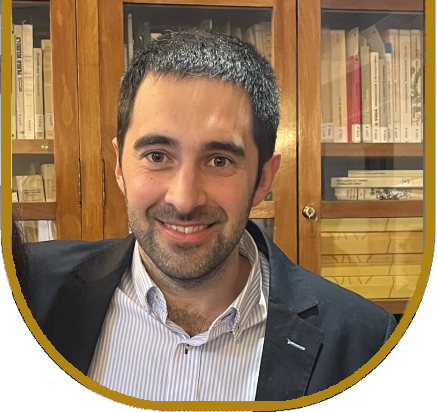
Full Professor, Dept. of Quantitative Methods in Economics and Business at the University of Granada (Spain)

Permanent Lecturer, Dept. of Human Geography at the University of Granada (Spain)

Permanent Lecturer, Dept. of Spanish and World Economics at the University of Granada (Spain)

Associate Professor, Dept. of Architectural Construction at the University of Granada (Spain)
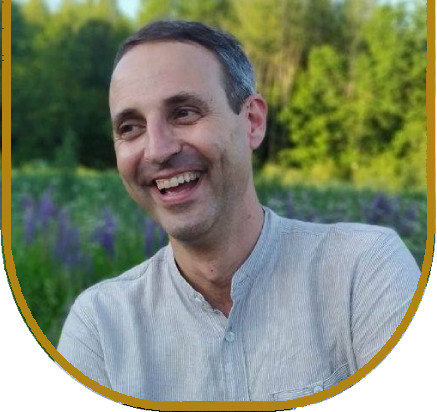
Junior Lecturer, Dept. of Computer Science and Artificial Intelligence at the University of Granada (Spain)

Full Professor at the Department of Marketing and Market Research at the University of Granada. Director of the Andalusian Institute for Research and Innovation in Tourism (IATUR).

Associate Professor, Dept. of Regional and Physical Geography at the University of Granada (Spain)

Associate Professor, Dept. of Economics Theory and History at the University of Granada (Spain)
Associate Professor, Dept. of Urban and Spatial Planning at the University of Granada (Spain)

Associate Professor, Dept. of Computer Science and Artificial Intelligence at the University of Granada (Spain)
Permanent Lecturer, Dept. of Structural Mechanics and Hydraulic Engineering, University of Granada (Spain). Associate Research Fellow of the Water Institute (IdA)

Associate Professor, Dept. of Ecology at the University of Granada (Spain). Member of the Scientific Commission of the Andalusian Inter-University Institute for Earth System Research (IISTA).
IEREK Conference will help you:
1. Open Discussions: We bring together leading academic scientists, from different universities and countries, to exchange and share their experiences and research results.
2. Internationally Accredited Certificate: The participants are granted internationally recognized certificates acknowledged by IEREK, the University, and Partnering Organizations.
3. Publication: Selected high-quality manuscripts will be published, after peer review, in the Advances in Science, Technology & Innovation (ASTI) book series by Springer or by IEREK Press Journals, both of which are indexed in world-renowned databases.
4. Research Technologies: Conferences can expand your resources by providing a great opportunity to promote gathered information on new technologies related to your research.
5. Networking: You can engage with industry experts to discuss with them the very latest research projects they could be working on and increase your chances of collaboration in future projects.
6. Academic Reputation: Attending many conferences will make you a known figure in academic circles and an active member of the academic community.
7. Conference Abstracts Material: Delegates will receive the conference Abstracts book in a digital format.
**CrossMED participants will enjoy a 10% discount off the best available rate at the time of booking at the following hotels (you will receive further details in your acceptance letter). In any case, room availability is subject to hotel availability.**
Website Link: Barceló Carmen Granada
Website Link: Barceló Granada Congress
Website Link: Occidental Granada
Cultural Visit 1 – 9 December 2025
Meeting Point: La Madraza, C/ Oficios 14, 18001 Granada
(Located in the city centre, near the Cathedral)
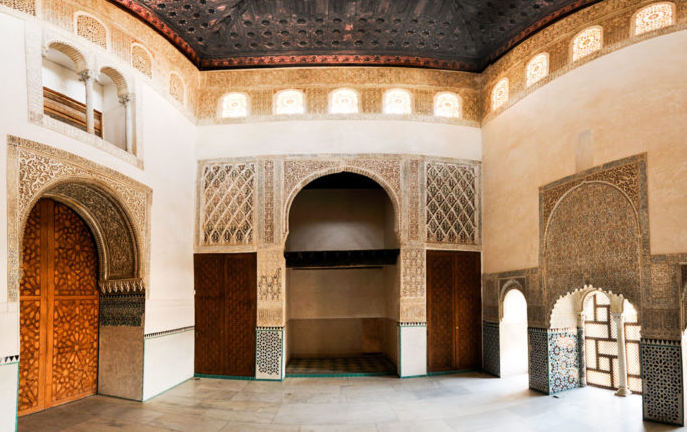
The cultural visit titled “Emblematic Buildings of Nasrid and Renaissance Architecture in Granada: History, Symbolism, and Geometric Meaning” will include guided access to three historically significant sites, following the schedule below.
17:00-17:45 | The Madrasa (https://lamadraza.ugr.es/360/)
Founded in the 14th century during the Nasrid period, the Madrasa of Granada was an Islamic educational institution dedicated to theology, law, and the sciences. Renowned for its exquisite Nasrid architecture, intricate stucco decoration, and beautifully crafted geometric and floral motifs, the Madrasa reflects the intellectual and artistic achievements of medieval Granada. Today, it stands as a symbol of the city’s rich cultural heritage and offers visitors a glimpse into the academic and architectural legacy of the Nasrid era.
For more information about the Madrasa, please refer to the video overview. https://patrimonio.ugr.es/multimedia/the-madrasa-by-elena-diez-sub-eng/
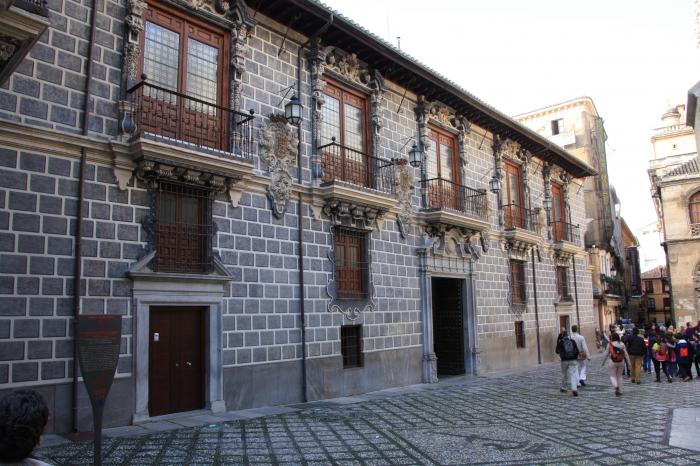
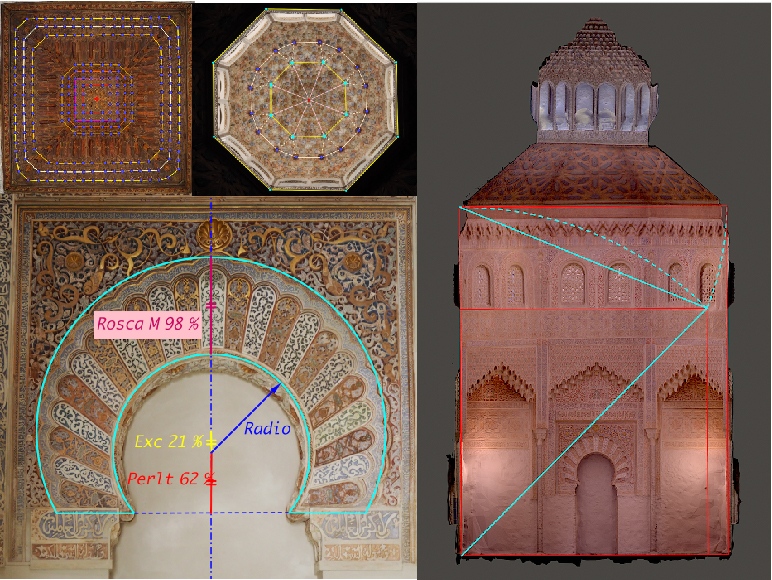
17:50-18:35 | Casa de Los Tiros
Built in the 16th century, Casa de los Tiros is a historic palace in Granada known for its distinctive architecture, blending Renaissance and Nasrid influences. Its name (“House of the Guns”) comes from the small cannons displayed on its façade. Today, the building houses a museum showcasing Granada’s history, including period art, weapons, and cultural artifacts, offering visitors a unique insight into the city’s rich heritage.
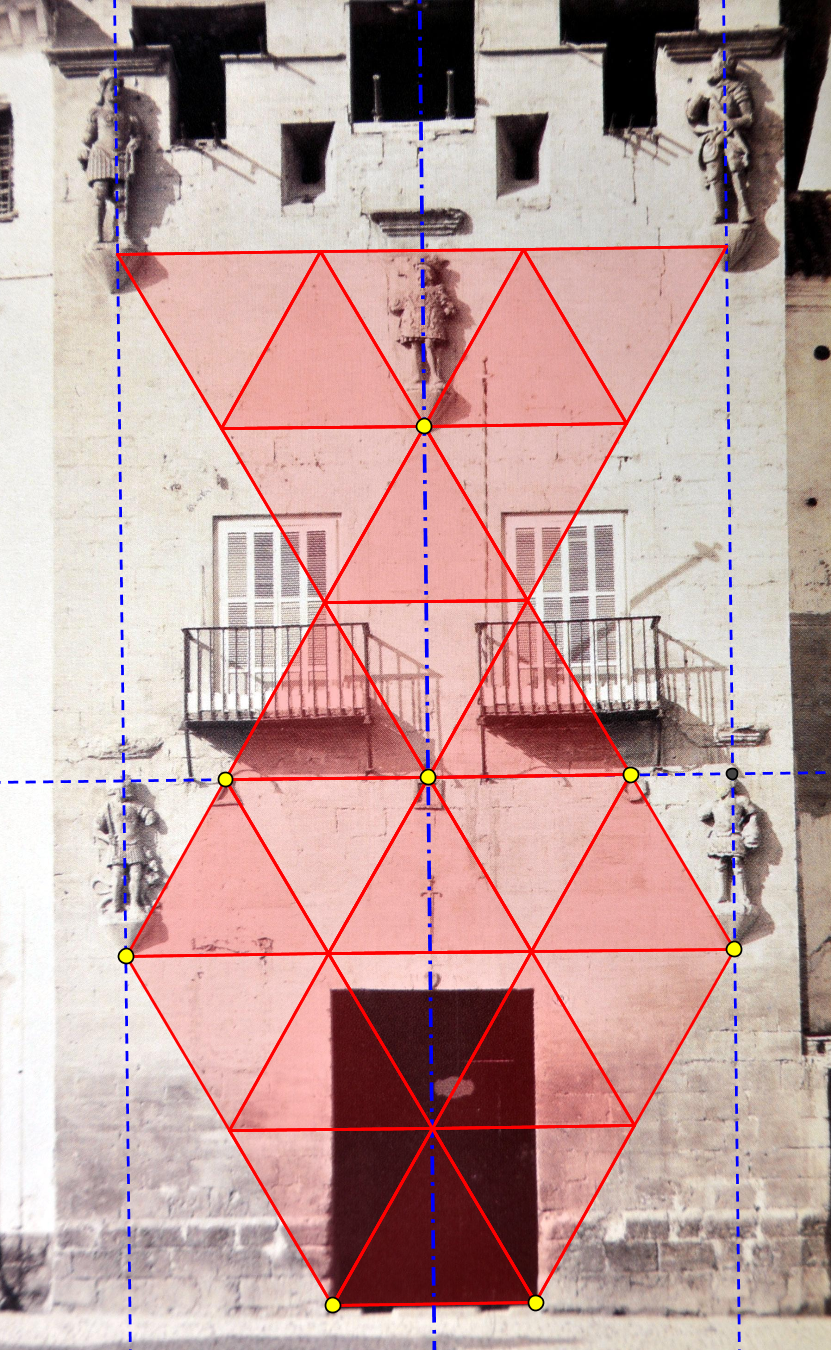
18:40-19:30 | Cuarto Real de Santo Domingo
The Cuarto Real de Santo Domingo is a historic Nasrid-era palace in Granada, originally built as a summer residence for the Nasrid royalty. Renowned for its elegant Islamic architecture, ornate stucco decorations, and beautifully landscaped gardens, the palace exemplifies the refinement of Nasrid design. Today, it offers visitors a glimpse into the leisure and aesthetic traditions of medieval Granada’s royal court.
About the Tour
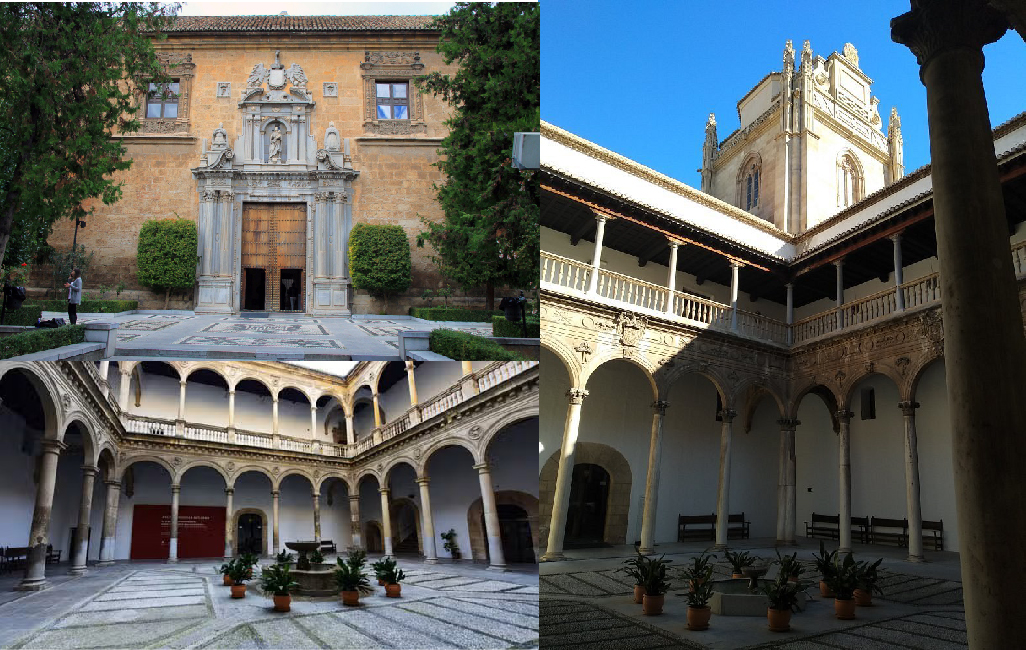
Cultural Visit 2 – 10 December 2025: The Royal Hospital
Founded in the early 16th century by the Catholic Monarchs, the Royal Hospital of Granada is one of Spain’s most important Renaissance buildings. Originally designed as a hospital and charitable institution, it showcases elegant Renaissance architecture with spacious courtyards, intricate stonework, and a harmonious layout. Today, it stands as a significant historical and cultural landmark, reflecting Granada’s social and architectural heritage.
Visit Times: Two rounds available at 18:00 and 19:30
Meeting Point: Hospital Real, Av. del Hospicio s/n, 18012 Granada
(Approximately a 10-minute walk from the Faculty of Economics and Business Studies)
The visit to the Royal Hospital (Hospital Real) will be conducted in English and guided by the cultural heritage company ARTEMISA. More information about ARTEMISA: https://artemisiagestiondepatrimonio.es/
Video Overview: https://patrimonio.ugr.es/multimedia/the-hospital-real-by-rafael-lopez-guzman-sub-eng/
**Please note that both cultural visits have limited capacity, and places will be allocated on a first-come, first-served basis according to the order of registration.**
To register, please fill in the form: https://forms.gle/FyhU4r1dkYvyjkiM8

ORCID, which stands for Open Researcher and Contributor ID, is a global, not-for-profit organization that aims to provide unique identifiers for authors, researchers, and scholars. ORCiD effectively eliminates duplication and errors regarding author names, affiliations, previous works, and all related academic data.
IEREK is a proud member of ORCiD, and we contribute directly to their initiative of clear and identifiable markers for researchers and scholars. As the first Egyptian partner to ORCiD in the organization’s history, we strongly believe that by utilizing ORCiD’s database and verification services, we become one step closer to achieving an accurate, and identifiable academic landscape.
We encourage our authors to input their ORCiD ID when registering for one of our conferences, submitting an abstract, or a full paper. By doing so, you directly link your research to your identity and affiliation and can showcase your various academic efforts all in one place. By Registering your ORCiD ID, you also increase your works’ visibility and provide easy access to your entire library of research and academic activity.
Click here to learn more about ORCiD, and here to register your ORCiD ID for free.
- For participants who need Entry Visas to the country where the conference will be held, IEREK will issue the corresponding invitation letter for accepted applicants to facilitate visa issuance.
- Please notice that we will endeavor to assist you in obtaining a visa but the responsibility is yours and the decision rests solely with the appropriate Embassy.
Invitation Letter Issuance Process
1- In case the participant is an author who has submitted a research paper to the conference, it must get accepted by the Scientific Committee
2- Required participation fees must be paid
3- The participant should send the following information to the conference's official email:
* A clear copy of the passport
* Passport number
* Full name as written in your passport.
* Date of Issuing and Expiration
* Date of Birth
* Email address of the nearest Embassy/Consulate to you
* Mobile Number including country code
4- The conference coordinator will issue the needful invitation letter and send a copy to the participant's email, in addition to another one to the corresponding email address of the embassy/consulate
5- The participant should print out the invitation letter along with all other required documents by the embassy/consulate and apply for VISA
|
Cancellation Policy |
Up to 60 days before the event |
Up to 50 days before the event |
Up to 40 days before the event |
39 days before the event |
|
Penalty |
20% |
50% |
70% |
100% |
EXCEPTION
A refund is not possible if
-An acceptance letter has been issued (Authors only)
-The proceedings of the event have been published (Authors only)
-A visa invitation letter has been issued (All participants)
Visa Rejection Cases
Reason and proof of rejection must be submitted. If the reason for rejection is due to an error on our part, the participant will be refunded their full fee with a deduction of a 20% administration fee.
Documents to be issued by IEREK to acquire a visa are as follows:
*Final Acceptance Letter (Authors only)
*Visa Invitation Letter
*Invoice/proof of payment
We encourage all authors and attendees to ensure their having acquired all documents (those applicable) mentioned.
If the reason for rejection is not related to any of the aforementioned and is an error on the participant’s part, the following will apply:
*Authors: may choose to let their co-author present his/her research on his/her behalf free of charge. If the author does not have a co-author, a member of the scientific committee shall present on the author’s behalf.
*Audience members/Registrants: will only be allowed to attend another similar event of their choosing that is organized by IEREK free of charge.
Permanent Lecturer, Dept. of Human Geography at the University of Granada (Spain)
Associate Professor, Dept. of Business Management II at the University of Granada (Spain)













Associate Professor
Department of Applied Economics at the University of Granada, Spain
Amira Nassar
Conference Coordinator
[email protected]
(+20) 3 5763827 | (+20) 3 5763828
(+20)1000028021
Subscribe to our newsletter
Join IEREK community