Emerging Concepts & Design for ...
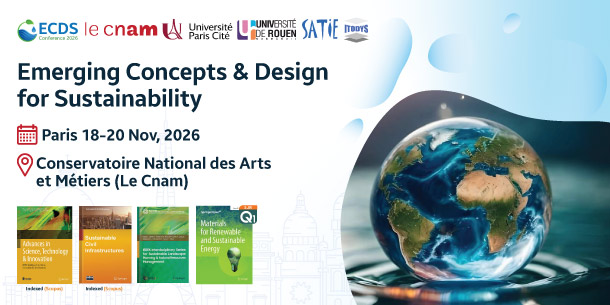
Conservatoire National des Arts et Métiers
18 Nov 2026 / 20 Nov 2026 read more
Conference Coordinator
[email protected]
(+20) 3 5763827 | (+20) 3 5763828
Whatsapp: (+20)1000028021
Subscribe to our newsletter
Artificial intelligence has become a defining force in contemporary technological development, reshaping how knowledge is generated, decisions are made, and complex challenges are addressed across different fields. Advances in machine learning, generative models, intelligent automation, and data-driven systems have expanded the capabilities of computational technologies, enabling new approaches to scientific investigation, industrial processes, environmental management, healthcare, education, and urban development. As these technologies continue to evolve, their influence is increasingly reflected in the systems and institutions that adopt them, as well as in the everyday experiences and opportunities of individuals and societies.
The growing integration of artificial intelligence into scientific and professional practice has opened new possibilities for addressing complex challenges through advanced data analysis, predictive capabilities, and interdisciplinary collaboration. However, its increasing adoption also raises important questions concerning reliability, transparency, accessibility, data privacy, algorithmic bias, cybersecurity, and accountability. Addressing these challenges requires an approach that considers not only technological performance but also the scientific, social, economic, and environmental contexts in which AI operates, ensuring that its development remains responsive to human needs.
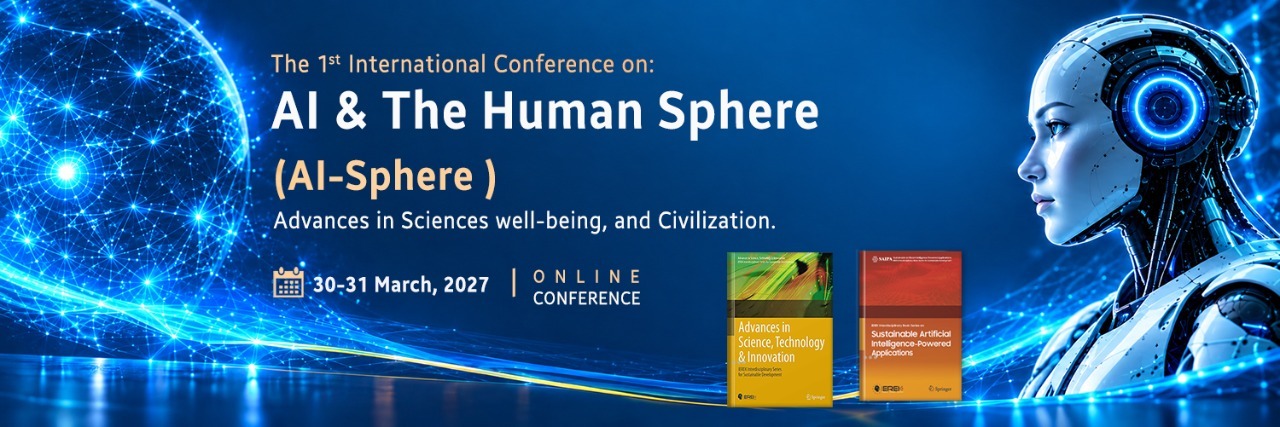
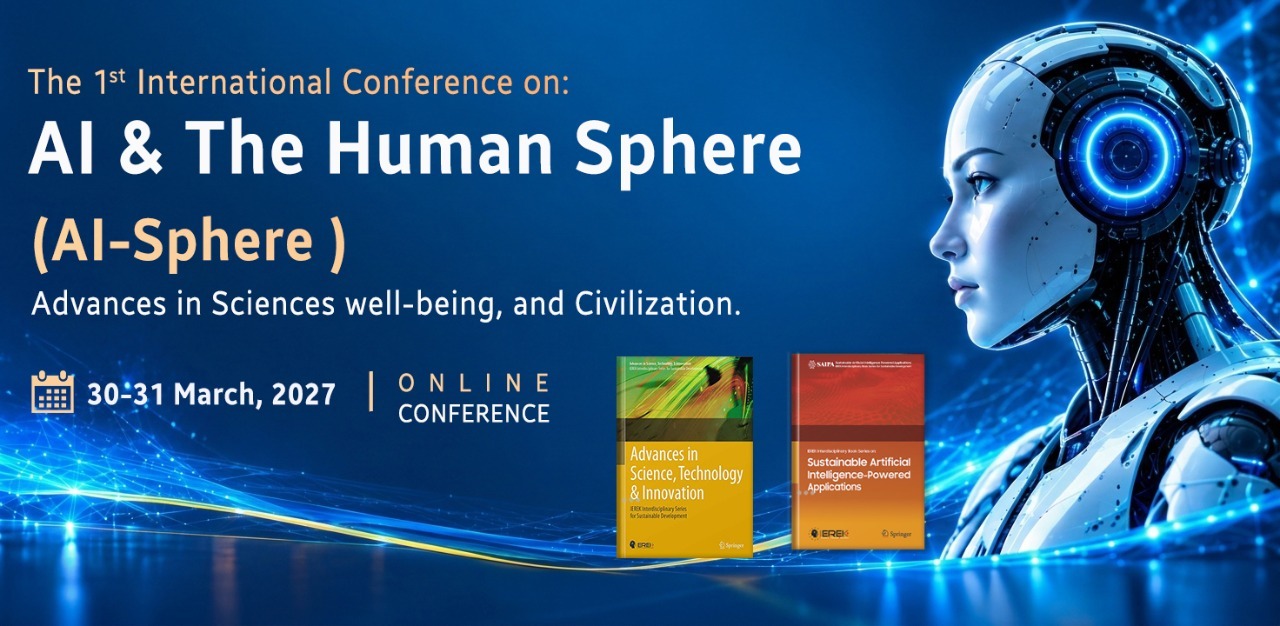
In this context, the AI & The Human Sphere (AI-Sphere) conference provides an interdisciplinary platform for examining recent developments in artificial intelligence and their implications across scientific, technological, environmental, and societal domains. Bringing together researchers, academics, and professionals, the conference aims to encourage the exchange of knowledge and perspectives on emerging AI applications, opportunities, and challenges. The conference will be held online on 30–31 March 2027, welcoming contributions that explore how artificial intelligence can support scientific advancement, responsible innovation, and a more sustainable and human-centered future.
Conference Scope
AI-Sphere explores the foundations and applications of artificial intelligence across a wide range of disciplines, including computational and physical sciences, biological research, healthcare, agriculture, environmental systems, architecture, smart cities, transportation, energy, education, and creative industries. It also addresses emerging AI methodologies, generative models, intelligent automation, robotics, and predictive analytics, alongside the ethical, social, and governance considerations associated with their implementation. Through this interdisciplinary scope, the conference encourages research examining both the capabilities of AI and its practical implications for individuals, institutions, and society.
Statement of Purpose
The purpose of AI-Sphere is to encourage interdisciplinary research and knowledge exchange on the evolving relationship between artificial intelligence and the human sphere. It aims to provide researchers, academics, professionals, and practitioners with an opportunity to present recent findings, discuss emerging challenges, and explore innovative applications that contribute to scientific advancement and societal development. By fostering collaboration across disciplines, the conference seeks to support a comprehensive understanding of AI's opportunities, limitations, and responsibilities, while promoting technological development that is reliable, inclusive, and responsive to human needs.

1.1. Generative AI and Foundation Models for Scientific Research
1.2. Agentic AI and Autonomous Research Systems
1.3. Multimodal AI and Domain-Specific Foundation Models
1.4. Automated Scientific Literature Analysis and Knowledge Synthesis
1.5. Multi-Agent Systems and Autonomous Workflows
1.6. Explainable AI, Model Reliability, and Reproducibility
1.7. Physics-Informed and Neuro-Symbolic AI Approaches
1.8. AI-Assisted Experimentation and Self-Driving Laboratories
1.9. Retrieval-Augmented Generation and Knowledge Graph Applications
1.10. Sustainable AI: Energy Efficiency and Computational Optimization
2.1. Machine Learning for Computational Chemistry and Molecular Modeling
2.2. AI Applications in High-Energy and Particle Physics
2.3. Generative AI for Materials Discovery and Engineering
2.4. Quantum Machine Learning and Hybrid Quantum-Classical Computing
2.5. Physics-Informed Neural Networks for Scientific Simulation
2.6. AI-Driven Battery, Catalyst, and Polymer Development
2.7. Neuromorphic Computing and Emerging AI Hardware
2.8. AI Applications in Astronomy and Astrophysical Data Analysis
2.9. Computational Modeling of Complex Physical Systems
3.1. Geospatial AI and Satellite-Based Environmental Monitoring
3.2. AI-Driven Weather Forecasting and Climate Modeling
3.3. Predictive Modeling of Extreme Weather and Natural Hazards
3.4. AI Applications in Seismic Risk Assessment and Geological Modeling
3.5. Remote Sensing for Land Cover Change and Desertification Monitoring
3.6. AI-Based Ocean, Marine, and Polar Environment Monitoring
3.7. Biodiversity Monitoring through Environmental DNA and Bioacoustics
3.8. AI for Carbon Accounting and Ecosystem Assessment
3.9. Environmental Digital Twins and Predictive Sustainability Modeling
4.1. Protein Structure Prediction and Generative Protein Design
4.2. Genomic Language Models and AI-Assisted Genetic Analysis
4.3. AI Applications in CRISPR and Gene Editing
4.4. Virtual Cell Models and Single-Cell Data Analysis
4.5. AI-Driven Drug Discovery and Molecular Engineering
4.6. Computational Biology and Metabolic Pathway Modeling
4.7. AI Applications in Metagenomics and Microbiome Research
4.8. AI-Based Disease Surveillance and Genomic Epidemiology
5.1. AI-Powered Medical Imaging and Intelligent Diagnostics
5.2. Clinical Foundation Models and AI-Assisted Decision Support
5.3. Predictive Analytics for Patient Monitoring and Critical Care
5.4. AI Applications in Personalized Medicine and Clinical Genomics
5.5. Robotic Surgery and Intelligent Medical Systems
5.6. AI-Driven Digital Therapeutics and Mental Health Support
5.7. Brain-Computer Interfaces and Neurotechnology
5.8. Wearable Technologies and Digital Health Monitoring
5.9. AI Applications in Elderly Care and Assistive Technologies
5.10. Clinical AI Safety, Human Oversight, and Ethical Healthcare Practices
6.1. AI-Powered Precision Agriculture and Crop Monitoring
6.2. Autonomous Agricultural Robotics and Intelligent Harvesting
6.3. Machine Learning for Crop Disease Detection and Yield Prediction
6.4. Smart Irrigation and AI-Based Water Resource Management
6.5. AI Applications in Desalination and Wastewater Treatment
6.6. Controlled-Environment Agriculture and Vertical Farming Technologies
6.7. AI-Driven Alternative Protein Development and Precision Fermentation
6.8. Food Supply Chain Optimization and Waste Reduction
6.9. Climate-Resilient Agriculture and Sustainable Food Production
7.1. Generative and Parametric Design in Architecture
7.2. AI Applications in Structural Engineering and Optimization
7.3. Building Information Modeling and Intelligent Construction
7.4. AI-Driven Building Energy Performance and Environmental Simulation
7.5. Urban Digital Twins and Intelligent City Management
7.6. AI-Based Urban Planning and Climate-Resilient Infrastructure
7.7. Predictive Structural Health Monitoring and Infrastructure Maintenance
7.8. Nature-Based Solutions and AI-Assisted Urban Ecological Planning
7.9. Robotic Construction and Automated Building Technologies
8.1. Autonomous Vehicles and Intelligent Transportation Systems
8.2. AI Applications in Traffic Management and Urban Mobility
8.3. Autonomous Aerial Systems and Drone-Based Applications
8.4. Embodied AI and Intelligent Robotic Systems
8.5. Human-Robot Collaboration in Industrial and Service Environments
8.6. AI-Driven Smart Grids and Decentralized Energy Systems
8.7. Intelligent Energy Storage and Battery Management
8.8. Renewable Energy Forecasting and Optimization
8.9. Vehicle-to-Grid Technologies and Intelligent Energy Integration
9.1. AI-Powered Personalized Learning and Intelligent Tutoring Systems
9.2. Learning Analytics and Adaptive Educational Technologies
9.3. Generative AI and Extended Reality in Education and Training
9.4. AI Applications in Cultural Heritage Documentation and Digital Reconstruction
9.5. Natural Language Processing for Endangered Languages and Historical Texts
9.6. AI-Driven Creative Arts and Generative Media
9.7. Human-AI Collaboration in Creative Industries and Digital Content Production
9.8. AI, Research Integrity, and the Future of Scholarly Publishing
9.9. Digital Preservation and AI-Assisted Cultural Heritage Interpretation
10.1. AI Regulation, Legal Frameworks, and International Governance
10.2. Algorithmic Bias, Fairness, and Explainable Decision-Making
10.3. Responsible AI Development and Human Oversight
10.4. AI Safety, Alignment, and Autonomous System Accountability
10.5. AI-Driven Cybersecurity and Threat Detection
10.6. Adversarial Attacks, Prompt Injection, and AI System Security
10.7. Data Privacy, Digital Sovereignty, and Information Governance
10.8. AI and the Future of Work: Labor Markets and Workforce Transformation
10.9. AI-Driven Economic Development, Productivity, and Green Finance
10.10. Digital Trust, Synthetic Media, and Deepfake Detection
| Title | Date |
|---|---|
| Abstract Submission Deadline (1st round) | 15 Nov 2026 |
| Last Notification for Abstract Acceptance & Approval to present | 25 Nov 2026 |
| Early Payment Deadline | 15 Dec 2026 |
| Regular Payment Deadline | 15 Jan 2027 |
| Late Payment Deadline | 15 Feb 2027 |
| Full Paper Submission Deadline | 20 Feb 2027 |
| Notification of preliminary acceptance/ rejection of submitted paper | 10 Mar 2027 |
| Conference Program | 20 Mar 2027 |
| Conference Launch | 30 Mar 2027 |
IEREK has an unyielding policy regarding plagiarism. We believe that copying/taking the ideas and work of other Authors without permission and credit is fraudulent. The Reviewing committee and IEREK employees have the authority to reject a paper during its reviewing process, based on the paper being subjected to either minor or major plagiarism.
Authors must refer to, and abide by, the following instructions in submitting their abstracts/ papers:
After abstract acceptance, you may be given the option to extend the abstract to publish your work in the conference proceedings in ASTI published by Springer Nature (indexed in Scopus/SCImago) (optional not obligatory).
This is not a prerequisite for presenting your work at the conference. Meaning, you can present your submitted abstract without intending to publish your work.
This process can only be initiated after payment completion and confirmation:
Registration
To help the organizers plan for inter-disciplinary dialogue, participants are requested to choose from the conference themes/ Topics upon registration.
They must also refer to, and abide by, the following instructions in registering and submitting their abstracts/ papers:
Types of Participation
1. Attend/ Present Virtually and Publish in Conference proceedings
Organized from the comfort of your own home, the conference offers a virtual attendance option for your convenience. That said, participants will have a chance to present their abstract/research, online, and have their work considered for publication in the proceedings.
Virtual presenters are required to submit an abstract and extend this abstract following the “author instructions” below and before the deadline (see Important Dates). At least one author must pay the registration fee (see Registration & Fees).
For any reason, authors may wish to submit pre-recorded video presentations no later than 15 days prior to the conference. Alternatively, they may wish to record a voice-over PowerPoint presentation for submission to the conference organizers.
See Author Instructions and Registration & Fees for more information.
2. Registration to publish in the proceedings without presenting/ attending
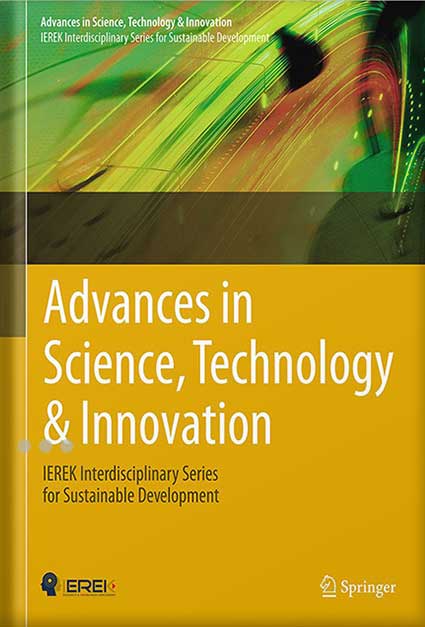
If your extended abstract (short paper) is accepted, it may be published in the conference proceedings book in the Advances in Science, Technology & Innovation Book Series by Springer (indexed in Scopus) even if you are not attending the conference. In this case, the accepted work will not be included in the final conference program and the fee will cover the cost of editorial handling and peer-review evaluation of your paper (See Author Instructions and Publishing Opportunities)
3. Non-presenting participant
Non-presenting participants may also wish to attend the conference as Audience Members or Co-authors contributing to an already submitted abstract/ paper.

All accepted submissions to the conference, after a rigorous double-blinded peer-review process by the respective Editorial Board, will be published in one of the following:
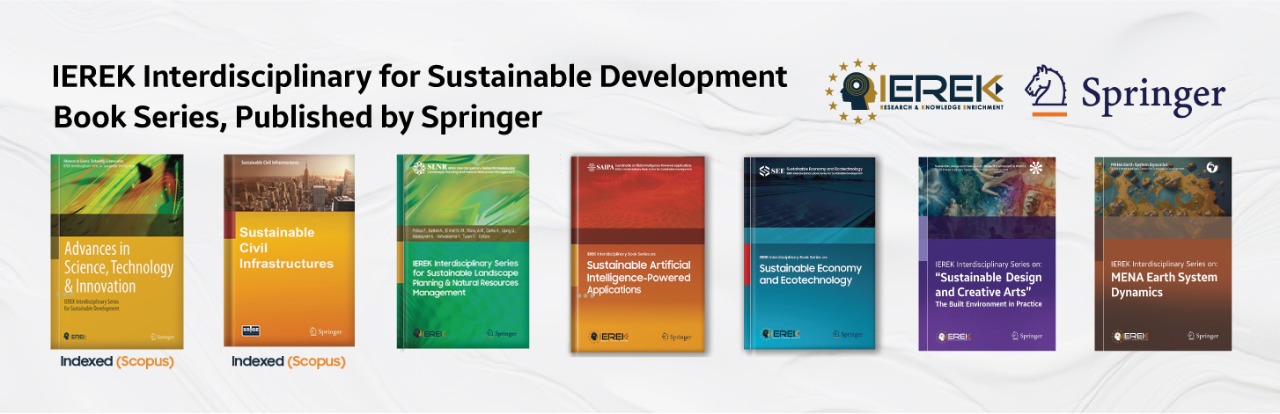
Advances in Science, Technology and Innovation (ASTI), an IEREK interdisciplinary book series published by Springer Nature. (SCOPUS indexed)
Publisher: Springer Nature (IEREK Interdisciplinary book series)
Indexing: SCOPUS indexed; some titles in Web of Science (ISI)
Focus: Emerging research in science, technology, and innovation for sustainable development, addressing UN SDGs.

Publisher: Springer (Peer-reviewed book series)
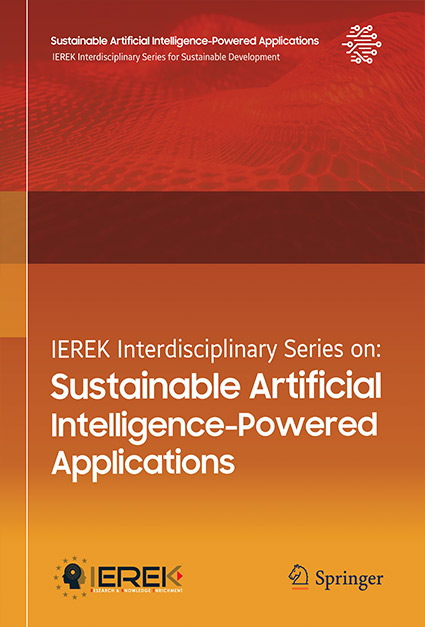
Focus: Advancing interdisciplinary research and applications of artificial intelligence to support sustainability and the achievement of global development goals.
Key Areas: Artificial intelligence; sustainable development; machine learning; smart cities; renewable energy; precision agriculture; environmental monitoring; climate modeling; Internet of Things (IoT).
Internationally peer-reviewed, open access journals published by IEREK Press. Covering a wide range of disciplines including sustainability, architecture, engineering, and environmental sciences.
Journal on:
Attending conferences is very beneficial, especially, on the professional level; conferences are full of people promoting new ideas which will expand your knowledge and undoubtedly help your career.
Moreover, all conference papers are archived online in the E-Library of IEREK‘s website where they are immediately and permanently available to the international scientific community.
The registration fee does not cover accommodation or travel expenses. A list of accommodation options can be suggested by our team if available. Please contact [email protected] for inquiries.
We recommend that all authors take advantage of the benefits that IEREK offers, including various attendance types, publishing opportunities, and opportunities for discounts and waivers.
We are pleased to inform all applicants that they can use their previous publications to register for an IEREK membership, which offers a special discount.
IEREK offers a special discount to applicants from collaborative universities that have signed an MoU with IEREK to host or co-host one of its conferences.
IEREK also provides special discounts to authors from low and medium-income countries.
The disclosed fees are for the conference participation (Publication is not included as it is free of charge, but only the conference participants can be considered in the conference proceedings).
Some of the disclosed conference fees may vary depending on the book series and/or journal(s) presented as a publication outlet, as we encourage submission to newly founded book series and/or journal(s) by presenting a discounted rate for the conference's fees.
IEREK offers many types of registrations that are diverse in registration fees; applicants can choose the type they are familiar with as follows:
Participants who are PhD holders, post-doctoral researchers, and universities’ affiliated professors and experts in the field.
Must provide proof of enrollment in a university by providing an enrollment certificate and/or a valid university ID (with issue/expiry date) etc.
Participants who are not affiliated with universities such as practitioners, policymakers, entrepreneurs, etc.
Have access to the event to enjoy the discussions, coffee breaks, and lunch as a co-author or audience.
| Type of Registration | Early Payment Deadline 15 Dec 2026 |
Regular Payment Deadline 15 Jan 2027 |
Late Payment Deadline 15 Feb 2027 |
|---|---|---|---|
| Scopus indexed-ASTI Book By Springer | |||
| Student | 250 € | 300 € | 350 € |
| Academic | 300 € | 350 € | 400 € |
| Professional | 350 € | 400 € | 450 € |
| Co-author/ Audience | 100 € | 150 € | 200 € |
| SAIPA Book by Springer | |||
| Student | 200 € | 250 € | 300 € |
| Academic | |||
| Professional | |||
| Co-author/ Audience | 100 € | 150 € | 200 € |
| Open Access IEREK Press Journals | |||
| Student | 150 € | 200 € | 250 € |
| Academic | 200 € | 250 € | 300 € |
| Professional | 250 € | 300 € | 350 € |
| Co-author/ Audience | 100 € | 150 € | 200 € |
IEREK offers virtual attendance, providing authors with a unique link to join the conference sessions and present their papers as per the announced program.
IEREK is dedicated to optimizing the benefits for each delegate so, similar to physical attendance, when it comes to virtual attendance IEREK also provides two venues for publication, which are:
The online fee covers:
* Each research paper should have one main author who should pay the full fee (Author fees) regardless of attendance.
* Co-authors, each, have their fees to pay to attend the event. This applies to online attendance as well as physical attendance.
* Participants can use only one type of discount opportunity, which meets their preferences.
* Authors should contact the conference manager through this email [email protected] to consider the discount and waiving for all the above cases so that the conference manager can provide an exclusive invoice for each case.
| Afghanistan, Algeria, Angola, Bangladesh, Benin, Bhutan, Bolivia, Burkina Faso, Burundi, Cabo Verde, Cambodia, Cameroon, Central African Republic, Chad, Comoros, Congo, Congo Dem. Rep., Côte d'Ivoire, Djibouti, Egypt, Eritrea, Eswatini, Ethiopia, Gambia, Ghana, Guinea, Guinea-Bissau, Haiti, Honduras, India, Iran, Jordan, Kenya, Kiribati, Kyrgyz Republic, Lao PDR, Lebanon, Lesotho, Liberia, Madagascar, Malawi, Mali, Mauritania, Micronesia, Mongolia, Morocco, Mozambique, Myanmar, Nepal, Nicaragua, Niger, Nigeria, Pakistan, Papua New Guinea, Philippines, Rwanda, Samoa, São Tomé and Principe, Senegal, Sierra Leone, Solomon Islands, Somalia, South Sudan, Sri Lanka, Sudan, Syria, Tajikistan, Tanzania, Timor-Leste, Togo, Tunisia, Uganda, Ukraine, Uzbekistan, Vanuatu, Vietnam, Yemen, Zambia, Zimbabwe |
Conservatoire National des Arts et Métiers
18 Nov 2026 / 20 Nov 2026 read more
Conference Coordinator
[email protected]
(+20) 3 5763827 | (+20) 3 5763828
Whatsapp: (+20)1000028021
Subscribe to our newsletter
Join IEREK community