

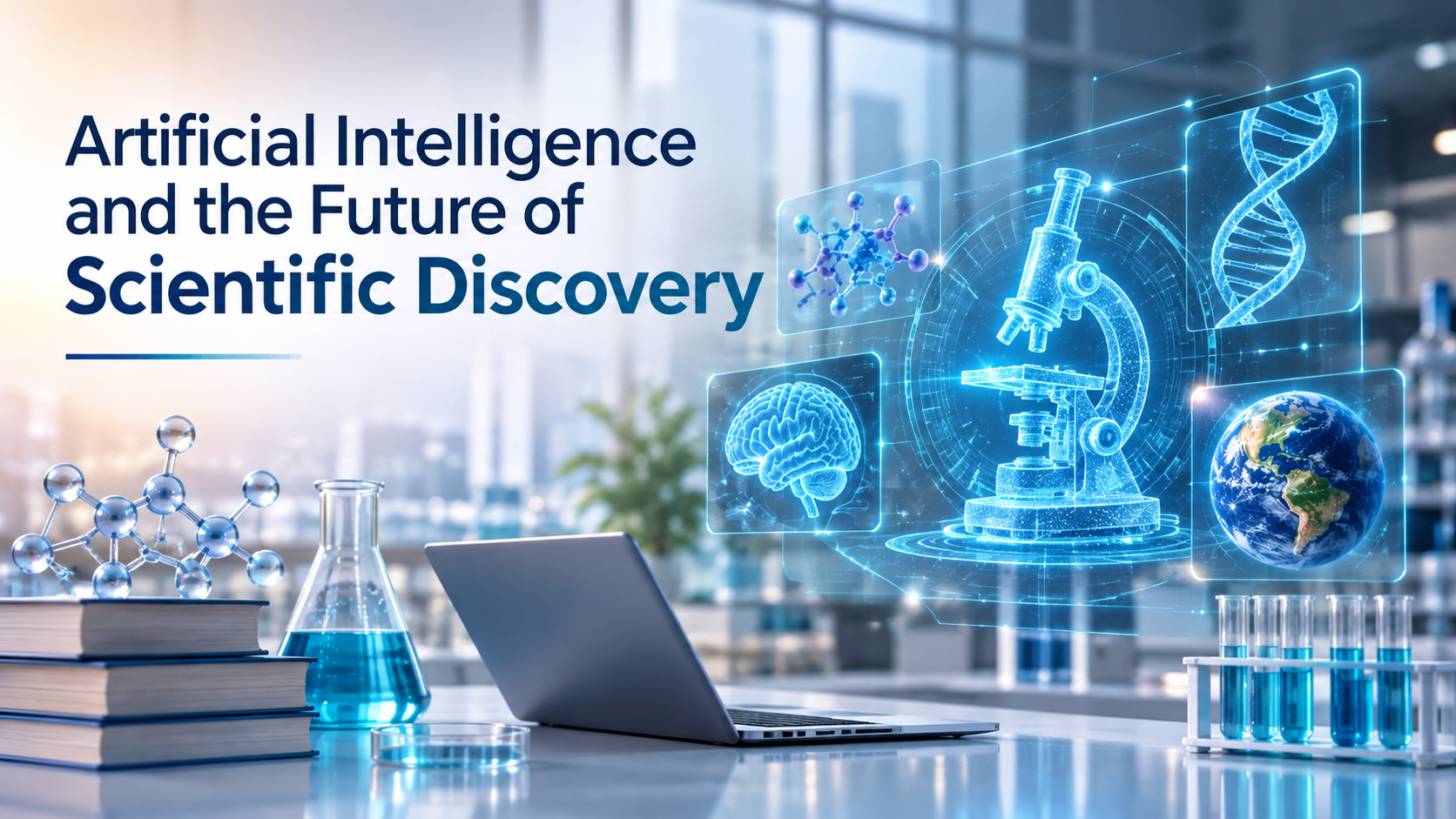

What if artificial intelligence could predict protein structures, identify materials and forecast extreme weather? AI, machine learning and generative models are changing research by helping scientists identify patterns, generate hypotheses and guide experiments.
One example is FieldSHIFT, a machine-learning framework presented in a 2024 study in Digital Discovery. It uses a large language model to translate abstracts between neuroscience and developmental bioelectricity, revealing connections and suggesting testable hypotheses.
Breakthroughs in Medicine and Drug Discovery
Artificial intelligence in medicine advances disease research, medical-image analysis and the search for treatments. AlphaFold, developed by Google DeepMind, uses deep learning to predict a protein’s three-dimensional structure from its amino acid sequence. Published in Nature in 2021, it achieved near-experimental accuracy in many cases. With EMBL’s European Bioinformatics Institute, Google DeepMind also made more than 200 million predicted structures freely available through the AlphaFold Protein Structure Database, supporting research into protein function, disease and drug targets.
AI also assists in cancer detection. LYNA (LYmph Node Assistant) is a deep-learning algorithm that identifies breast-cancer metastases in digitised lymph-node biopsy images. It highlights suspicious tissue. A 2019 study in Archives of Pathology & Laboratory Medicine reported a slide-level area under the curve (AUC) of 99% on one evaluation dataset, indicating potential as an assistive tool for pathologists.
Beyond detection, AI-assisted drug discovery helps screen chemical compounds and prioritise candidates. Machine-learning models can estimate molecular stability, solubility, toxicity and interactions with disease-related proteins. They can streamline early research, but laboratory testing and clinical trials remain essential.
AI in Climate Science and Environmental Research
AI enhances climate and environmental research through satellite-image analysis, environmental monitoring and atmospheric pattern detection.
A notable example is GraphCast, developed by Google DeepMind. It uses graph neural networks trained on historical weather data to produce global forecasts up to ten days ahead. In a 2023 Science study, GraphCast outperformed the European Centre for Medium-Range Weather Forecasts’ operational deterministic system on 89.3% of evaluated target variables and lead times.
AI weather forecasting can help anticipate heatwaves, tropical cyclones and changing precipitation, supporting risk assessment and preparedness. GraphCast is a weather-forecasting system, rather than a long-term climate model, but it demonstrates how machine learning can complement established forecasting methods.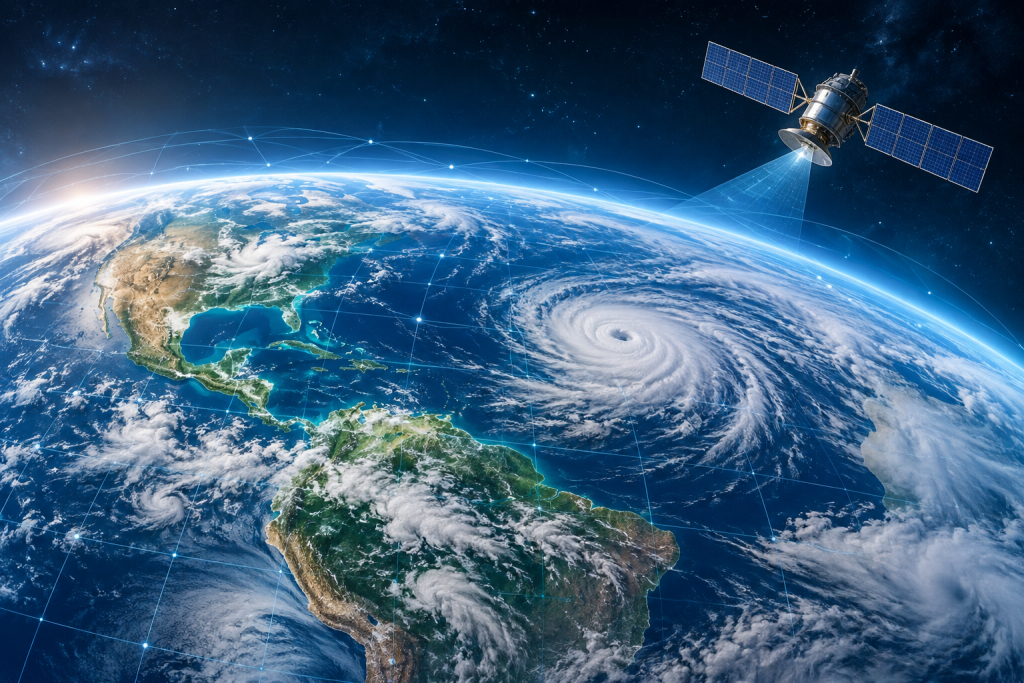
AI in Materials Science and Discovery
Artificial intelligence in materials science helps researchers identify candidates for batteries, semiconductors and clean-energy technologies. AI predicts material properties and prioritises structures for investigation.
One development is GNoME (Graph Networks for Materials Exploration), developed by Google DeepMind. It uses deep learning and graph neural networks to predict crystal stability from atomic arrangements. A 2023 Nature study reported 2.2 million predicted stable structures, including approximately 381,000 new entries on the updated stability convex hull. These predictions expand the search space but require further assessment and experimental validation.
Another development is MatterGen, a generative AI model from Microsoft Research. Using an inverse-design approach, it generates candidate inorganic structures based on properties specified by researchers. Researchers can specify magnetic properties as design conditions. In a 2025 Nature proof-of-concept study, researchers synthesised one generated material and measured a property within 20% of the target, demonstrating the potential of generative AI in materials discovery.
The Future of Human-AI Collaboration in Science
Turning AI-generated hypotheses and predictions into reliable results remains challenging. A 2026 review introduced the EXHYTE framework (Exploration, Hypothesis Generation, and Testing) to examine AI’s role across these stages. It found progress in literature exploration and hypothesis generation, while identifying the transition to executable experiments and reliable testing as a key bottleneck.
Predictions are not validated discoveries: materials may behave differently when synthesised, and proposed biological interactions require testing. Human expertise remains essential for evaluating evidence, interpreting results and ensuring reproducibility. AI in scientific research is most valuable alongside human judgement, experimental validation, interdisciplinary collaboration and automated laboratories.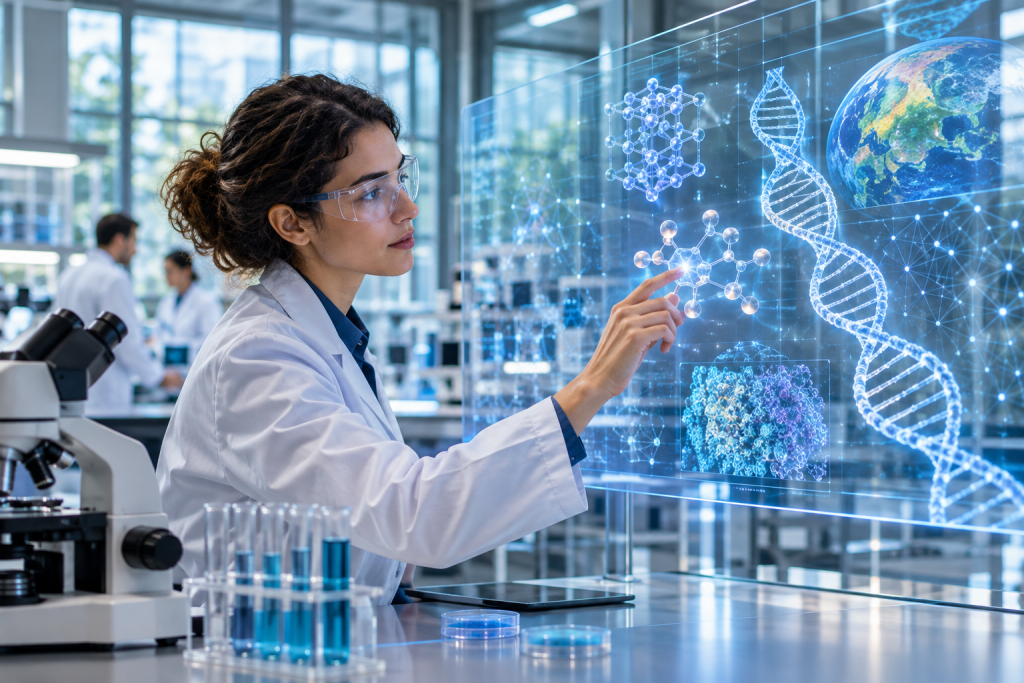
Conclusion
From predicting protein structures to designing materials and improving weather forecasts, artificial intelligence is expanding the boundaries of scientific research. Meaningful progress, however, depends on combining computational capabilities with human expertise, experimental evidence and collaboration across disciplines.
The AI & The Human Sphere (AI-Sphere) – 1st Edition, taking place online on 30–31 March 2027, provides an interdisciplinary platform for researchers, academics and professionals to explore the relationship between artificial intelligence, scientific advancement, human well-being and civilisation.
PhD candidates, university faculty, researchers and professionals are invited to share their work, exchange perspectives and contribute to discussions shaping the future of AI and its impact on society.
References
- O’Brien, T. et al. (2024). Machine learning for hypothesis generation in biology and medicine: exploring the latent space of neuroscience and developmental bioelectricity. Digital Discovery, 3, 249–263.
- Jumper, J. et al. (2021). Highly accurate protein structure prediction with AlphaFold. Nature, 596, 583–589.
- Varadi, M. et al. (2022). AlphaFold Protein Structure Database: massively expanding the structural coverage of protein-sequence space with high-accuracy models. Nucleic Acids Research.
- Liu, Y. et al. (2019). Artificial Intelligence-Based Breast Cancer Nodal Metastasis Detection: Insights Into the Black Box for Pathologists. Archives of Pathology & Laboratory Medicine, 143, 859–868.
- Lam, R. et al. (2023). Learning skillful medium-range global weather forecasting. Science, 382, 1416–1421.
- Merchant, A. et al. (2023). Scaling deep learning for materials discovery. Nature.
- Zeni, C. et al. (2025). A generative model for inorganic materials design. Nature, 639, 624–632.
- Hasib, M. M. et al. (2026). Unifying AI-assisted scientific discovery around exploration, hypothesis generation, and testing. Patterns.
