



Understanding how to write a research paper introduction is essential to presenting your research clearly. The introduction is often where reviewers form their first impression of your work. This guide gives you a clear structure so you can write an effective opening with confidence.
What a Research Paper Introduction Has to Do
An introduction answers three questions for the reader: what is this about, why does it matter, and what did you do about it. It is not a summary of your results, and it is not the place for every study you have ever read. Think of it as a short, honest pitch that earns the reader’s time.
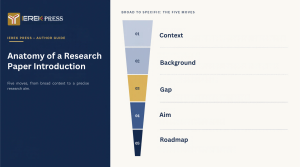
Most strong introductions follow a simple research paper introduction structure: context, background, gap, aim, and a brief roadmap. You can adjust the proportions, but skipping any of these moves usually leaves the reader asking questions your paper should have answered.
If you are still working on other sections, see our guide to how to write a strong abstract and our tips on writing a literature review.
Start With a Hook That Fits Your Field
Open with something concrete. A striking statistic, a real-world problem, or a clear statement of why the topic is urgent all work well. In environmental and sustainability research, a single sentence about rising urban energy demand or water stress in a specific region grounds the reader immediately.
Avoid sweeping openers like “Since the dawn of time” or “In today’s modern world.” They say nothing and signal that the writer is filling space. Be specific in the first two sentences and the rest of the paragraph tends to follow.
Check your target journal too. Some prefer a direct, technical opening, while others welcome broader framing.
Build the Background Without Writing a Literature Review
After the hook, narrow your focus step by step. Move from the general topic to the specific problem your study addresses and cite only the sources that support that movement. If a reference does not help the reader understand the gap you are about to describe, save it for your literature review section.
Here is a useful test. After each background paragraph, ask what the reader now knows that they did not before. If the answer is vague, trim it. Define key terms early, especially in cross-disciplinary work, because a word like “resilience” means different things in ecology, engineering, and social science.
Show the Research Gap
The research gap is the heart of the introduction. It is the reason your paper deserves to exist. Describe what earlier studies have established, then name what is missing, unresolved, or contradictory.
Be careful with claims like “no one has studied this.” They are rarely true and easy for reviewers to challenge. A safer research gap statement points to limited evidence in a particular context, method, or population.
A reliable pattern looks like this: previous work has done X, but it has not addressed Y, which matters because Z. Fill in those three parts and your gap becomes hard to miss.
State Your Aim and Contribution Clearly
Once the gap is on the table, say exactly what you did to address it. Give your research question, objective, or hypothesis in one or two sentences. Then tell the reader what they will gain, whether that is a new dataset, a tested method, a framework, or evidence from an underexplored setting.
Many writers close with a short roadmap of how the paper is organized. Keep it to a sentence or two. If your paper follows a standard format, a long roadmap adds little.
Common Research Paper Introduction Mistakes
- Writing it once and never returning. Many authors draft the introduction last, or revise it after finishing, because by then they know what the paper really argues.
- Overloading on citations. Twenty references in the first paragraph read like a bibliography, not an argument.
- Hiding the aim. If the objective appears only in the final line, readers spend the whole section guessing.
- Promising more than the data delivers. Reviewers compare your introduction with your conclusions, so keep the claims matched.
- Repeating the abstract. The introduction should expand the reasoning, not restate the summary.
Frequently Asked Questions
How long should a research paper introduction be?
It depends on the journal and the field, but most introductions run between 500 and 1,000 words, or roughly 10 to 15 percent of the full paper. Check your target journal’s author guidelines for specific limits.
What is a research gap?
A research gap is the missing, unresolved, or contradictory piece in existing studies that your paper sets out to address. Naming it clearly is what justifies your research.
Should I write the introduction first or last?
Either works, but many authors revise it after finishing the paper, because by then they know exactly what the paper argues and can match the claims to the results.
Final Thoughts
A good research paper introduction is rarely clever. It is clear, specific, and honest about what the study adds. Work through the five moves, hook, background, gap, aim, and roadmap, and revise once your results are final. Strong academic writing tips often come down to this: respect the reader’s time, and they will respect your research.
Recommended ESSD for Further Reading
- Environmental Science and Sustainable Development (ESSD) journal home: browse open access articles to see how published authors frame their introductions.
- ESSD author guidelines: formatting and structure expectations before you submit.
