


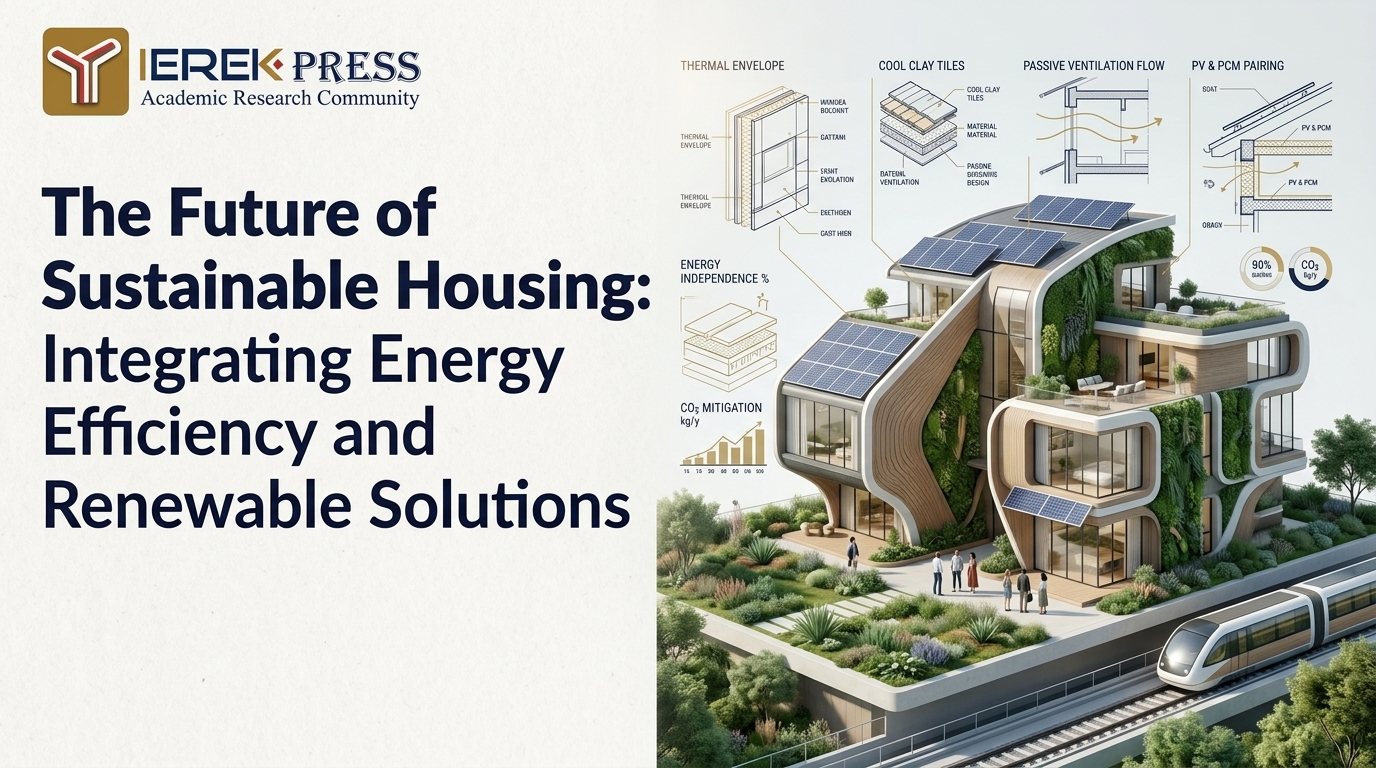
The Future of Sustainable Housing: Integrating Energy Efficiency and Renewable Solutions

The residential sector is one of the largest consumers of global energy, accounting for a substantial share of greenhouse gas emissions worldwide. As urbanization accelerates and climate extremes intensify, the way we design, build, and power our homes must undergo a fundamental transformation. Traditional housing models—reliant on fossil-fuels for heating, cooling, and electricity—are no longer viable in an era dedicated to carbon neutrality. Transitioning toward energy-efficient housing is essential not only for mitigating environmental degradation but also for ensuring long-term economic resilience and occupant well-being.
Rethinking Residential Architecture and Thermal Performance
Achieving true sustainability in housing begins at the drawing board. Modern architectural design must prioritize passive strategies that reduce mechanical heating and cooling loads before active energy systems are even considered. By optimizing building orientation, enhancing natural ventilation, and utilizing high-performance insulation, architects can dramatically lower a home’s baseline energy demand.
Furthermore, advanced material science is revolutionizing how residential envelopes interact with local climates. For instance, research published in Environmental Science and Sustainable Development (ESSD) highlights innovative thermal-energy solutions, such as cool clay tiles and solar-reflective roofing systems, which effectively mitigate the urban heat island effect while stabilizing indoor temperatures in residential districts. Integrating such localized cooling strategies ensures that homes remain comfortable during extreme heatwaves without placing excessive strain on municipal electrical grids.
Renewable Energy Integration in Modern Homes
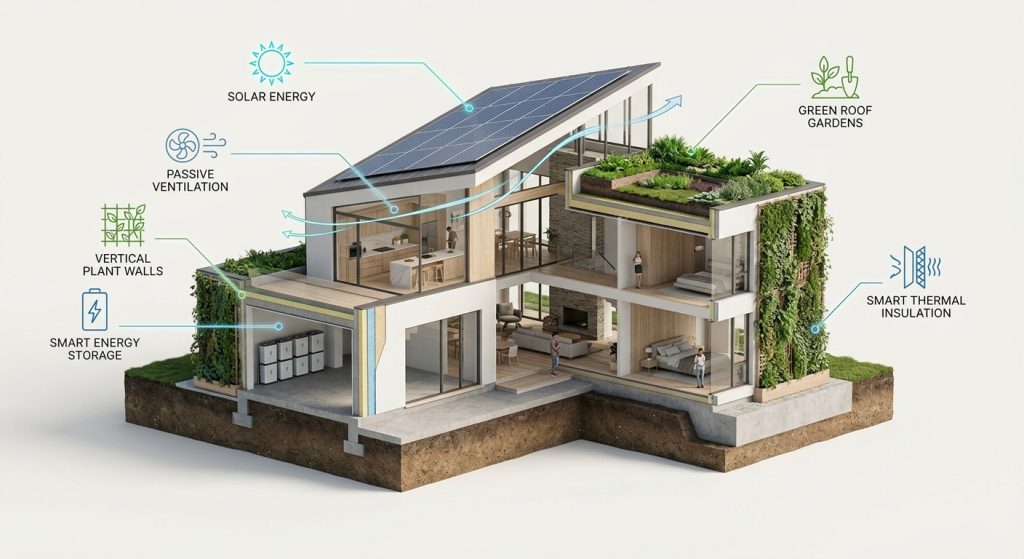
Beyond passive design, the modern home is rapidly evolving from a passive energy consumer into an active prosumer. The widespread adoption of rooftop photovoltaic (PV) solar systems, decentralized microgrids, and advanced energy storage solutions allows households to generate, store, and manage their own clean electricity.
To maximize these renewable gains, smart home automation systems are increasingly utilized to monitor energy consumption in real time. Technologies such as sub-surface phase change materials (PCMs) paired with cool roofing solutions further enhance thermal inertia, preventing condensation and managing indoor latent heat. These engineering breakthroughs ensure that residential buildings operate at peak efficiency, minimizing waste and maintaining a stable indoor environment throughout fluctuating seasonal changes.
Economic Value and Real Estate Sustainability
Sustainability in housing extends far beyond environmental metrics; it is increasingly becoming a core driver of property valuation and market demand. Homebuyers and investors are prioritizing properties that demonstrate verified energy performance, lower utility costs, and resilience against climate shocks.
Studies exploring the intersection of ecology and economics—such as evaluations on sustainability and energy performance in the real estate market—demonstrate that energy-efficient buildings command higher market value and lower long-term operational risks. Green certifications and high energy-rating labels provide transparent benchmarks, reassuring buyers that their investments are future-proofed against rising energy tariffs and stricter regulatory compliance standards.
Conclusion
The shift toward energy-efficient housing is a critical pillar of sustainable urban development. By combining passive architectural design, advanced thermal materials, and decentralized renewable energy systems, we can create residential spaces that protect the environment while enhancing human comfort and economic value. Embracing these innovations today paves the way for resilient, zero-carbon communities tomorrow.
You can read more about this subject in the following papers in IEREK Press’ Environmental Science and Sustainable Development (ESSD):
- Anna Laura Pisello, Veronica Lucia Castaldo, Federico Rossi, Franco Cotana’s “Cool Clay Tiles in Italian Residential Districts: Investigation of the Coupled Thermal-Energy and Environmental Effects” – Examines advanced cool roofing materials and their thermal impact on residential neighborhoods.
- “Sustainability and Energy Performance in the Real Estate Market” – Analyzes the economic valuation and market dynamics of energy-efficient buildings.
- ‘s “Coupling of Solar Reflective Cool Roofing Solutions with Sub-Surface Phase Change Materials (PCM)“ Explores innovative phase change materials for thermal regulation and moisture control in sustainable housing.
Visit IEREK Press Journals to explore numerous published articles on this significant topic.
