



What do we talk about when we talk about the environment? It is people, the materials around them, and the laws and policies that organize the relationship between the two. Environmental science research rarely begins with a grand abstraction. It starts with something ordinary, such as a concrete cube, a hiking trail or a heart rate monitor, and asks how it shapes the world and how the world shapes us.
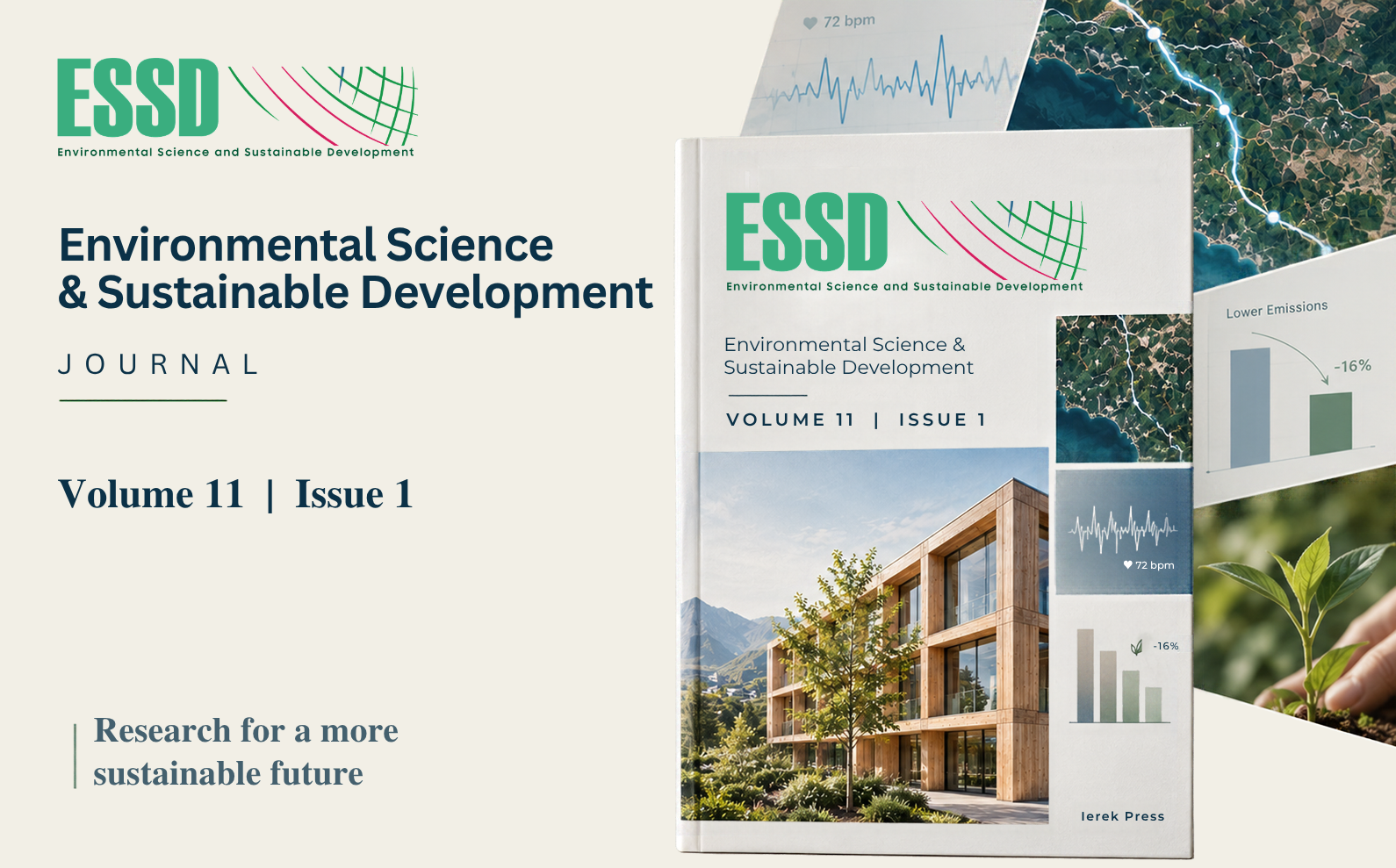
Volume 11, Issue 1 of Environmental Science & Sustainable Development (ESSD) follows that idea across ten articles: nine research papers and one review, from Japan to Kosovo and from heart rate experiments to landscape theory. Here is a guided tour.
Landscape Design as Environmental Science Research
The issue opens with two landscapes built on opposite ideas. In Paris, Tschumi’s Parc de la Villette is shaped by philosophy. It scatters red folies across a grid of points, lines for movement and surfaces for green and play space. In Canada, Hahm’s Augmented Grounds is shaped by technology, a playground of woven ropes that combines hand weaving with augmented reality. Sami Kamoun compares the two through a literature review and a visual analysis of photographs and video, asking what each approach contributes to landscape and garden design.
How Environmental Policy Meets Pressure on the Land
Two papers then bring environmental science research to the question of what happens when policy meets pressure on the land. Zeqir Veselaj examines Kosovo’s progress under Chapter 27 (Environment and Climate Change) of the EU accession process. He compares five years of European Commission reports with the views of 243 students and academic staff and eight interviewees. The result is very limited progress, with Kosovo lagging behind other Western Balkan countries. Participants largely trusted the reports, and their views matched them completely in 10 of 19 areas.
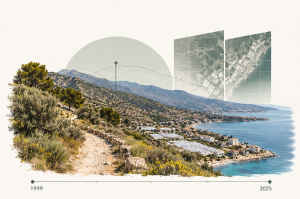
On Türkiye’s 540-kilometer Lycian Way, Tutku Yazıcı, Fahriye Yavaşoğlu and Mine Özdemir used satellite imagery from 1999 to 2025 to map change within a one-kilometer corridor. Tourism-driven urban growth and greenhouse agriculture have transformed the route, especially at its gateways and along the coastal plains. Protecting the trail, they conclude, will take planning built on data.
Sound and Stress Recovery: The Human Body
Then the issue turns from land to the body, where environmental science research becomes a laboratory experiment. Xiaotong Jing, Chao Liu and Hiroatsu Fukuda put 26 participants through a stress test, then let them recover in silence or to the sound of water, birdsong or wind. Natural sounds were associated with better recovery than silence, and birdsong did best on the heart rate measures. It is the only paper in the issue that measures the human body directly.
Heritage and the Built Environment
Two papers look at how rules shape the built environment. Laura Magri studies Italy’s Ecobonus tax incentive, introduced in 2007, through two retrofits of postwar apartment buildings. In Milan, the energy upgrade erased much of the building’s architectural meaning. In Trento, it was paired with conservation of the original façade elements. The same incentive produced very different outcomes.
Margherita Meta asks whether greenbelts, long used to contain urban sprawl, can do more. Her Greenbelt 2.0 framework, built from an analysis of the London Green Belt, proposes adaptive zoning, multifunctional management, monitoring and participatory governance. She presents these ideas as a basis for future testing, not as proven results.
Environmental Science Research in Construction Materials
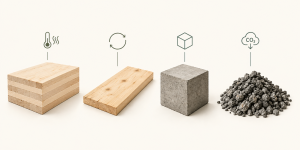
The next three papers move to materials. In Japan, Yaqin Cao and Hiroatsu Fukuda monitored a cross-laminated timber office building through winter and humid summer. Its thermal inertia delayed and dampened temperature swings, which reduced heating and cooling cycles.
Zaheer Doomah and colleagues found that pine formwork can be reused for concrete casting up to three times with a water-reducing admixture. In Abu Dhabi, Mohammed Alzard and colleagues measured the emissions of producing steel slag aggregate. On average they were about 16% lower than natural aggregate, with transport the biggest contributor.
The Review: Digital Tools in Construction Management
The issue closes with a review. Shadrack Habu and colleagues analyze 382 publications from 2015 to 2025 on digital tools in construction management. BIM, AI, drones, virtual and augmented reality, and cloud computing stand out. China, the United States and Australia lead the research, while Africa is underrepresented. The authors point to gaps in integrated digital frameworks, digital literacy among construction professionals, and regional participation.
What This Issue Tells Us About Environmental Science Research
Taken together, these papers answer the opening question in practice. Environments are people who feel them, materials that build them, and policies that govern them, and each affects the others.
To read the full issue, visit ESSD Vol. 11, Issue 1, published by IEREK Press. If your environmental science research touches any of these threads, we invite you to cite and submit to the journal.
Recommended ESSD Articles for Further Reading
- Analysis of Kosovo’s European Integration Path in Chapter 27 Environment and Climate Change
- Environmental Pressures and Policy Responses on the Lycian Way Towards Sustainable Cultural Route Management
- The Effect of Natural Sounds on Stress Recovery A Study of Heart Rate Variability
- Thermal Inertia and Seasonal Energy Performance of CLT Office Buildings in Japan A Case Study Based on Monitoring
- Bibliometric Analysis on Digital Tools for Project Delivery in Construction Management
