




Addressing the Climate Challenge with Innovative Solutions
Mitigating climate change requires comprehensive and scalable technological solutions. Among the portfolio of emerging climate solutions, Carbon Dioxide Capture, Utilization, and Storage (CCUS) is increasingly recognized as a critical pathway toward decarbonization . These CCUS technologies are vital for their pivotal role in decarbonizing hard-to-abate sectors and achieving ambitious climate goals
. These technologies prevent large quantities of CO2 from entering the atmosphere, reducing emissions from industrial activities and energy production .
CCUS has emerged as a practical decarbonization strategy for industries where emissions remain difficult to eliminate. By intercepting CO2 emissions at their source, these technologies offer a crucial bridge to a low-carbon economy, particularly where direct electrification or renewable energy integration remains challenging
. The widespread adoption of CCUS systems is considered essential for meeting net-zero targets and ensuring a resilient global ecosystem.
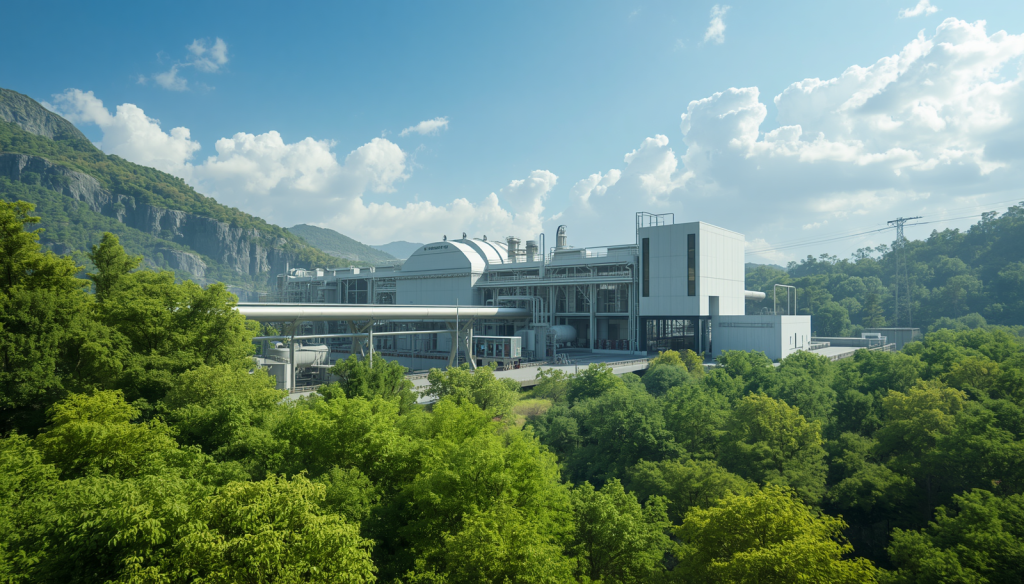
The Three Pillars of CCUS: Capture, Utilization, and Storage
CCUS encompasses a sophisticated process involving three primary stages: capturing CO2, utilizing it in various applications, and safely storing it long-term. Each stage is characterized by distinct technologies and operational considerations, all contributing to the overarching goal of carbon management.
1. CO2 Capture: Intercepting Emissions at the Source
Carbon capture is the initial and foundational step in the CCUS chain. This process involves separating CO2 from other gases produced during industrial processes or power generation. A variety of methods are employed, each suited to different emission sources and concentrations:
- Post-combustion capture: This is the most common approach, where CO2 is separated from flue gases after fossil fuels have been burned. Chemical solvents are typically used to absorb the CO2, which is then released and compressed for further processing.
- Pre-combustion capture: In this method, fossil fuels are gasified before combustion, producing a synthesis gas (syngas) from which CO2 is removed. This process is often integrated with integrated gasification combined cycle (IGCC) power plants.
- Oxyfuel combustion: Here, fuels are burned in a mixture of oxygen and recycled flue gas, resulting in a flue gas that is primarily CO2 and water vapor, making CO2 separation relatively straightforward.
- Direct Air Capture (DAC): While still in earlier stages of commercial deployment, DAC technologies are designed to capture CO2 directly from the ambient air. This approach offers the potential to address diffuse emissions and even achieve negative emissions
The selection of a capture technology is typically dictated by factors such as the concentration of CO2 in the gas stream, the presence of impurities, and economic viability. Significant advancements are continually being made in material science to develop more efficient and cost-effective capture agents, including advanced sorbents and membranes
2. CO2 Utilization: Transforming Waste into Value
Once captured, CO2 can be transformed from a waste product into a valuable resource through various utilization pathways. This aspect of CCUS, often referred to as Carbon Capture and Utilization (CCU), offers economic incentives and contributes to a circular carbon economy. Key utilization applications include:
- Enhanced Oil Recovery (EOR): CO2 is injected into mature oil reservoirs to increase oil extraction. This method provides a revenue stream that can offset the costs of capture and transport, while also storing CO2 underground.
- Production of Chemicals and Fuels: CO2 can be converted into a range of products, including methanol, urea, polymers, and synthetic fuels. Research in green chemistry is actively exploring novel catalytic processes to facilitate these conversions efficiently.
- Building Materials: CO2 can be incorporated into construction materials, such as concrete, where it reacts to form stable carbonates, thereby sequestering carbon permanently within infrastructure.
- Agriculture: In controlled environments like greenhouses, CO2 is used to enhance plant growth, demonstrating a direct beneficial application.
The development of new utilization pathways is a dynamic field, with ongoing research focused on increasing the economic value and scalability of CO2-derived products. This transformation of CO2 into useful commodities is a crucial step in fostering a sustainable industrial ecosystem.

3. CO2 Storage: Ensuring Long-Term Sequestration
For CO2 that cannot be economically utilized, permanent and secure geological storage is a critical component of CCUS. This involves injecting compressed CO2 deep underground into carefully selected geological formations, where it is safely contained for millennia. Suitable storage sites typically include:
- Saline aquifers: These are porous rock formations saturated with brine, offering vast storage potential globally.
- Depleted oil and gas reservoirs: These formations have historically held hydrocarbons for millions of years, indicating their capacity for secure CO2 containment.
- Unmineable coal seams: CO2 can be adsorbed onto the surface of coal, displacing methane in the process, which can then be recovered for energy.
Rigorous monitoring and geological assessment ensure the long-term safety and integrity of CO2 storage operations. Advanced seismic imaging and subsurface modeling are routinely used to assess geological stability and predict CO2 plume migration. Regulatory frameworks are also being established to govern long-term liability and environmental protection.
The Broader Impact: Benefits and Challenges of CCUS
The deployment of CCUS infrastructure offers several significant benefits. It provides a viable option for industries that are difficult to decarbonize, such as cement, steel, and chemical production, which are vital for modern society. Furthermore, CCUS can support the continued use of fossil fuels in a carbon-constrained world, allowing for a more gradual transition to renewable energy sources while maintaining energy security
. The economic benefits extend to job creation in new industries and the potential for new revenue streams from CO2 utilization.
However, the widespread implementation of CCUS is not without its challenges. High capital costs, energy penalties associated with capture processes, and the need for extensive transport and storage infrastructure are considerable hurdles that must be overcome. Public perception and regulatory uncertainties also play a role in the pace of deployment. Nevertheless, ongoing research and development, coupled with supportive policy frameworks, are steadily addressing these issues, paving the way for broader adoption

Conclusion: A Path Forward for a Carbon-Neutral Future
CCUS technologies for CO2 Capture, Utilization, and Storage are indispensable tools in the global effort to combat climate change. By enabling the reduction of emissions from industrial sources and offering pathways for CO2 valorization, CCUS contributes significantly to the transition towards a carbon-neutral future. As research continues to advance and supportive policies are implemented, the role of CCUS in achieving environmental sustainability and economic resilience will undoubtedly expand. As industrial sectors face increasing pressure to decarbonize, CCUS is expected to play a central role in supporting net-zero transitions while maintaining industrial productivity and energy security.
In this context, the Emerging Concepts & Design for Sustainability (ECDS 2026) Conference, organized by IEREK and taking place in Paris, France (18–20 November 2026), provides a key international platform for advancing discussions on CCUS and other transformative sustainability solutions. The conference brings together leading researchers, industry experts, and policymakers to exchange cutting-edge research on climate mitigation, circular economy strategies, renewable energy systems, and emerging environmental technologies. With distinguished keynote speakers and scientific chairs from globally recognized institutions, ECDS fosters interdisciplinary collaboration aimed at accelerating the transition toward a carbon-neutral and resilient future.
More details on keynote speakers and the scientific program are available at:
https://www.ierek.com/events/emerging-concepts-design-for-sustainability-ecds
References
[1] S&P Global. (2026). S&P Global’s Top 10 Sustainability Trends to Watch in 2026
[2] IEA. (n.d. ). A new era for CCUS – CCUS in Clean Energy Transitions
[3] IEA. (n.d. ). CCUS technology innovation
[4] Yusuf, B.O. (2026 ). Carbon dioxide (CO2) capture and utilization technologies. ScienceDirect
[5] CAS. (2025 ). Green chemistry: Six key trends to watch
[7] BNP Paribas. (2025 ). The future of carbon capture and storage: strategies and challenges
[8] IEF. (n.d. ). The Circular Carbon Economy
[9] S&P Global. (2026 ). 2026 CCUS: Navigating the tides of the great realignment
