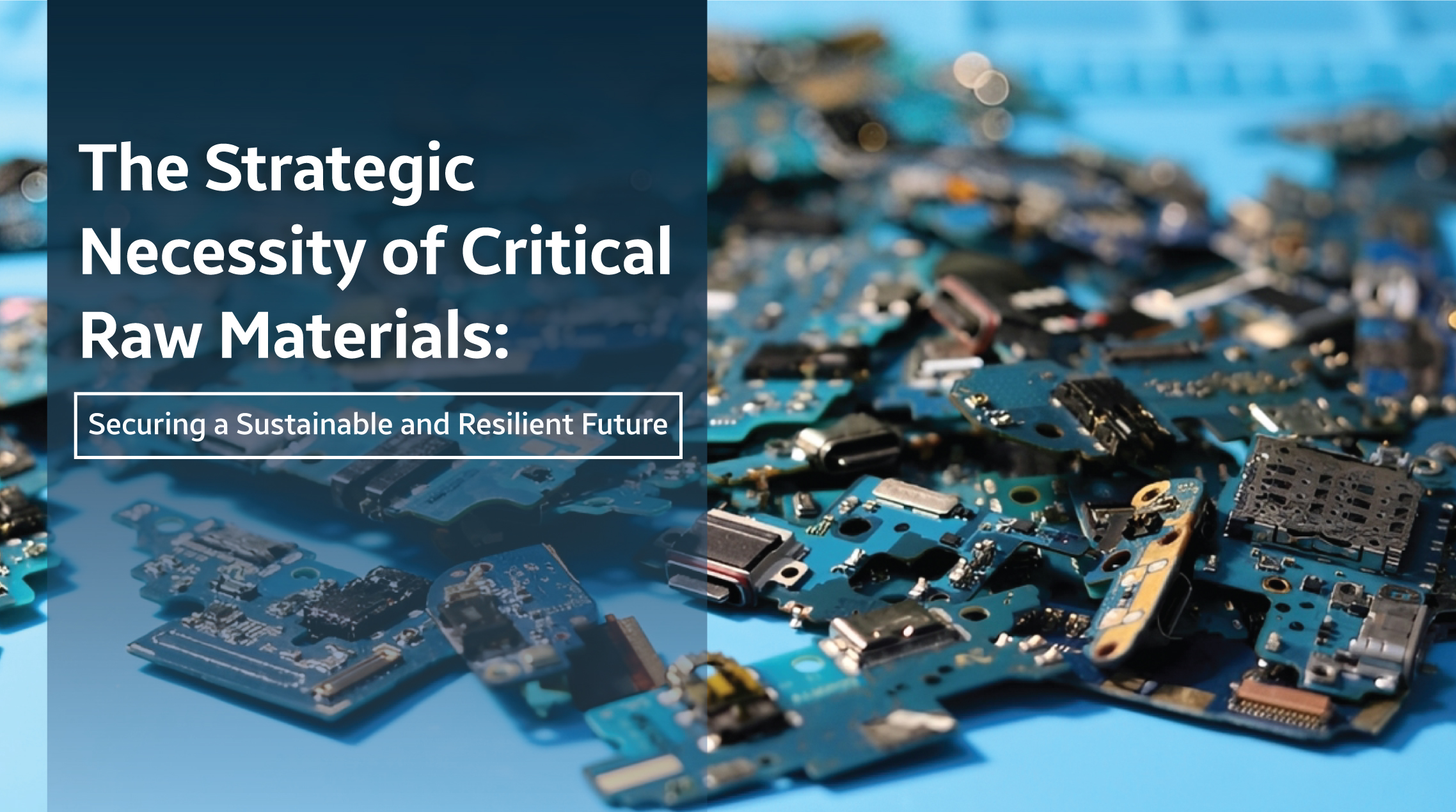

The global shift toward a greener and more digital future is fundamentally a push for more minerals. While the 20th century was defined by a heavy reliance on fossil fuels, the 21st century is being built on a foundation of metals and minerals. Every solar panel, high-capacity battery, and high-speed data center requires a specific set of elements that are not always easy to find or extract. These are known as Critical Raw Materials (CRMs). They are the hidden engine behind the transition to renewable energy and the expansion of the digital world.
Understanding Criticality and Supply Risk
What exactly makes a raw material “critical”? It is not simply a matter of rarity. Some materials are abundant in the earth’s crust but are difficult to process or are controlled by a very small number of suppliers. Criticality is measured by the economic importance of the material and the risk associated with its supply.
If a specific mineral is essential for the aerospace industry or renewable energy systems but is sourced from a region facing political instability, it is labeled as critical. The demand for these materials is expected to skyrocket in the coming years. For instance, lithium demand for batteries could increase by over forty times by 2040. Rare earth elements, which are vital for the permanent magnets found in wind turbines and electric motors, face similar pressures. This creates a paradox: we need these materials to save the environment, but traditional mining can have a significant environmental footprint if not managed responsibly.
From Extraction to Circularity
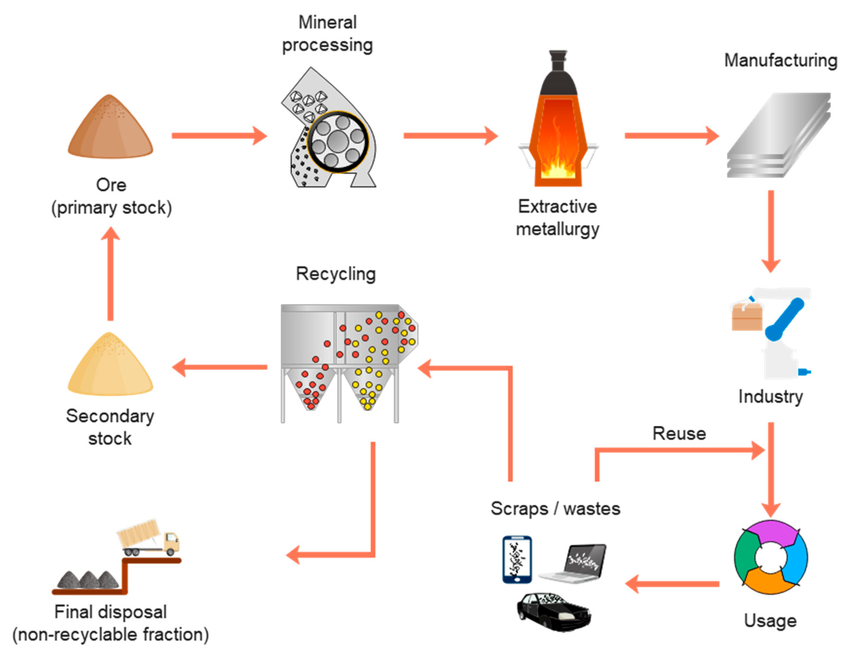
The traditional linear model of resource management, often described as “take-make-waste,” is no longer viable. In this system, we extract minerals, use them in a product, and then discard that product at the end of its life. This approach leads to depleted natural reserves and growing piles of waste. To reach the goals set out in Sustainable Development Goal 12 (SDG 12), we must move to a circular raw materials management system.
A circular approach focuses on two main streams: primary and secondary raw materials. While primary mining will still be necessary to meet growing global demand, the ultimate goal is to maximize the use of secondary materials. This means keeping metals and minerals in the loop for as long as possible through repair, reuse, and high-performance recycling. By doing so, we reduce our dependency on virgin resources and minimize the environmental damage associated with new mining projects.

The Power of Urban Mining and Advanced Recycling
One of the most promising areas in this transition is urban mining. Instead of digging new holes in the ground, we can find the materials we need within our existing infrastructure and discarded products. Old smartphones, laptops, and household appliances are rich in gold, silver, copper, and cobalt. Construction and demolition waste can be processed to recover steel and aluminum. Even textile waste is being viewed through a new lens as a source of recycled fibers.
However, recovering these materials is technically difficult. Modern products are incredibly complex. A single smartphone can contain over sixty different elements. Separation requires advanced mechanical recycling, such as smart disassembly and sensor based sorting. Chemical and biotechnological methods are also being developed to leach precious metals out of complex waste streams without using harsh or toxic substances.
Core Recovery Methods
- Mechanical Recovery: This involves physical disassembly and the separation of materials by size or weight. It is known for low energy consumption and the ability to handle high volumes of waste efficiently.
- Sensor-Based Sorting: This utilizes cameras and advanced sensors to identify and sort materials based on specific properties. It offers high precision and significantly reduces the risk of contamination in the recovered stream.
- Chemical and Biotechnological Methods: These use specific solvents or microbes to recover metals from the rest of the material. This approach is highly effective for complex electronic components where physical separation is not enough.
The Digital Edge: AI and Resource Management
The digital transition is not just a consumer of raw materials; it is also a powerful tool for managing them. Artificial Intelligence is now being used to optimize waste collection and material recovery. Machine learning models can forecast exactly when and where waste will be generated, allowing for more efficient logistics and sorting.
“Achieving resource equilibrium requires a comprehensive and technologically advanced approach to raw materials management, integrating both primary and secondary sources.”
Blockchain technology is also helping to create digital product passports. These passports provide transparency and traceability, allowing manufacturers to know exactly where their raw materials came from and how they can be safely recycled at the end of their life. This transparency is essential for building resilient and ethical supply chains.
Global Policy and Social Responsibility
Managing raw materials is a global challenge that requires international cooperation. Supply chains are spread across continents, and standards for recycling must be harmonized to create a true global circular economy. Beyond the technical and economic aspects, there is a strong social dimension.
Public awareness and consumer behavior are vital. People need to understand the value of the materials inside their devices and feel empowered to participate in responsible consumption and recycling programs. Education and capacity building are necessary to ensure that the workforce is ready for the transition to a circular economy.
Conclusion
Securing a sustainable future requires more than just new technology. It requires a fundamental rethink of how we value the physical building blocks of our world. By integrating secondary raw materials, advancing recycling processes, and utilizing digital tools like AI, we can build a resilient supply chain that protects both our economy and our planet. The path toward resource security is paved with innovation, cooperation, and a steadfast commitment to circularity.
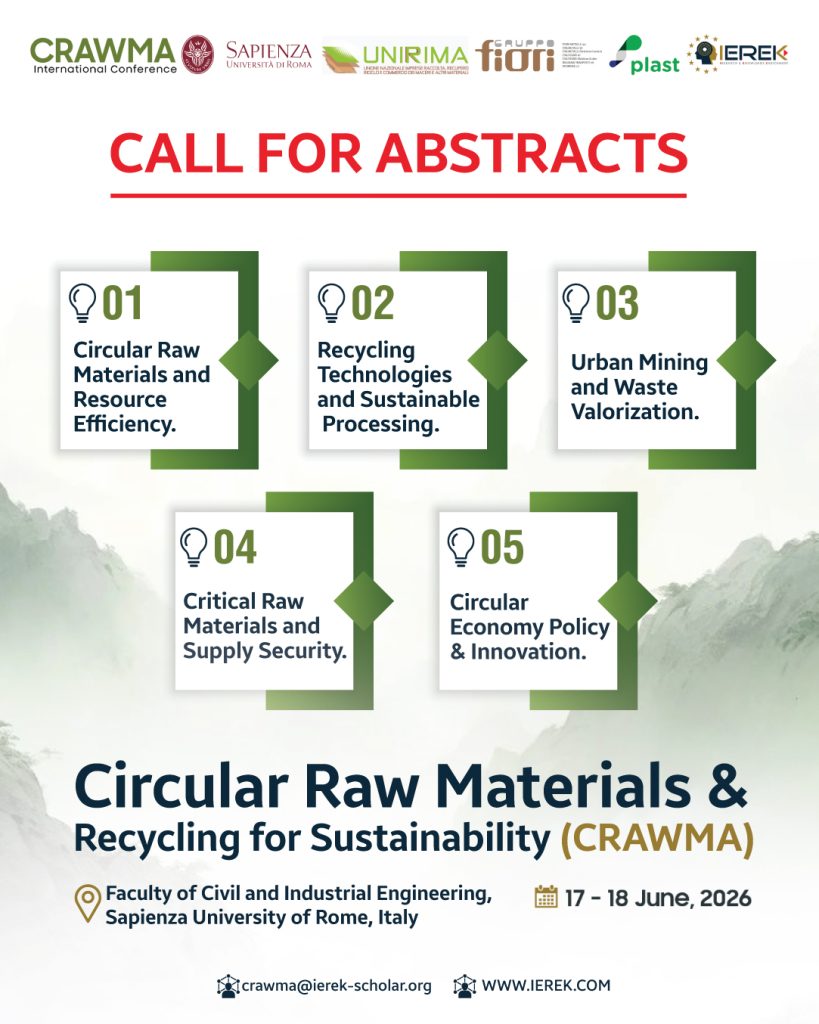
The strategies and innovations explored throughout this discussion will be central to the upcoming Circular Raw Materials and Recycling for Sustainability (CRAWMA) – 1st Edition. This conference will be held from 17-18 June 2026 at Faculty of Civil and Industrial Engineering, Sapienza University of Rome and will serve as a vital meeting point for engineers, scientists, industry leaders, and policymakers dedicated to advancing the circular economy. By focusing on the secure supply of critical raw materials in alignment with SDG 12, CRAWMA 2026 aims to facilitate the global transition toward sustainable resource management.