


As global environmental challenges intensify, the Mediterranean region has emerged as one of the most vulnerable—and most proactive—in addressing climate change. Characterized by its rich cultural landscapes, densely populated coastlines, and fragile ecosystems, the region is experiencing the growing impact of rising sea levels, heatwaves, drought, and wildfires. These challenges have profound social and economic impacts.
In response, landscape architects, urban planners, environmental scientists, and communities are reshaping Mediterranean landscapes to be more adaptive, sustainable, and enduring. The objective is not only to respond to risk but to plan for long-term adaptation and regeneration.
The Urgency of Climate Resilience
Scientific research confirms that the Mediterranean is warming 20% faster than the global average due to climate change. As a result, urban heat stress, water scarcity, and sea-level rise are becoming defining features of the region’s future. These climate change-related pressures are especially critical in coastal cities and rural zones with limited ecological buffers.
In this context, landscape resilience has become a central concept in climate change adaptation. It calls for integrated strategies that combine environmental restoration with infrastructure planning, green public space development, and local engagement. Rather than separating natural and built environments, resilience planning works through their interdependence.
Case Studies of Mediterranean Adaptation
In several Mediterranean cities, new approaches to climate-responsive design are already being implemented. These projects show how landscape interventions can combine environmental performance with social and cultural value.
In Barcelona, the Green Infrastructure and Biodiversity Plan is converting the city into a more climate-resilient urban environment. Tree planting, green roofs, and stormwater-absorbing parks help mitigate heatwaves and flooding, while enhancing the quality of public space.
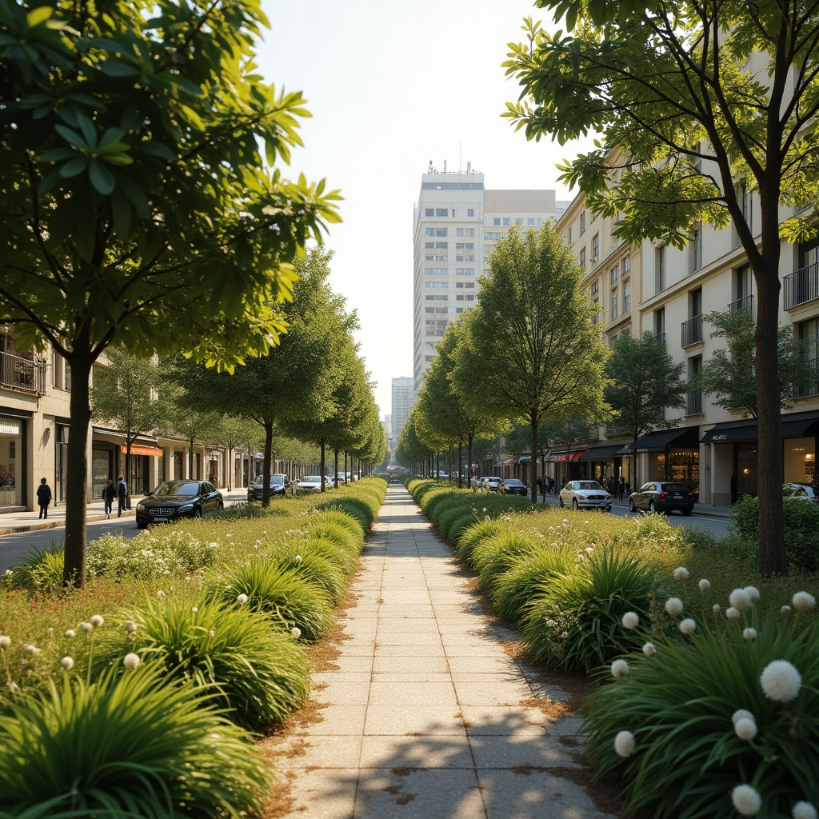
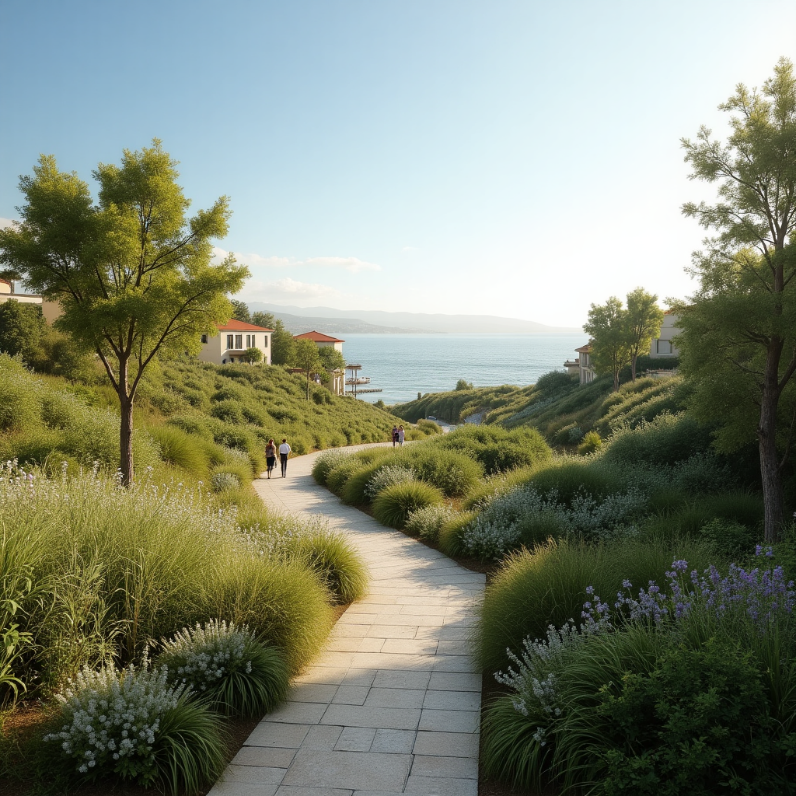
- In Thessaloniki, the redesign of the waterfront introduces layered green infrastructure along the coastline. The project integrates floodable parks and adaptive vegetation to manage sea-level rise, while providing accessible and inclusive spaces for residents and visitors.
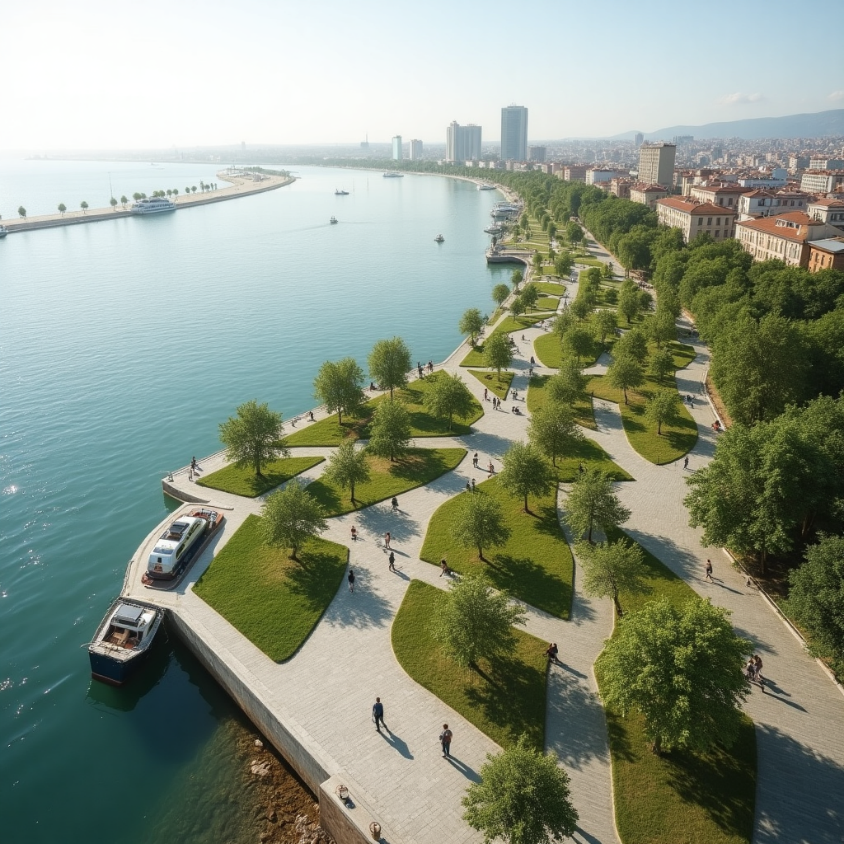
- In Taranto, a city with a heavily industrialized coastline, new ecological regeneration plans are underway. This includes restoring native vegetation, developing green mobility networks, and improving public access to previously restricted areas. These changes aim to reconnect the city with its coastal identity and support healthier urban environments.
Nature-Based Solutions in Practice
The Mediterranean is rich in traditional practices that align closely with ecological principles. Terraced agriculture, water-conserving planting techniques, compact urban forms, and shaded courtyards are all examples of sustainable design inherited from past generations.
Building on these principles, nature-based solutions are emerging as a practical and context-specific response to climate change. These include restoring wetlands to manage floods, establishing green-blue corridors in urban areas, planting drought-tolerant vegetation, and strengthening coastal dunes. Such interventions improve ecological performance while enhancing the cultural and visual character of the landscape.
Conclusion
As climate challenges continue to impact the Mediterranean region, resilience has become a central principle in the planning and design of contemporary landscapes. The region’s longstanding relationship between culture, ecology, and settlement provides a valuable foundation for adaptation.
Through the implementation of integrated strategies—such as nature-based solutions, green infrastructure, and ecological restoration—Mediterranean cities and regions are developing practical responses that address both environmental and social needs.
Moving forward, the transformation of landscapes will play a critical role in shaping sustainable and livable environments. The work being done today reflects not only a response to risk, but a broader commitment to preserving the identity, health, and continuity of Mediterranean places.
The future of Mediterranean landscapes rests on a shared commitment to resilience, cultural heritage, and sustainable innovation. Meeting these challenges requires thoughtful research, interdisciplinary collaboration, and the exchange of ideas across regions.
The 2nd Edition of the Landscapes Across the Mediterranean – CrossMED Conference serves as a platform for researchers to contribute to this essential dialogue. By presenting their work and engaging with peers, participants can help shape practical strategies for addressing climate adaptation, preserving heritage, and supporting sustainable development in Mediterranean contexts.
Date: 9-11 December 2025.
Location: University of Granada, Spain.
Registration and Link: Vistit the Official CrossMED 2025 Website
