


A Future That Is Already Arriving
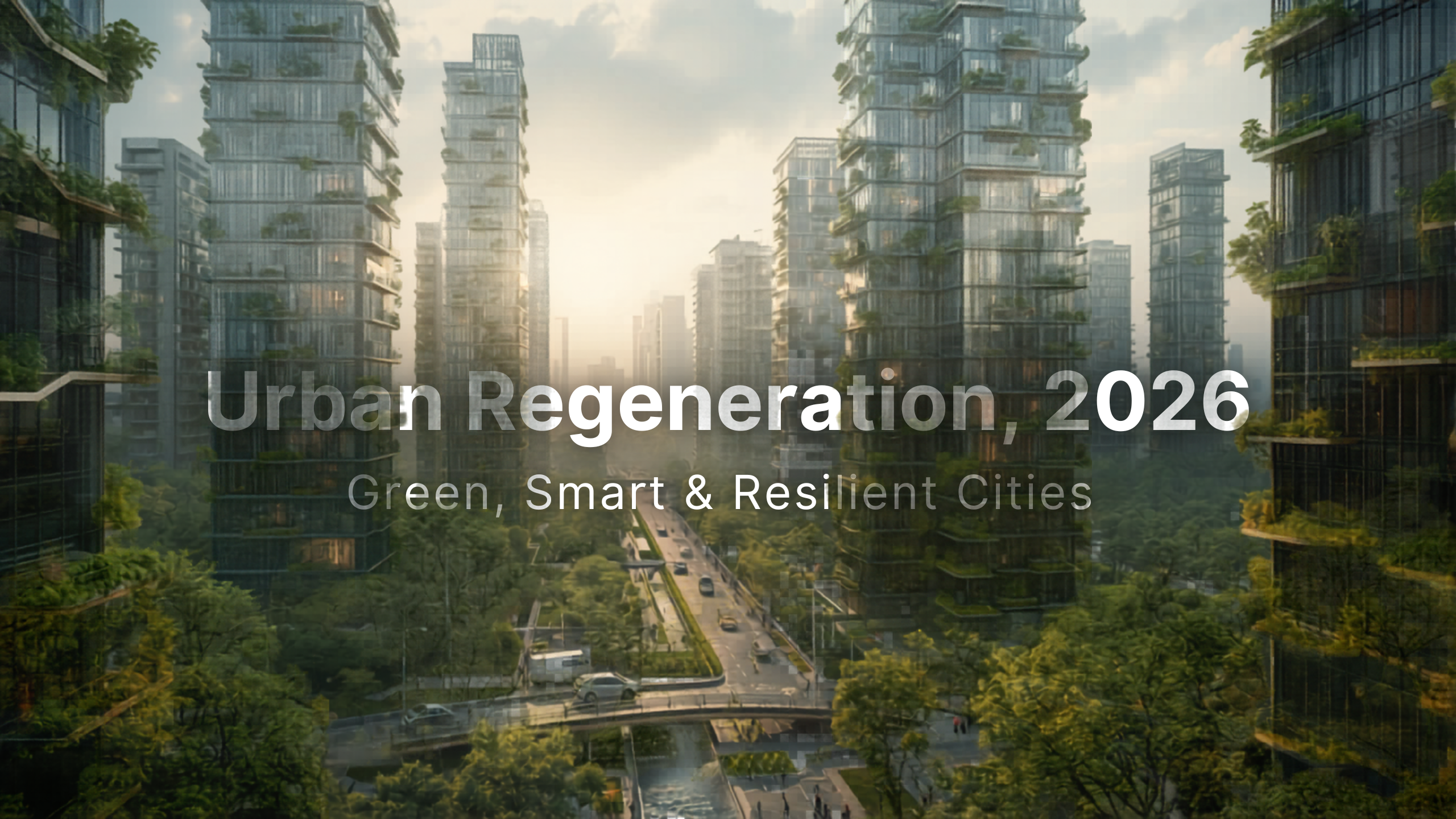
What if the future of cities is already happening right in front of us through urban regeneration 2026?
What if the places we once abandoned old factories, empty streets, forgotten districts could come back to life stronger, greener, and more meaningful than before?
This is not science fiction anymore. This is the reality of urban regeneration in 2026.
Across the world, cities are quietly undergoing one of the most important transformations in human history. Not through expansion but through reinvention. Not by building outward but by rebuilding inward.
And at the center of this transformation is a simple but powerful idea:
A city should not only grow. It should evolve to protect the people who live in it.
What Urban Regeneration Really Means Today
Urban regeneration is no longer just an architectural or planning concept.
In 2026, it is a human-centered transformation strategy that focuses on:
- Reviving neglected urban areas
- Improving quality of life
- Restoring economic activity
- Strengthening climate resilience
- Preserving cultural identity
But more importantly, it is about giving cities a second life without erasing their history.
A broken district is no longer seen as waste it is seen as potential waiting to be unlocked.
Why Cities Have No Choice but to Regenerate
Cities today are under pressure from every direction:
- Rising temperatures
- Flooding and extreme weather
- Overpopulation
- Traffic congestion
- Aging infrastructure
- Housing crises
Ignoring these challenges is no longer possible.
Urban regeneration is not a luxury project anymore it is a survival strategy.
Cities that fail to adapt are not just becoming inefficient…they are becoming unlivable.
From Concrete to Green: The Sustainability Revolution
One of the strongest shifts in 2026 is the return of nature to cities.
Green Infrastructure Everywhere
Cities are now redesigning themselves with:
- Urban forests that cool entire districts
- Green roofs that reduce energy consumption
- Rain gardens that prevent flooding
- Permeable streets that absorb water
These are not decorative elements they are functional survival systems.
Net-Zero Buildings
Modern buildings are being designed to:
- Produce their own energy
- Reduce carbon emissions
- Recycle water
- Operate with minimal waste
A building is no longer just a structure it is a living energy system.
Smart Cities: When Urban Life Becomes Intelligent
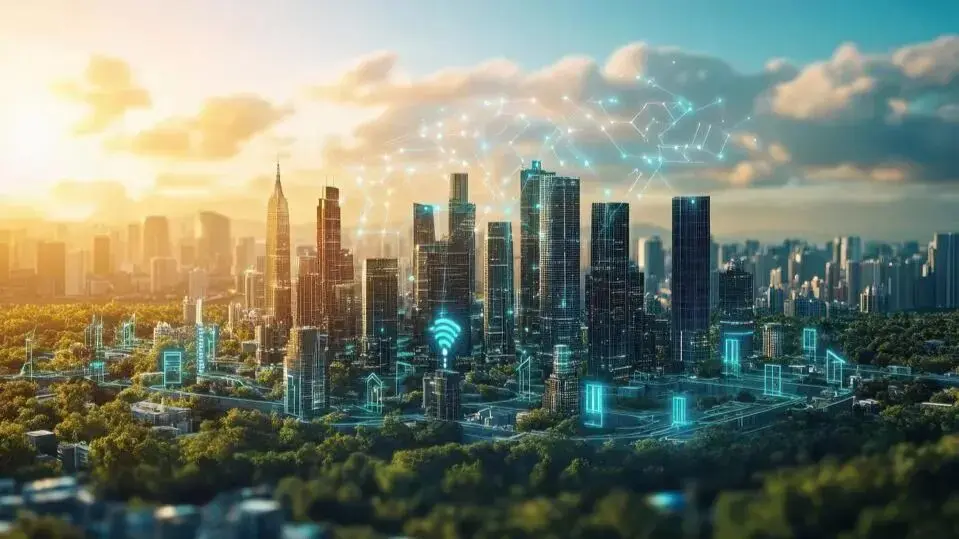
Technology is now the invisible nervous system of modern cities.
AI-Powered Urban Planning
Cities now use AI to:
- Predict traffic flow
- Reduce congestion
- Optimize energy use
- Simulate disaster scenarios
This means decisions are no longer reactive they are predictive.
IoT Everywhere
Sensors are now embedded in:
- Roads
- Streetlights
- Waste bins
- Public transport
Cities are becoming aware of themselves in real time.
Climate Resilience: Designing for Survival
Climate change is no longer a future threat it is a present reality.
Urban regeneration now focuses heavily on resilience design.
Flood-Proof Cities
Cities are introducing:
- Floodable public parks
- Elevated infrastructure
- Smart drainage systems
Heat-Resistant Design
To fight rising temperatures:
- Streets are shaded with trees
- Buildings use reflective materials
- Airflow corridors are created
Cities are literally being redesigned to stay alive under climate stress.
People First: The Return of Human-Centered Cities
For many years, cities forgot something important: people.
Now, that is changing.
Community Participation
Residents are no longer passive observers. They are active designers through:
- Public workshops
- Digital planning tools
- Local decision-making platforms
Housing With Dignity
Modern regeneration focuses on:
- Affordable housing
- Mixed-income neighborhoods
- Anti-displacement policies
Because regeneration without people is not progress it is replacement.
Adaptive Reuse: When Old Becomes Valuable Again
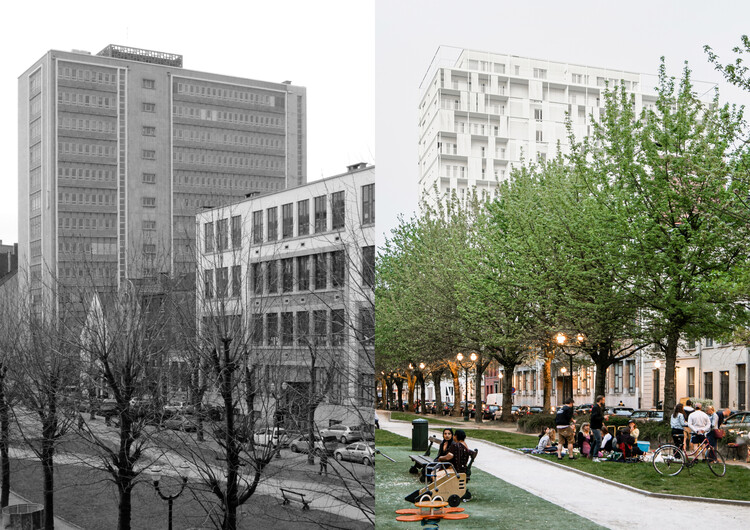
Instead of destroying old buildings, cities are giving them new meaning.
Examples of Transformation:
- Factories → innovation hubs
- Warehouses → cultural centers
- Rail yards → public parks
This approach reduces waste and preserves urban memory.
Cities are learning that history is not a burden it is an asset.
Mobility Revolution: Cities Without Chaos
Transportation is being completely reimagined.
Sustainable Mobility Systems
- Electric buses
- Bike-first infrastructure
- Walkable districts
- Car-free zones
Transit-Oriented Development
Cities are now built around transport hubs, not cars.
The result? Less pollution. Less congestion. More life on the streets.
Economic Transformation Through Regeneration
Urban regeneration is also an economic engine.
It creates:
- Construction jobs
- Tech innovation hubs
- Tourism growth
- Local business revival
A regenerated district does not just look better it performs better economically.
Nature-Based Solutions: Cities That Work With Nature
Instead of fighting nature, cities are now collaborating with it.
Urban ecosystems include:
- Wetlands inside cities
- Biodiversity corridors
- Urban farming zones
Nature is no longer outside the city it is part of its structure.
Challenges Still Holding Cities Back
Even in 2026, regeneration is not easy.
Key challenges include:
- High costs
- Political complexity
- Unequal development
- Risk of gentrification
But cities are improving through better governance and smarter funding models.
Public-Private Partnerships: The Engine Behind Change
No city can regenerate alone.
Public-private partnerships help:
- Share investment risks
- Speed up development
- Combine expertise
This collaboration is becoming the backbone of modern urban transformation.
The Future of Urban Regeneration
Looking ahead, cities will become:
- More adaptive
- More digital
- More ecological
- More human-centered
The future city is not just smart. It is alive, responsive, and resilient.
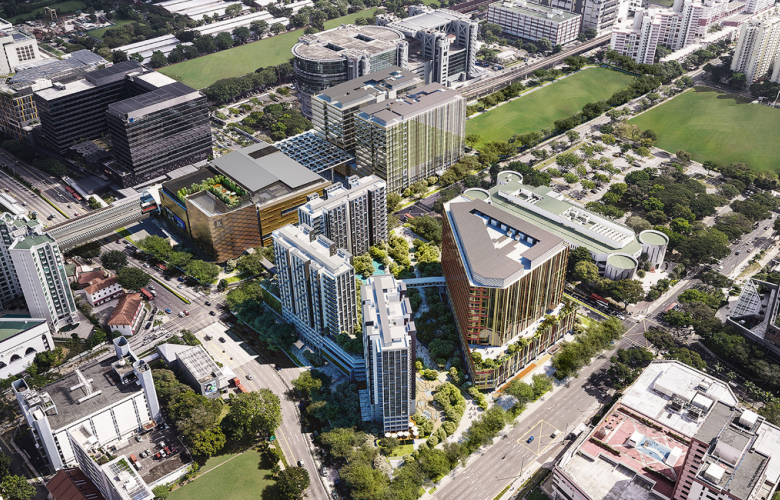
Conclusion: Cities Are Learning to Heal Themselves
Urban regeneration in 2026 is not just about construction it is about restoration of life itself inside cities.
We are witnessing a shift from cities that consume resources to cities that regenerate them.
From cities that expand blindly to cities that evolve intelligently.And most importantly from cities that ignore people to cities that finally put humans at the center again.
The future of urban living is not about building more. It is about building better, smarter, greener and more human cities.
Join the Global Conversation on Urban Regeneration. One of the leading international platforms exploring these transformations is the Urban Regeneration and Sustainability (URS) – 7th Edition conference, held in Rome, Italy, on 22–23 October 2026.
