



Circular Economy in Cities is transforming the way urban areas develop, and Amsterdam is a leading example. In the early 2000s, the city faced a major challenge: rapid expansion created huge amounts of construction waste, overwhelming landfills. Old buildings were demolished, and much of the debris was discarded. Today, Amsterdam tells a very different story.
By applying the principles of the Circular Economy in Cities, the city has turned waste into opportunity, creating vibrant, sustainable neighborhoods. This approach not only reduces environmental impact but also drives innovation, urban regeneration, and community engagement, proving that circular thinking can reshape the future of cities
From Waste to Wonder: Circular Economy in Cities in Action
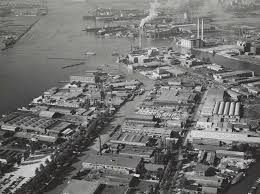
In the past, the construction industry generated nearly 40% of all waste in the Netherlands. The approach was linear: build, demolish, and discard.
Instead of continuing down that path, Amsterdam decided to innovate. By embracing the Circular Economy in Cities, it began reusing and recycling materials to keep them in circulation for as long as possible. As a result, the city reduced both environmental damage and resource waste.
Furthermore, this change opened the door to a new wave of Urban Regeneration, blending creativity with sustainability to reshape the city’s future
A Bold Vision for the Circular Economy in Cities
The transformation began in 2015 with the launch of the Amsterdam Circular Strategy. The goal was ambitious yet achievable: to make the city fully circular by 2050, with half of all materials reused by 2030.
However, the change didn’t happen overnight. It started earlier with smaller pilot projects designed to test new ideas. Two key neighborhoods, Buiksloterham and De Ceuvel, became powerful examples of how Circular Economy in Cities principles can turn forgotten spaces into thriving, low-carbon communities.
Together, these projects proved that innovation, planning, and collaboration can truly breathe life back into the urban landscape
Buiksloterham: A Model for Circular Urban Regeneration
Once an abandoned industrial area in North Amsterdam, Buiksloterham has transformed into a showcase for Circular City development.
Developers began with a simple but profound question: What if we reused what already exists? Instead of sending waste to landfills, they recycled or repurposed 95% of the site’s materials. Old concrete became the base for new structures, while steel beams found new uses in modern buildings.
In addition, the neighborhood was designed for flexibility. Modular components allow buildings to be taken apart and reused in the future. With green roofs, solar panels, and rainwater systems, Buiksloterham is now a self-sustaining, eco-conscious community.
Ultimately, it serves as a clear example of how sustainable design can also enhance livability and beauty
De Ceuvel: The Creative Face of Circular Innovation
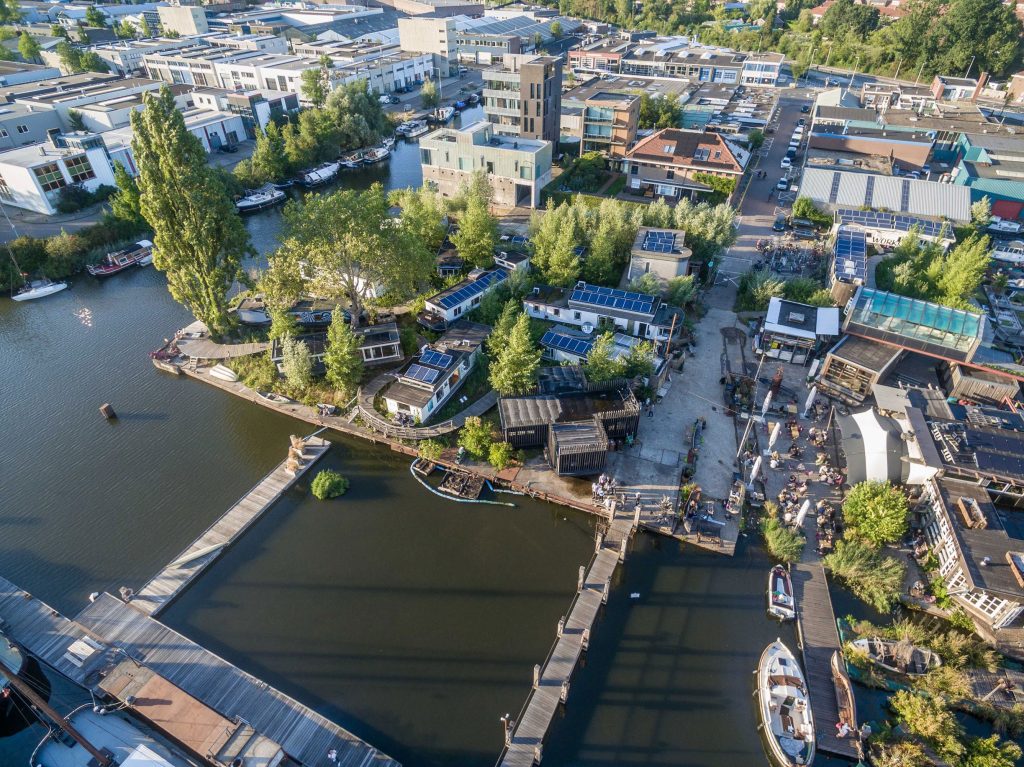
If Buiksloterham represents structure and planning, De Ceuvel embodies creativity and experimentation. Once a polluted shipyard, the site was reimagined by architects and entrepreneurs who wanted to create something new but with old materials.
They upcycled houseboats into floating offices and studios, connecting them with wooden walkways made from reclaimed construction timber. Moreover, every structure was temporary and reusable, allowing for future relocation or redesign.
Instead of using chemical methods to clean the soil, the team relied on phytoremediation plants, which absorb and break down toxins naturally. Consequently, nature became an active partner in the regeneration process.
Today, De Ceuvel has evolved into a creative and ecological hub, attracting artists, researchers, and innovators committed to sustainability
Circular Design: Building for the Future
At the core of Amsterdam’s transformation lies circular design thinking a mindset that looks beyond the present. Every building is planned for reuse and regeneration.
Architects now design structures that can be disassembled, reconfigured, and reused rather than demolished. As a result, resources remain in circulation longer, and the environmental footprint continues to shrink.
Additionally, this design approach has helped lower CO₂ emissions and reduce material costs. Amsterdam has proven that sustainability can drive both environmental and economic progress. This is the essence of Circular Economy in Cities in practice
Measurable Impact: The Results Speak Clearly
Amsterdam’s efforts have produced remarkable, measurable results:
-
Nearly 95% of construction and demolition waste in pilot projects was recycled or reused.
-
CO₂ emissions linked to construction dropped by 32%.
-
Developers cut material expenses by up to 25%.
-
More than 500 local jobs were created in recycling and green innovation sectors.
Altogether, these outcomes show that Circular Economy in Cities offers not just environmental benefits, but also economic resilience and community growth
People Power: The Community Behind the Change
Amsterdam’s circular success is not only about technology or policy it’s about people.
From the start, residents, architects, and entrepreneurs participated in planning sessions, workshops, and co-design activities. Because of this collaboration, local communities took ownership of the change.
In turn, sustainability became a shared mission rather than an external demand. This inclusive model demonstrates that Circular Economy in Cities works best when citizens play an active role
A Growing Circular Economy in Cities
The city’s focus on construction waste recycling also stimulated economic growth.
New companies emerged to provide circular materials, modular design solutions, and innovative reuse systems. Meanwhile, small startups turned reclaimed bricks, wood, and glass into valuable commercial products.
As a result, Amsterdam now serves as a magnet for sustainable investment, attracting global innovators eager to contribute to the city’s eco-focused economy
Inspiring the World: Lessons from Amsterdam
Today, cities from London to Copenhagen look to Amsterdam as a model of transformation. Urban planners, developers, and policymakers study how the city has turned waste into opportunity.
Indeed, Amsterdam has proven that the Circular Economy in Cities can succeed in practice. By reusing materials, cities can lower emissions, save money, and enhance urban quality
The Future of Circular Economy in Cities
As Amsterdam continues its journey toward full circularity by 2050, the message is clear: waste is a resource waiting for purpose.
By rethinking how we design and build, cities everywhere can grow sustainably and regenerate naturally. The circular model offers a future of prosperity, not scarcity.
Neighborhoods like Buiksloterham and De Ceuvel show that Circular Economy in Cities thrives through innovation, cooperation, and vision. Together, they point the way toward a future where sustainability and creativity walk hand in hand
Conclusion: Building Tomorrow from Today’s Waste
Amsterdam’s story shows how Circular Economy in Cities can reshape entire communities. With bold leadership, creative reuse, and citizen participation, the city has turned construction waste into sustainable neighborhoods full of life.
As more cities face climate and growth challenges, Amsterdam’s experience provides a hopeful blueprint. With circular thinking, we can design cities that thrive without waste and give back more than they take
Looking ahead, these ideas will take center stage at the Disrupting for Good: AI, Entrepreneurship, and Sustainable Circular Economy – 2nd Edition conference, scheduled for January 28–29, 2026, at the American University of Ras Al Khaimah, United Arab Emirates.
This international event will bring together innovators, entrepreneurs, and sustainability experts to explore how AI and the circular economy can shape the next generation of Circular Cities.
Ultimately, the future belongs to those who see waste as opportunity and who choose to rebuild our world with creativity, care, and purpose.
