



The Enigma of “Stealth” Volcanoes: A Call for Advanced Volcanic Hazard Prediction
Volcanoes are powerful and unpredictable. A new type of volcano, called a “stealth” volcano, is even harder to predict. These volcanoes, like Alaska’s Veniamin of, erupt without the usual warning signs. This creates a major risk for people and infrastructure nearby. Understanding these silent threats is a key focus for the upcoming MENA Earth Systems Sciences Congress (MESC). It is also crucial for the future of geoscience.
Unveiling the Mechanisms: Why Some Volcanoes Stay Silent
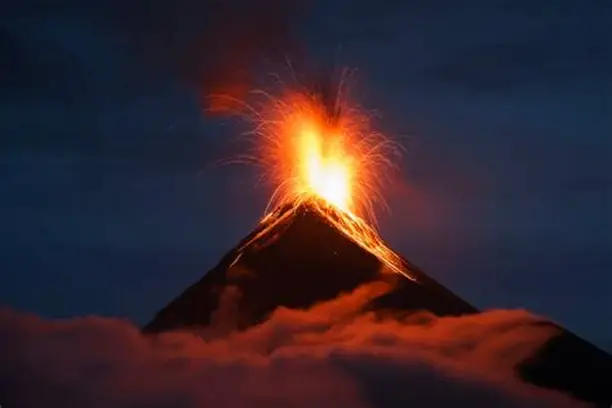
Case Study: Veniaminof Volcano, Alaska
Veniaminof, an ice-clad stratovolcano in the Aleutian Arc of Alaska, serves as a prime example of a stealthy volcano. Despite being one of Alaska’s most active volcanoes, with 13 eruptions since 1993, only two were preceded by sufficient warning signs for scientists to issue alerts [1]. A notable instance occurred in 2021, where an explosive eruption, sending ash 15 kilometers high, was only detected three days after it had commenced [1]. This delayed detection highlights the severe limitations of conventional monitoring methods when dealing with such volcanoes.
Researchers, including Dr. Yuyu Li from the University of Illinois, have modeled Veniamin Of’s stealthy behavior. They found that several factors contribute: a small magma chamber, low magma flow rates, and warm host rock [1]. When magma flows slowly into a small chamber and the surrounding rock is warm, it is less likely to produce detectable seismic activity or ground deformation. This makes the volcano appear quiet even when it is primed to erupt, challenging the very foundation of traditional volcanic hazard prediction.
Other Stealthy Volcanoes and Global Implications
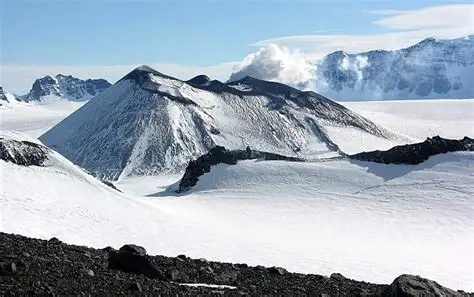
Veniaminof is not an isolated case. The phenomenon is not confined to Alaska. Cleveland, Shishaldin, and Pavlov share similar traits, while further afield, volcanoes like Popocatépetl in Mexico and Merapi in Indonesia also display stealthy behavior. These examples highlight the global scale of the challenge, especially for populations and air traffic at risk [1]. These global examples underscore the widespread challenge posed by stealthy volcanoes and the urgent need for advanced volcanic hazard prediction techniques.
The study of these volcanoes reveals that the internal conditions of a magma system play a crucial role in determining the detectability of pre-eruptive signals. Magma flowing into larger, flatter chambers might cause minimal earthquakes, while smaller, more elongated chambers might produce little ground deformation. However, the presence of consistently warm host rock further masks these signals, making eruptions even more stealthy [1]. This complex interplay of geological factors necessitates a multi-faceted approach to monitoring and prediction.
The MENA Earth Systems Sciences Congress (MESC): A Platform for Advancing Volcanic Hazard Prediction
The MENA Earth Systems Sciences Congress (MESC) serves as a vital annual gathering for scientists, policymakers, industry leaders, and community stakeholders across the Middle East and North Africa. It is a forum dedicated to fostering collaboration, sharing knowledge, and advancing innovation within the Earth Sciences [3]. The challenges posed by stealth volcanoes underscore the critical importance of platforms like MESC, where cutting-edge research and interdisciplinary approaches to volcanic hazard prediction can be discussed and developed.
For professors, academics, and researchers, MESC offers an unparalleled opportunity to engage with leading experts in volcanology, seismology, remote sensing, and risk assessment. Discussions at MESC will undoubtedly explore the latest advancements in monitoring technologies, data analysis techniques, and predictive modeling crucial for improving volcanic hazard prediction. By participating, attendees can contribute to and benefit from a collective effort to enhance our understanding of volcanic processes and develop more robust strategies for protecting vulnerable populations.
Join the Conversation: Shape the Future of Volcanic Hazard Prediction
The insights gained from studying Alaska’s stealth volcanoes are not confined to a single region; they have global implications for volcanic hazard assessment and mitigation. As we continue to unravel the mysteries of these silent giants, the need for collaborative research and knowledge exchange becomes ever more pressing. The MESC provides the perfect environment for this critical dialogue.
We invite all professors, academics, and researchers to join us at the MENA Earth Systems Sciences Congress to contribute to this essential conversation. Your expertise and perspectives are invaluable in shaping the future of volcanic hazard prediction and ensuring the safety of communities worldwide. By working together, we can transform our understanding of these silent threats and develop the strategies needed to protect communities worldwide. The challenge is immense, but so is our collective ability to rise to it.
References
[1] Li, Y., Gregg, P. M., Lu, Z., & Wang, J. (2025). Stealthy magma system behavior at Veniaminof Volcano, Alaska. Frontiers in Earth Science, 13. https://www.frontiersin.org/journals/earth-science/articles/10.3389/feart.2025.1535083/full
[2] Scientists uncover why “stealth” volcanoes stay silent until eruption. (2025, June 10). ScienceDaily. https://www.sciencedaily.com/releases/2025/06/250610074307.htm
[3] MENA Earth Systems Sciences Congress (MESC). IEREK. https://www.ierek.com/events/mena-earth-science-congress-mesc
