



North Africa has long been a cornerstone of the global energy market, a region where vast deserts and deep waters conceal immense geological wealth. The story of its energy reserves is dynamic, continuously evolving with discoveries and technologies. The ongoing hydrocarbon exploration in North Africa is not just about finding new resources; it’s about deciphering complex petroleum systems that have been millions of years in the making. This post delves into two contrasting but equally important case studies: the prolific, mature Ghadames Basin and the challenging, high-potential frontier of the Red Sea.
The Ghadames Basin: A Prolific Saharan Giant
The Ghadames Basin is a classic example of a supergiant intracratonic sag basin stretching across Algeria, Tunisia, and Libya. For decades, it has been a reliable engine of Algeria’s energy sector, yet it continues to surprise geologists with its untapped potential.
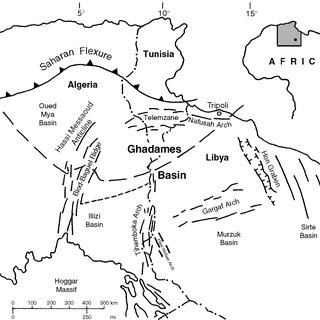
The Geological Blueprint for Success
The basin’s immense hydrocarbon wealth is the result of a perfect geological storm. Its story begins over 400 million years ago.
- World-Class Source Rocks: The foundation of the Ghadames Basin’s petroleum system lies in two key source rock formations: the Lower Silurian Tannezuft Formation and the Upper Devonian Frasnian Formation. These organic-rich “hot shales” were deposited in an anoxic marine environment, allowing vast quantities of organic matter to be preserved. Over time, burial and heat transformed this matter into the oil and gas that define the basin today.
- High-Quality Reservoirs: The hydrocarbons, once generated, needed a place to accumulate. They migrated into highly porous and permeable reservoir rocks. The most significant of these are the Triassic TAGI sandstones and the Devonian F3/F4 sandstones. These fluvial and deltaic deposits provide excellent storage capacity for the migrated oil and gas.
- Impermeable Seals and Traps: To prevent the hydrocarbons from escaping, an effective seal is crucial. The Ghadames Basin is blessed with thick layers of Triassic evaporites (salt) and shales that act as a regional caprock. This impermeable barrier, combined with structural faulting and anticlines, created the perfect trapping mechanisms, preserving enormous quantities of hydrocarbons for millennia. This systematic hydrocarbon exploration in North Africa has been key to mapping these intricate systems.
Modern Exploration in a Mature Basin
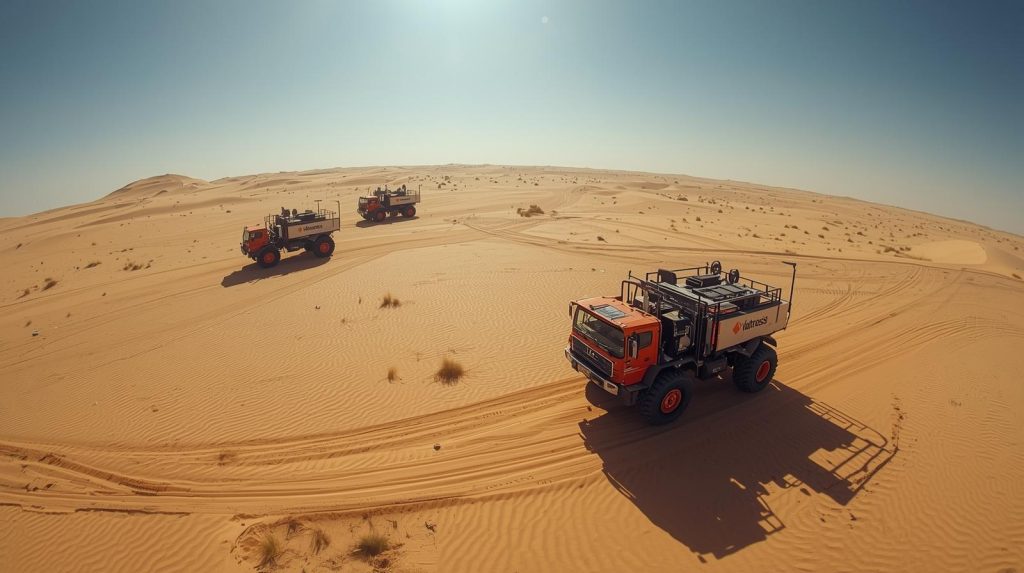
You might think that after decades of production, a basin like Ghadames would have few secrets left. However, technology continues to push the boundaries. Advanced 3D and 4D seismic imaging techniques allow geoscientists to visualize the subsurface with unprecedented clarity. This helps in identifying subtle, previously missed stratigraphic traps and in optimizing production from existing fields. The ongoing work here is a testament to how innovation can breathe new life into mature assets.
The Red Sea: A Frontier of Tectonic Opportunity
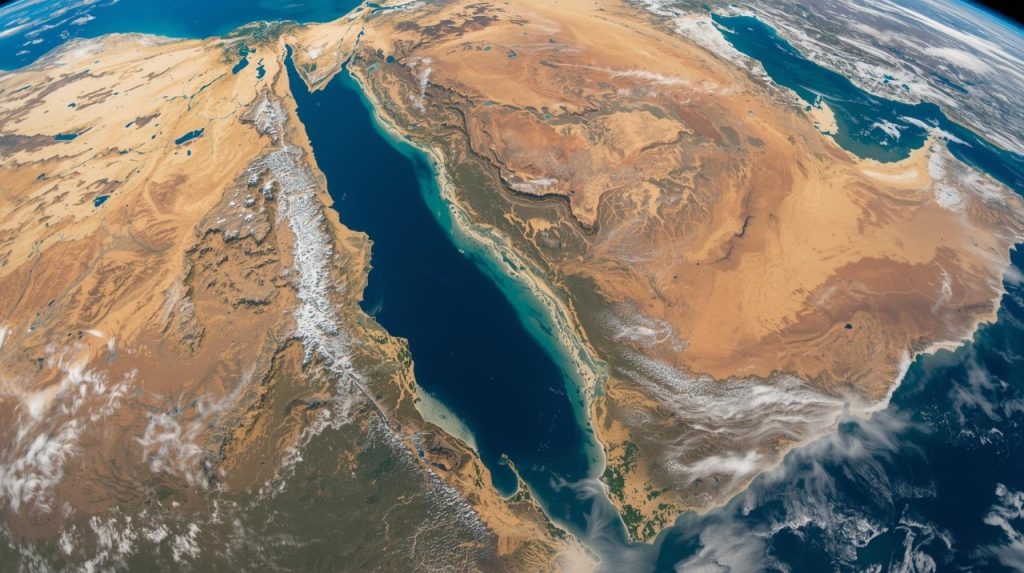
In contrast to the mature Ghadames Basin, the Red Sea represents a frontier of youthful tectonics, a dynamic rift zone still in the making. As the African and Arabian plates pull apart, they are creating a new ocean basin and a frontier for energy exploration filled with both immense promise and formidable challenges.
A Unique and Complex Tectonic Setting
The Red Sea is a classic rift valley. Its unique geological evolution has created a petroleum system unlike any other.
- The Salt Giant: The most defining feature of the Red Sea’s geology is its massive salt layer, known as the “Messinian salt.” Deposited around 5-6 million years ago when the connection to the Indian Ocean was severed, this salt layer is several kilometers thick in places. While these salt bodies (diapirs) are excellent at trapping hydrocarbons, they also create a major imaging problem, distorting seismic waves and making it difficult to see the structures beneath.
- Source and Reservoir Potential: Despite the challenges, the Red Sea shows clear signs of a working petroleum system. Pre-rift and syn-rift sediments, including organic-rich shales from the Miocene, are believed to be effective source rocks. The primary exploration targets are sandstone and carbonate reservoirs located in tilted fault blocks beneath the thick salt layers. The high heat flow from the rifting process could have accelerated the maturation of source rocks, potentially generating significant quantities of oil and gas in a relatively short geological timeframe.
Overcoming the Exploration Hurdles
Modern hydrocarbon exploration in North Africa, particularly in complex offshore settings like the Red Sea, is a high-tech endeavor. Companies are employing sophisticated algorithms and processing techniques, such as Full Waveform Inversion (FWI), to “see through” the salt and accurately map the pre-salt reservoirs. Furthermore, the high-pressure, high-temperature (HPHT) conditions found at depth require specialized drilling equipment and expertise. Each successful well in the Red Sea is a major technological achievement.
The Future of North African Energy
From the mature fields of the Sahara to the frontier plays of the Red Sea, hydrocarbon exploration in North Africa is more than an economic engine, it is a driver of scientific discovery, technological innovation, and regional energy security. Looking ahead, these basins will play a pivotal role in balancing the region’s hydrocarbon legacy with the demands of a transitioning global energy landscape. The insights gained here contribute to a global understanding of how petroleum systems form and evolve.
Join the Conversation at MESC
Are you passionate about the future of energy and earth sciences? The topics discussed here are just a glimpse of the in-depth conversations happening at the MENA Earth Systems Sciences Congress (MESC). This is a unique opportunity to connect with leading experts, geoscientists, and industry professionals to explore the latest research and technological advancements in the field.
Be part of this vital conversation. Register for MESC today to connect with global experts, share insights, and help shape the future of energy and earth sciences in the MENA region and beyond.
For more info: MESC2026 Showcase
