


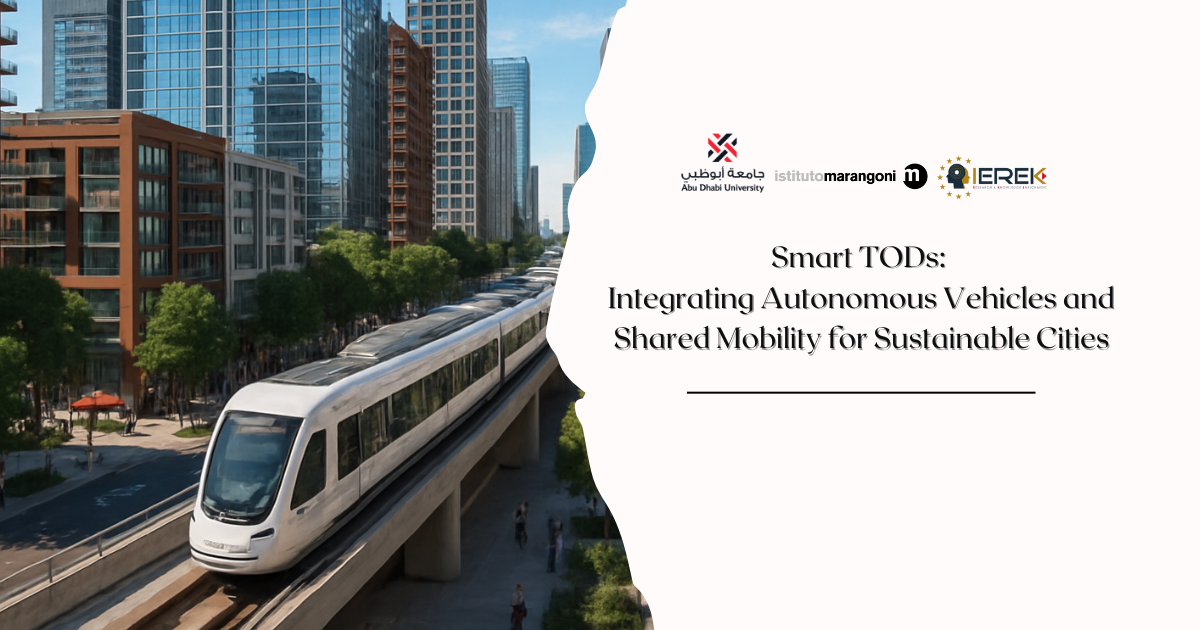
Smart TODs: Integrating Autonomous Vehicles and Shared Mobility for Sustainable Cities
Exploring how the fusion of AVs, shared mobility services, and transit-oriented development can create equitable, future-ready urban spaces

Urban spaces are evolving at lightning speed, and with them comes the need for smarter, more sustainable ways to move people efficiently. Smart TODs with Autonomous Vehicles and Shared Mobility represent the next step in this evolution. Transit-Oriented Development (TOD) has long been a benchmark for designing walkable, high-density, mixed-use communities centered around public transit.
Now, with the rise of autonomous vehicles (AVs) and the growing popularity of shared mobility services, TOD is entering a new era — the era of Smart TODs. These forward-thinking developments go beyond building near transit lines; they integrate technology, flexibility, and equity to create sustainable urban ecosystems.
Understanding the Core Concepts
What is Transit-Oriented Development?
An urban planning approach that focuses on creating vibrant, mixed-use communities built around high-quality public transportation. TOD reduces dependence on private cars, encourages walking and cycling, and maximizes land use efficiency.
The Rise of Autonomous Vehicles (AVs)
AVs, powered by advanced sensors, AI, and machine learning, are redefining both personal and public transport — from driverless shuttles to on-demand AV taxis.
Shared Mobility Services
Includes car-sharing, ride-hailing, bike-sharing, and e-scooter rentals — all designed to complement traditional transit by filling gaps, reducing congestion, and offering affordable mobility choices.
The Synergy Between AVs, Shared Mobility, and TOD
1. First-Mile/Last-Mile Connectivity
AVs can operate as on-demand shuttles, linking neighborhoods to transit hubs without private cars.
2. Flexible Transit Supplement
Shared mobility services can adapt to fluctuating demand and provide off-peak coverage.
3. Smart Infrastructure Integration
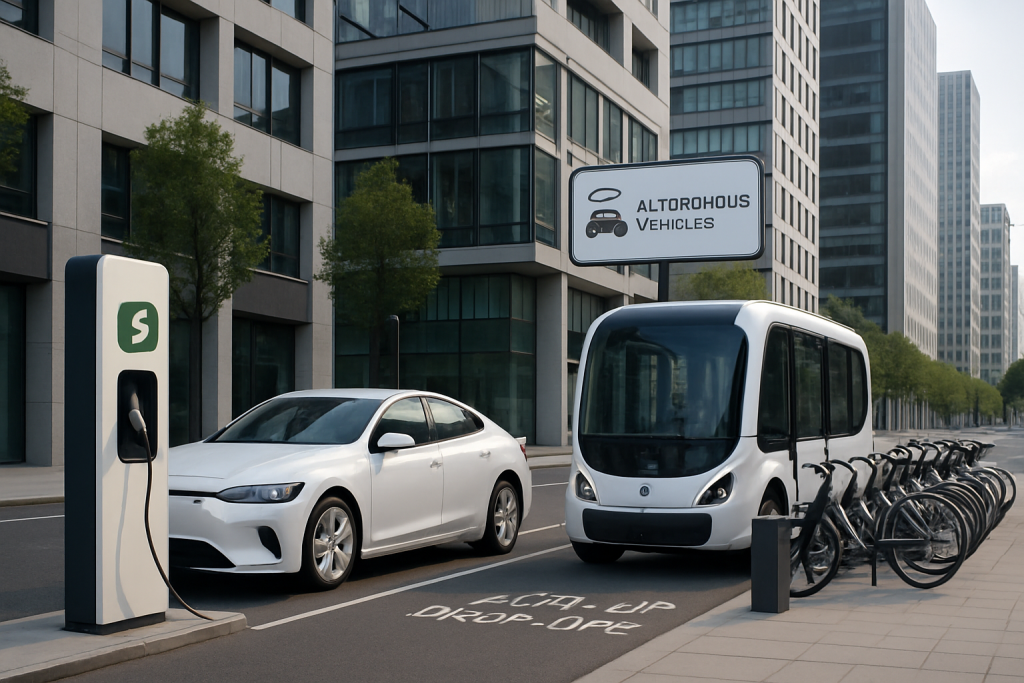
Charging stations, AV pick-up/drop-off points, and shared mobility docking areas seamlessly blend into the urban fabric.
Benefits of Creating Smart TODs
-
Reducing Traffic Congestion — Prioritizing shared rides and AV shuttles over private vehicles.
-
Enhancing Accessibility — Wheelchair-accessible AVs, safe walking paths, and inclusive infrastructure.
-
Lowering Emissions — Electric AVs and shared fleets drastically cut carbon footprints.
Equity in Smart TOD Planning
-
Bridging Mobility Gaps — AVs can connect underserved communities to jobs, healthcare, and education.
-
Ensuring Affordability — Subsidized pricing models ensure equal access.
-
Inclusive Urban Design — Spaces designed with community input and cultural inclusivity.
Technological Innovations Driving Smart TODs
-
IoT and Smart Traffic Management — Real-time data to adjust transit schedules dynamically.
-
AI-Powered Urban Planning — Optimized layouts for efficiency and livability.
-
Data Integration — Smooth connections between AV operators, transit agencies, and mobility apps.

Challenges and Barriers
-
Infrastructure Costs — Building AV-ready streets and charging stations.
-
Policy and Regulation — Safety standards, privacy, and equitable service rules.
-
Public Trust — Building confidence through testing and transparent communication.
Global Examples
-
Singapore — Integrated mobility hubs combining AV shuttles, metro access, and shared bikes.
-
Sweden — AV-only urban districts in Gothenburg.
-
United States — AV shuttles serving TOD communities near transit corridors.
Strategies for Successful Implementation
-
Public-Private Partnerships — Aligning innovation with community needs.
-
Community Engagement — Involving residents in the planning process.
-
Phased Integration — Testing before scaling up city-wide.
The Future of Smart TODs
-
Fully Automated Mobility Ecosystems — Minimal private car ownership.
-
Integration with Renewable Energy — Solar and wind-powered AV charging.
-
Car-Free Urban Cores — Many cities are already preparing for it.
Conclusion
Smart TODs represent the next leap in urban development — blending technology, equity, and sustainability into living, connected communities. By integrating AVs, shared mobility, and smart infrastructure into TOD frameworks, cities can create mobility systems that are efficient, inclusive, and environmentally responsible.
This transformative topic will be a key focus of the International Conference on Environmental Design, Material Science, and Engineering Technologies (EDMSET) – 3rd Edition, held in collaboration with Abu Dhabi University and Istituto Marangoni Dubai, from 12–14 May 2026 in Abu Dhabi, UAE. The conference will bring together global experts, researchers, and industry leaders to share strategies for making Smart TODs a reality.
