


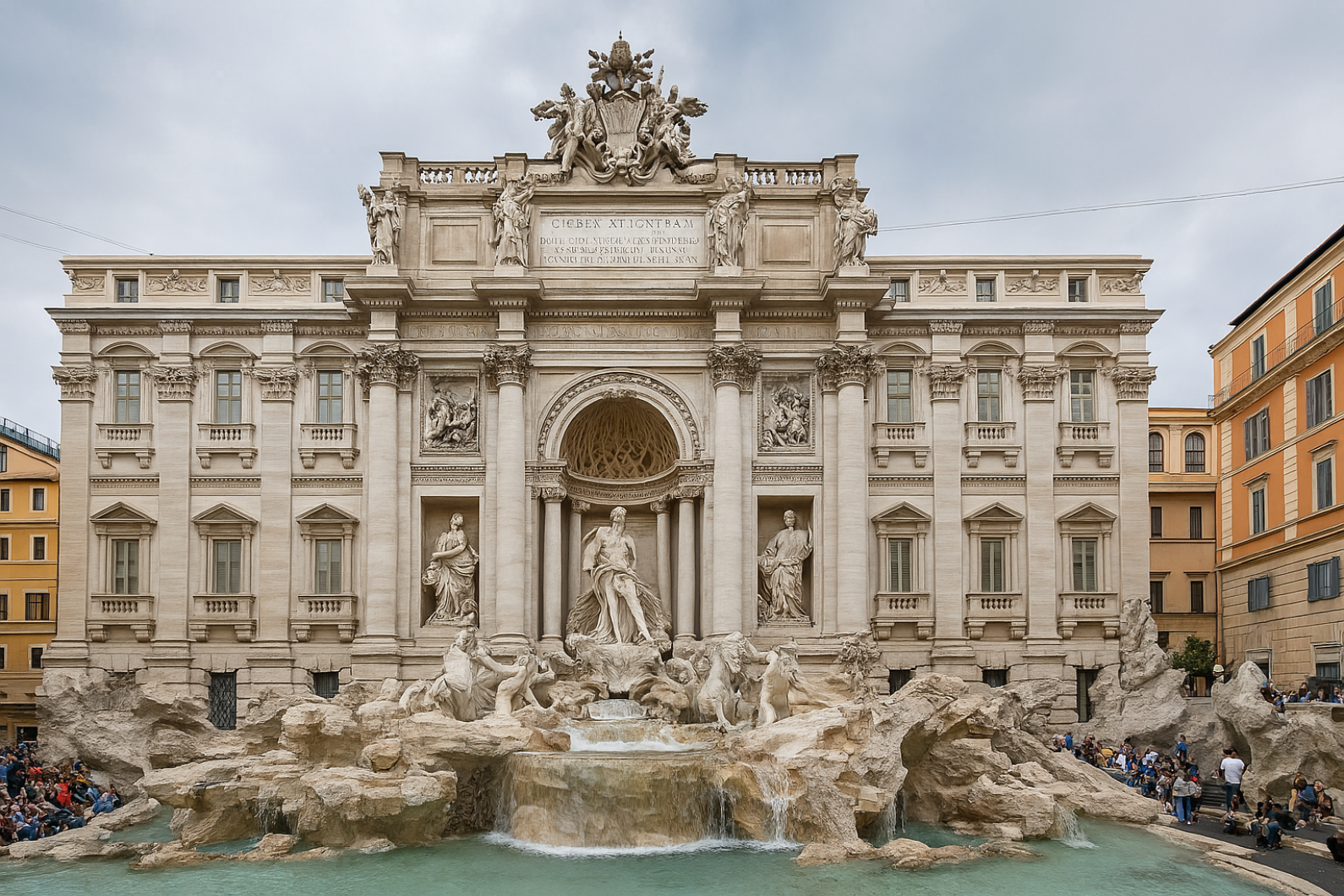

The Fontana di Trevi is one of the world’s most famous fountains, admired for its grandeur and rich history. But beyond its beauty lies a fascinating story of geology, engineering, and sustainable resource use. As the MENA Earth Systems Sciences Congress (MESC) emphasizes the value of integrating natural systems into urban planning, this Roman landmark offers timeless lessons in Geo-Urbanism, showing how past societies harnessed local geology and water management for enduring urban design.
The Geological Foundations of Fontana di Trevi
The Fontana di Trevi, a masterpiece of Baroque artistry, is not merely a decorative monument but a profound illustration of the interplay between human design and geological resources. Its construction heavily relied on locally sourced materials, primarily travertine stone and, to a lesser extent, Carrara marble. Travertine is a porous limestone with a distinctive creamy-white to yellowish color. It was extensively quarried in Tivoli, about 35 kilometers east of Rome, and has been a staple of Roman architecture for centuries, famously used in landmarks such as the Colosseum [12, 18]. The durability and aesthetic appeal of travertine made it an ideal choice for the fountain’s grand facade and intricate sculptural elements.
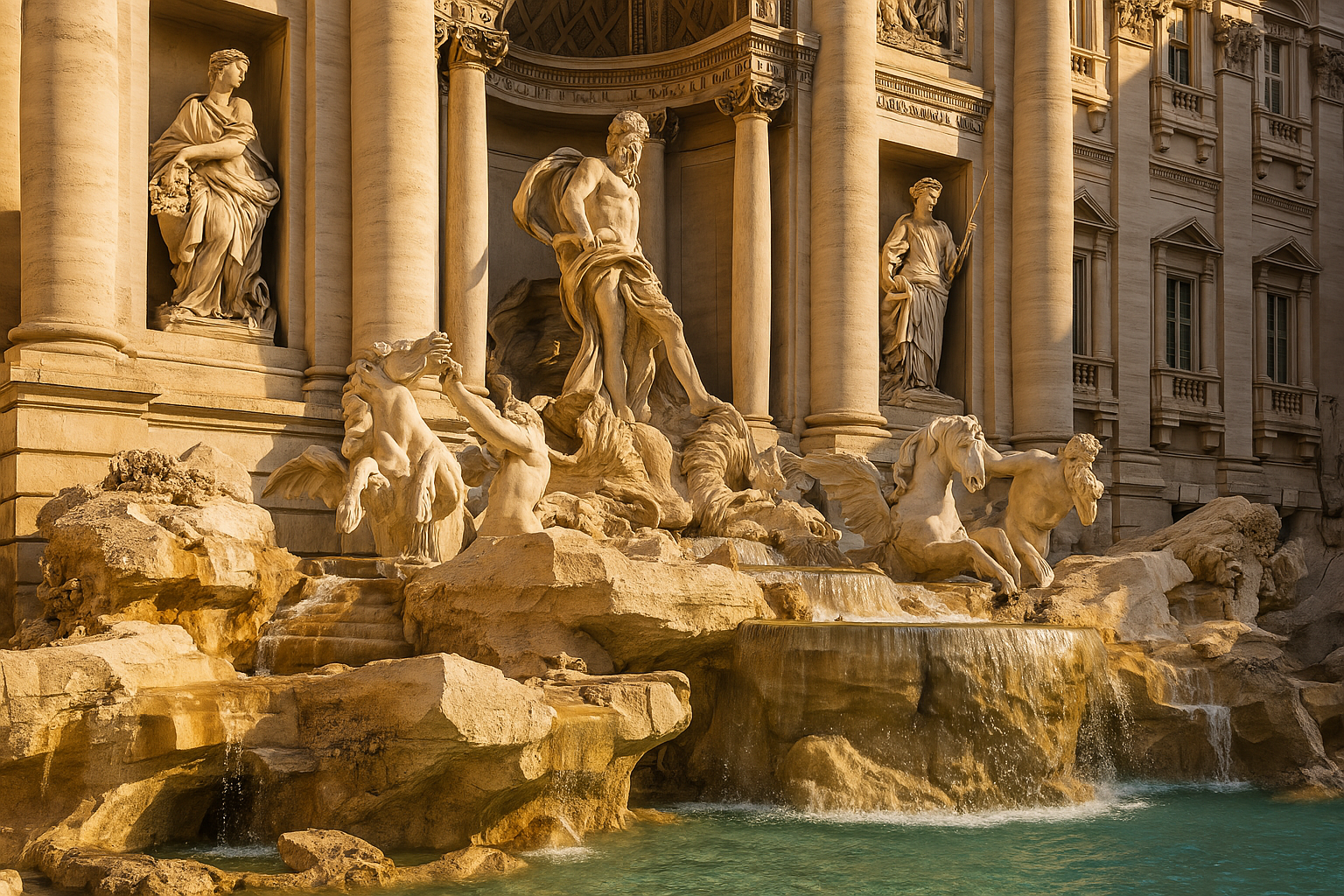
The use of travertine in the Fontana di Trevi is a testament to the Romans’ deep understanding of their local geology and their ability to harness natural resources for monumental constructions. The stone’s inherent properties, including its resistance to weathering and its ability to be carved with precision, allowed for the creation of the fountain’s dynamic and detailed figures, such as Oceanus and the tritons. Furthermore, the fountain’s structural integrity, enduring centuries of exposure to water and the elements, speaks volumes about the geological suitability of travertine for such an ambitious project.
The Aqua Virgo Aqueduct: A Hydrological Marvel
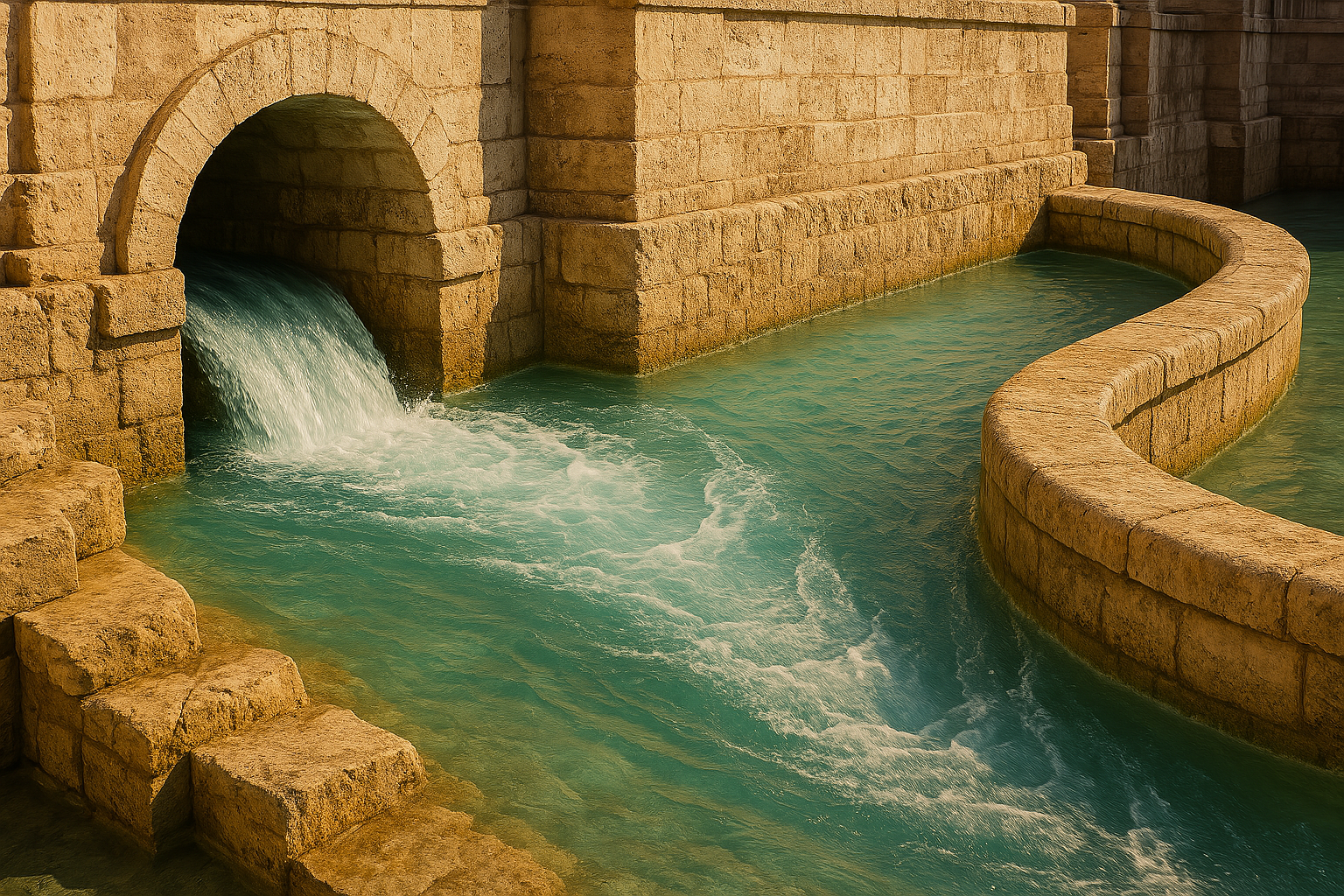
Beyond its visible stone, the very lifeblood of the Fontana di Trevi is its water, supplied by the ancient Aqua Virgo aqueduct. Constructed in 19 BC by Marcus Vipsanius Agrippa, this aqueduct is a remarkable feat of Roman engineering and a prime example of sustainable water management [8, 11]. The Aqua Virgo, still in continuous use today, transports water over 20 kilometers from its source in the Alban Hills, primarily through underground channels, to the heart of Rome [1, 5]. The consistent flow and purity of this water have been integral to the fountain’s operation and its symbolic significance throughout history.
Aqua Virgo’s longevity and efficiency are directly linked to the region’s hydrogeological characteristics. The aqueduct taps into natural springs and groundwater sources, demonstrating an early understanding of hydrological cycles and the importance of a reliable water supply for urban centers. The design of the aqueduct, which relies on gravity to maintain a steady flow, showcases an ingenious application of geological principles to ensure a continuous and sustainable water supply. This historical precedent of managing water resources for urban development provides a valuable lesson for contemporary discussions on sustainable urbanism and resource management, topics central to the MESC agenda.
Interdisciplinary Insights for Earth Scientists
The Fontana di Trevi, therefore, offers a rich interdisciplinary case study for earth scientists. It highlights:
- Geomaterials Science: The selection and performance of travertine as a primary construction material, its quarrying, and its long-term durability in an aquatic environment.
- Hydrogeology: The sustainable management of water resources through the Aqua Virgo aqueduct, its source, flow dynamics, and the underlying geological formations that support it.
- Geological Heritage: The recognition of natural geological features and materials as integral components of cultural heritage and urban identity.
- Urban Geology: The profound influence of local geology on urban planning, infrastructure development, and the resilience of historical structures.
As modern cities grapple with climate change, water scarcity, and sustainable construction, the Fontana di Trevi reminds us that geology and urban planning have always been intertwined. By applying similar principles, using local materials, designing for longevity, and integrating natural water systems, we can create cities that are not only functional but also enduring. The fountain stands as a powerful reminder of Geo-Urbanism, urging us to consider the long-term geological implications of our urban developments. It exemplifies how understanding the Earth’s systems can lead to enduring and beautiful creations, reinforcing the importance of Geo-Urbanism in our collective future. The continued study of such historical marvels provides invaluable data for contemporary research in sustainable development, underscoring the enduring legacy of Geo-Urbanism in shaping our world. This case study powerfully illustrates the practical applications of earth science knowledge, emphasizing the critical role of Geo-Urbanism in building resilient societies.
References
MENA Earth Congress: MENA Earth Science Congress (MESC)
[1] Trevi Fountain – Wikipedia. URL: https://en.wikipedia.org/wiki/Trevi_Fountain
[5] Trevi Fountain – Italy – Water supply – Caprari. URL: https://www.caprari.com/en-en/progetti/trevi-fountain-italy-water-supply/
[8] Trevi Fountain: Everything You Need to Know Guide. URL: https://www.romaexperience.com/post/trevi-fountain
[11] 8 Things you Never Knew About the Trevi Fountain – Dark Rome. URL: https://darkrome.com/blog/Rome/things-you-never-knew-about-trevi-fountain
[12] Trevi Fountain Facts: All You Need To Know About The Fontana Di …. URL: https://www.tours-italy.com/blog/all-you-need-know-about-fontana-di-trevi
[18] Trevi Fountain: Secrets, History, and Facts – Rome – Travel + Leisure. URL: https://www.travelandleisure.com/attractions/landmarks-monuments/trevi-fountain-unique-facts-history
