


Introduction
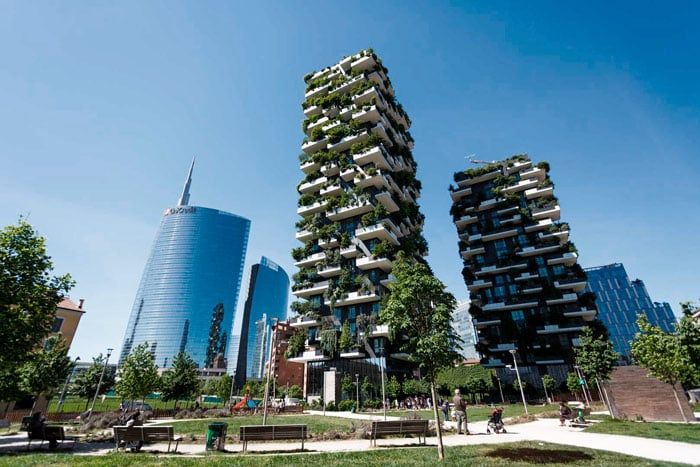
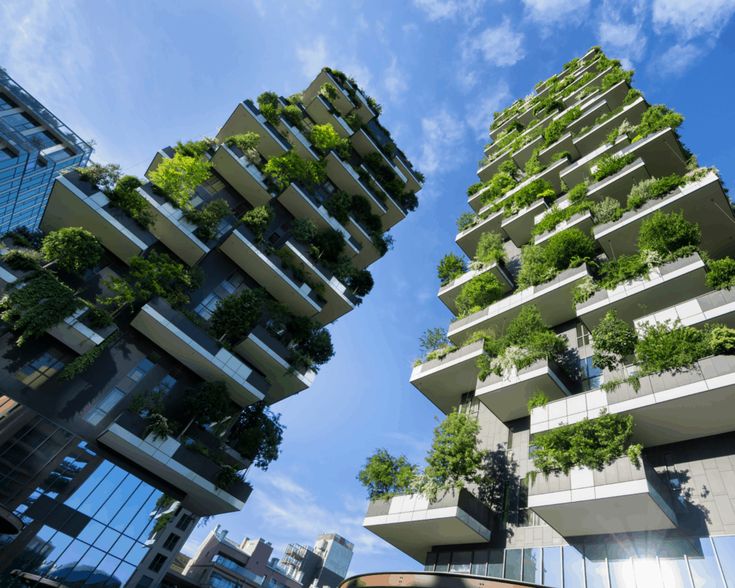
In the bustling heart of Milan, where fashion, finance, and forward-thinking design converge, two towers rise above the skyline like vertical ecosystems. These are the Bosco Verticale, or Vertical Forest, a groundbreaking architectural project that has captured global attention and admiration. Designed by renowned Italian architect Stefano Boeri, Bosco Verticale is not just a modern building it is a revolutionary concept that merges urban architecture with living nature.
Reimagining the Urban Landscape
Bosco Verticale was completed in 2014 as part of Milan’s Porta Nuova redevelopment district. It consists of two residential towers, standing at 80 meters and 112 meters respectively. What sets them apart is not their height or sleek design, but the over 20,000 plants that cover the facades of the buildings.
This includes: 900 trees, 5,000 shrubs, and 11,000 floral plants, all covering 23,000 square meters of vertical surface.
Instead of occupying ground space like a traditional park, this forest grows vertically, turning the towers into living, breathing organisms that contribute to the city’s ecology.
A Living, Breathing Skyscraper
The design concept is both poetic and practical. The extensive vegetation performs multiple ecological functions:
- Improves air quality by filtering dust and pollutants.
- Reduces CO₂ emissions and increases oxygen levels.
- Regulates temperature inside the apartments by acting as a natural insulator.
- Absorbs noise pollution and improves the microclimate around the buildings.
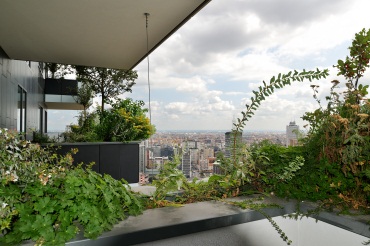
This green envelope not only protects the building but also provides comfort and well-being to its residents. Living in Bosco Verticale means waking up to your own private garden, even if you’re 30 floors above street level.
Engineering Meets Ecology
Transforming a high-rise into a forest wasn’t without challenges. Traditional building methods couldn’t be applied blindly. The architects and engineers had to think beyond concrete and steel; they had to work with botanists, horticulturalists, and environmental scientists to create a functional and sustainable ecosystem.
Some unique engineering solutions include:
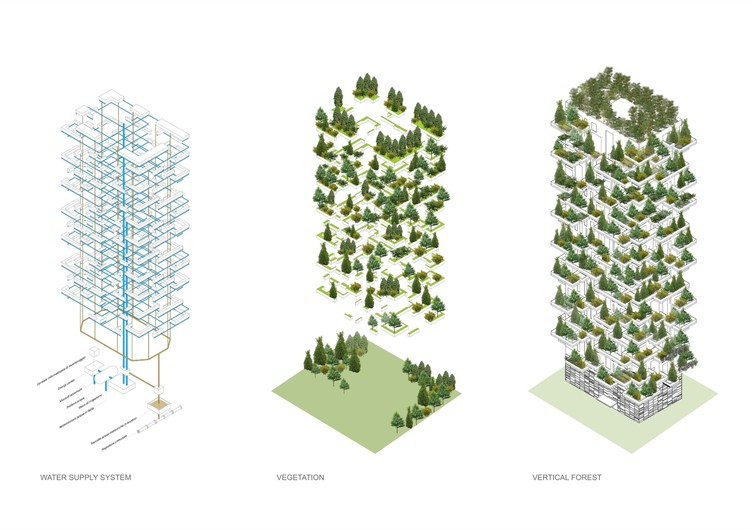
- Custom-designed balconies that are strong enough to support full-grown trees.
- An integrated irrigation system, which reuses filtered greywater to nourish plants.
- Careful selection of tree species, chosen for their adaptability to wind, sun exposure, and elevation.
Regular maintenance is key. Arborists use climbing equipment to prune trees, inspect root systems, and monitor the health of the flora, almost like gardeners of a high-rise jungle.
A Model of Sustainable Urban Development
Bosco Verticale represents a new philosophy in city planning. Urban environments are notorious for their heat islands, pollution, and lack of green space. This project challenges those problems by proposing a building that doesn’t destroy nature, it invites it in.
Beyond its environmental benefits, the Vertical Forest also supports:
- Urban biodiversity, attracting over 1,600 bird and butterfly species back to the city.
- Energy efficiency, reducing heating and cooling costs.
- Psychological well-being, as residents are surrounded by natural elements daily.
This is not just a luxury residence. It’s a symbol of environmental responsibility in the age of climate change.
Global Recognition and Replication
Bosco Verticale’s success didn’t go unnoticed. It received international accolades such as:
- The 2014 International Highrise Award,
- The 2015 CTBUH Best Tall Building Worldwide Award,
- And was praised by UN-Habitat as a model for future sustainable housing.
More importantly, the idea has taken root around the world. Vertical Forests inspired by Boeri’s vision are now under construction or planning in:
- Nanjing, China
- Utrecht, Netherlands
- Cairo, Egypt
- Paris, France
Each iteration adapts the core concept integration of greenery with dense urban housing to local climates and conditions, proving that Bosco Verticale is more than a one-time project. It’s a scalable solution to one of the most pressing issues of our time: how to make cities greener, healthier, and more livable.
A Glimpse Into the Future of Architecture
Bosco Verticale is not merely a building, it’s an idea, a manifesto for how architecture can coexist with the environment. It invites us to rethink the future of urban living. It’s a response to sprawl, pollution, and alienation from nature, proposing instead a future where cities don’t suffocate life, they support it.
As climate challenges grow and cities become more crowded, the Vertical Forest offers a bold answer: don’t pave over nature, build with it, around it, and for it.
Conclusion:
Bosco Verticale is more than an architectural marvel, it’s a bold step toward greener, healthier cities. By blending nature with urban design, Milan shows the world that sustainability and innovation can grow side by side. It’s a true symbol of the future of city living.
We encourage readers and professionals interested in fashion, architecture, and other creative arts to participate in the upcoming conference: Sustainable Creative Art: Inspiration from Nature (SCIN) – 2nd Edition.
Scheduled for 21–24 July 2026 at the National Museum of Science and Technology Leonardo da Vinci in Milan, Italy, this conference welcomes the international community of artists and scholars.
We are honored to host esteemed representatives from universities worldwide, who will share their invaluable insights and expertise. Renowned designers in architecture and other disciplines, including artists, fashion designers, and influential figures, will also contribute their knowledge and experiences.
