



Entrepreneurship in the Circular Economy: A New Path to Sustainable Business Success
In an era where sustainability has become a fundamental necessity rather than a peripheral concern, entrepreneurship within the circular economy is emerging as a transformative approach to business. The conventional “take-make-dispose” model is increasingly obsolete. Entrepreneurs and enterprises now recognize that minimizing waste, conserving resources, and embedding sustainability into core strategies are essential for long-term success.
Defining the Circular Economy and Its Relevance to Entrepreneurs
The circular economy represents a paradigm shift from the linear model of production and consumption. While the linear model involves creating, using, and discarding products, the circular economy promotes a regenerative system.
This model emphasizes reusing, refurbishing, and recycling materials to retain their value and utility for as long as possible.
As a result, the circular economy reduces environmental impact while generating economic value, making it highly relevant for modern entrepreneurs.
Circular Economy: A Lasting Shift, Not a Passing Trend
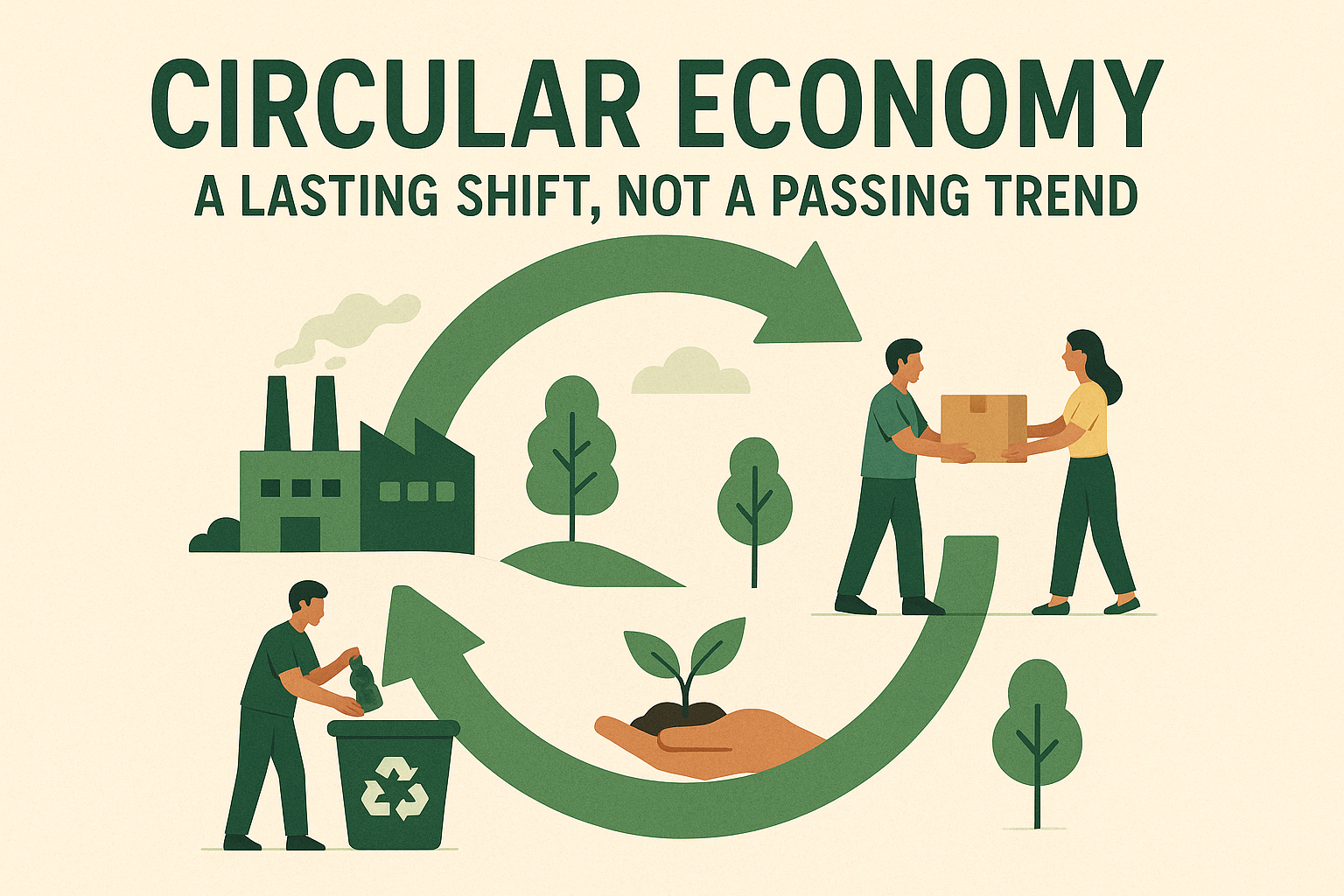
Although some may view sustainability as a trend, evidence strongly suggests that the circular economy is a permanent fixture of the business landscape.
Consumers increasingly demand environmentally responsible products; regulatory bodies are implementing stricter environmental policies; and corporations are discovering the economic advantages of waste minimization.
Entrepreneurs have a pivotal role to play. By leveraging emerging technologies, reimagining business models, and addressing environmental challenges with innovative solutions, they can align profitability with responsibility.
Advantages for Entrepreneurs Embracing Circularity
1. Resource Efficiency and Cost Reduction
Implementing circular practices, such as recycling and refurbishment, significantly decreases dependency on virgin raw materials.
As a result, businesses can reduce costs and protect themselves from resource scarcity and price volatility.
2. Enhanced Customer Loyalty
Environmentally aware consumers increasingly prefer brands that reflect their values. Businesses that offer products designed for durability, repairability, and recyclability often foster stronger customer loyalty.
3. Novel Revenue Streams
The circular economy facilitates new business models, such as product-as-a-service. Instead of traditional sales, companies can generate recurring revenue through leasing or subscriptions.
Additional opportunities lie in upcycling, waste-to-resource innovations, and reverse logistics.
4. Competitive Differentiation
By adopting circular principles, entrepreneurs can differentiate their offerings and gain a competitive advantage.
As environmental consciousness influences consumer behavior, early adopters will be seen as industry leaders.
Strategies for Integrating Circular Economy Principles
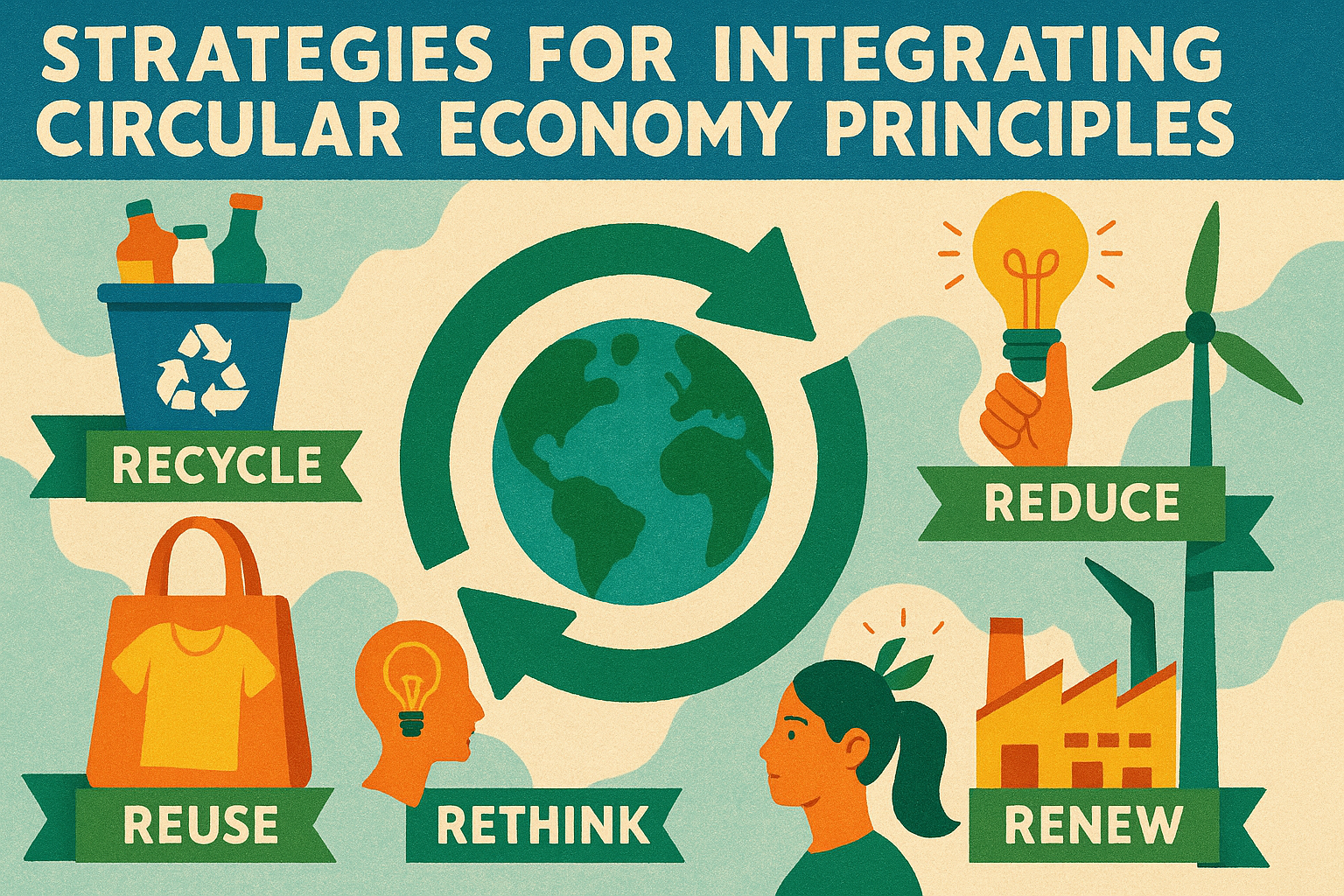
Rethinking Product Design
Product design is the foundation of circularity. Entrepreneurs should focus on durable, modular, and easily repairable products.
Modular design allows components to be replaced without discarding the entire item.
Implementing Take-Back Programs
Encouraging customers to return used products for repair or recycling fosters closed-loop systems.
Offering incentives such as discounts or points increases customer engagement.
Building Circular Supply Chains
Sustainable partnerships are key. Collaborate with suppliers who use recycled or renewable materials to build a resilient supply chain.
Educating and Engaging Customers
Consumer participation is essential. Use websites, social media, or product packaging to inform customers about how to extend product life and return used items.
Measuring Environmental Impact
Quantifying metrics like carbon emissions, waste generation, and resource usage supports continuous improvement.
Transparent reporting strengthens brand trust.
Addressing Challenges in Circular Economy Entrepreneurship
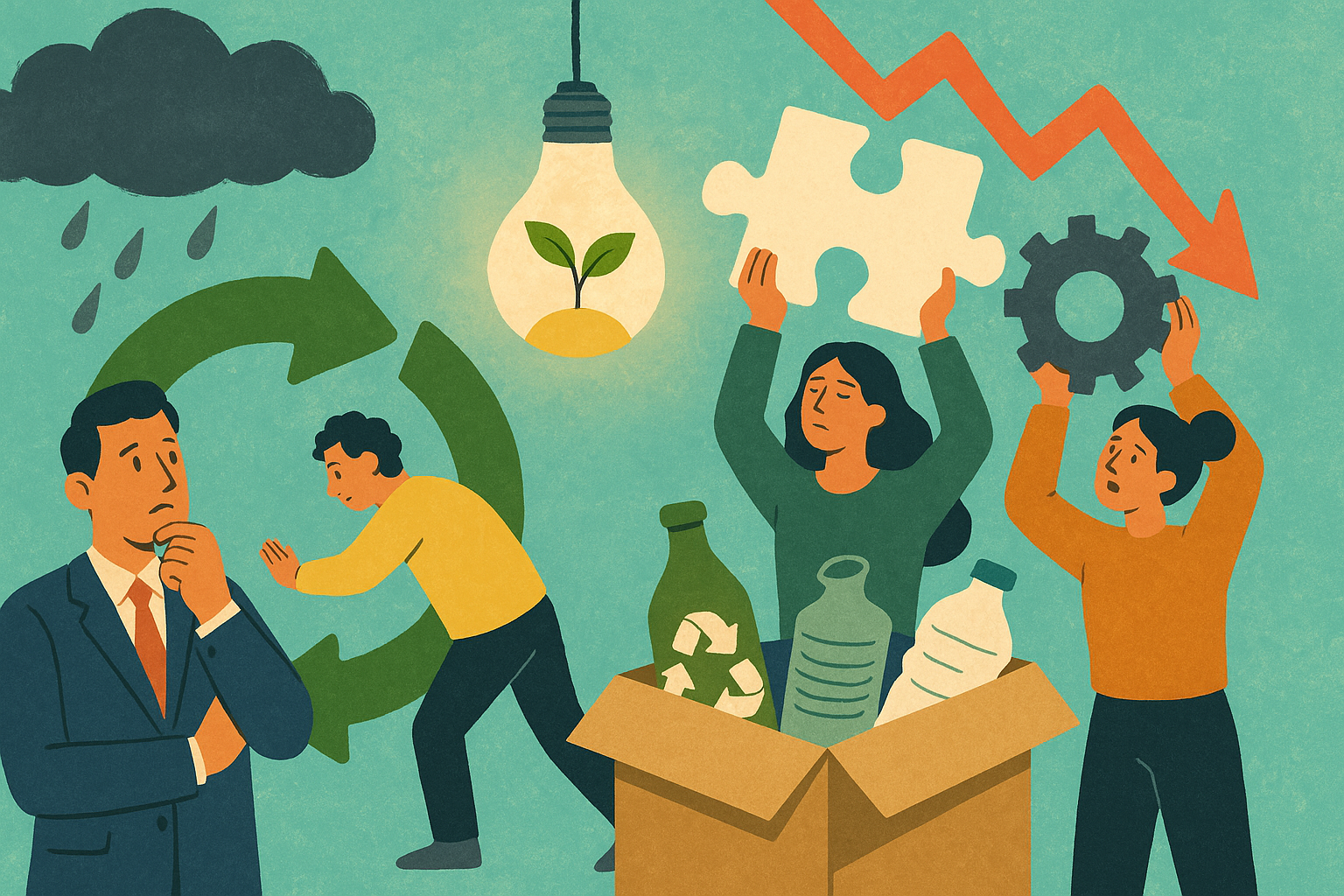
While the benefits are compelling, entrepreneurs may encounter significant challenges:
-
Initial Capital Requirements: Transitioning may involve high upfront investments, but long-term efficiency gains can offset these costs.
-
Supply Chain Complexity: Developing circular supply chains is more complex and requires innovation and collaboration.
-
Consumer Behavior: Some customers resist alternatives to disposables. Education and awareness campaigns are essential to overcome this.
Case Studies: Leading Examples in Circular Entrepreneurship

Examples of companies successfully applying circular principles include:
-
Patagonia: Through its “Worn Wear” program, Patagonia repairs and resells used clothing, promoting longevity and waste reduction.
-
Fairphone: A smartphone brand offering modular, repairable phones, extending product life and reducing waste.
-
Loop: A platform offering products in reusable packaging. Customers return empty containers, which are refilled and reused.
The Future of Circular Economy Entrepreneurship
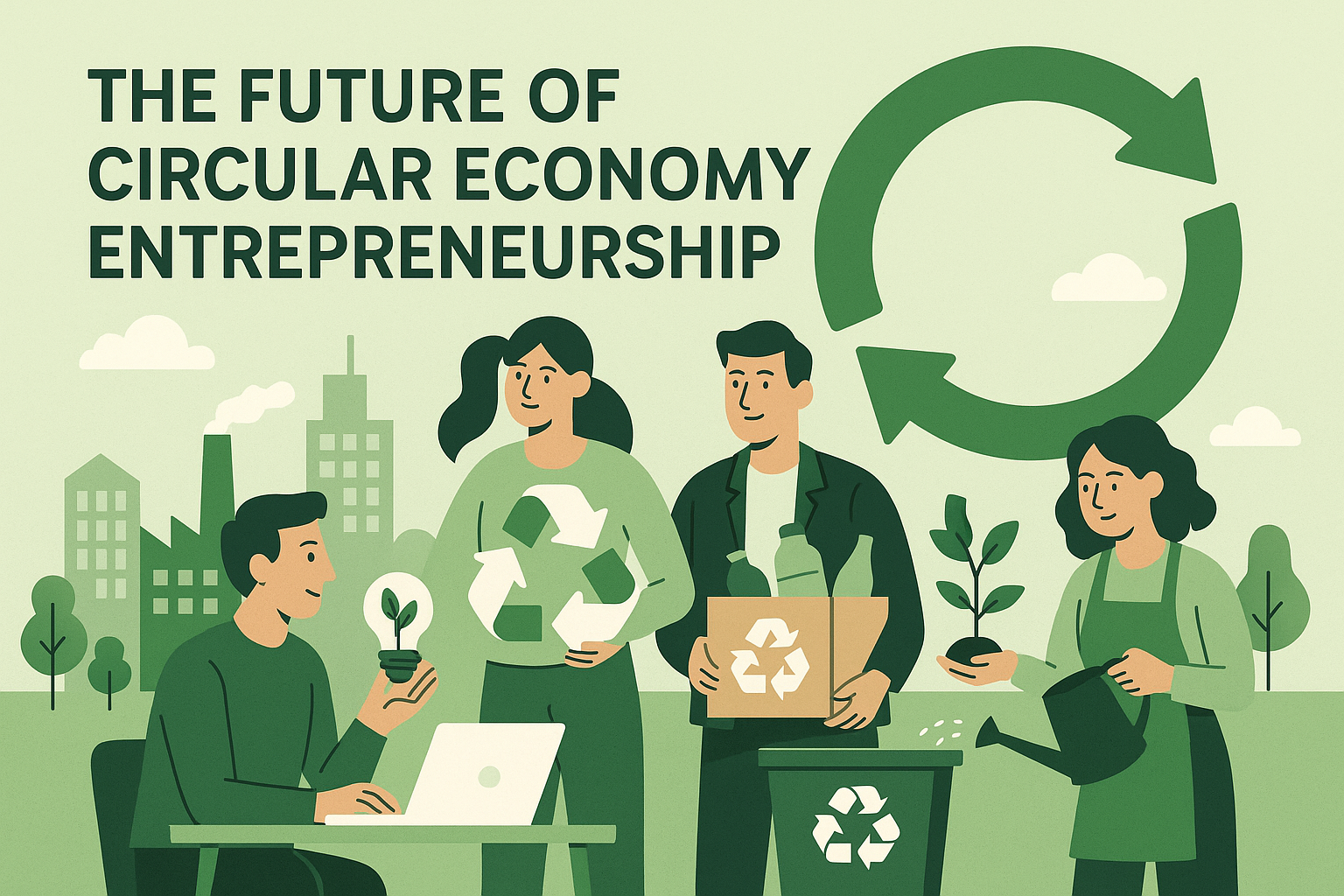
As sustainability becomes a global priority, entrepreneurial opportunities in the circular economy will rapidly expand.
By adopting circular practices, entrepreneurs can lead in building resilient, future-proof businesses.
Conclusion
Circular economy entrepreneurship is more than a sustainability initiative—it is a blueprint for resilient and profitable business models.
By aligning ecological responsibility with innovation, entrepreneurs can shape a world that is both economically successful and environmentally sustainable.
This theme will be further explored at the Disrupting for Good: AI, Entrepreneurship, and Sustainable Circular Economy – 2nd Edition conference, where thought leaders and innovators will share strategies for a more sustainable future.
