



The Fundamental Role of an Effective Conclusion in Securing Scientific Clarity and Research Impact

The final section of an academic paper often presents a unique challenge for researchers. After spending months or even years gathering data and refining the main body of a study, the temptation to rush through the final paragraphs is strong. However, the conclusion is perhaps the most vital part of the entire manuscript. It is the last impression a reader carries away and the final opportunity for an author to prove the significance of their work. A well-crafted conclusion does not just end the paper; it bridges the gap between the specific findings of the study and the broader world of scientific knowledge.
Step 1 : Summarizing Key Ideas Without Repetition
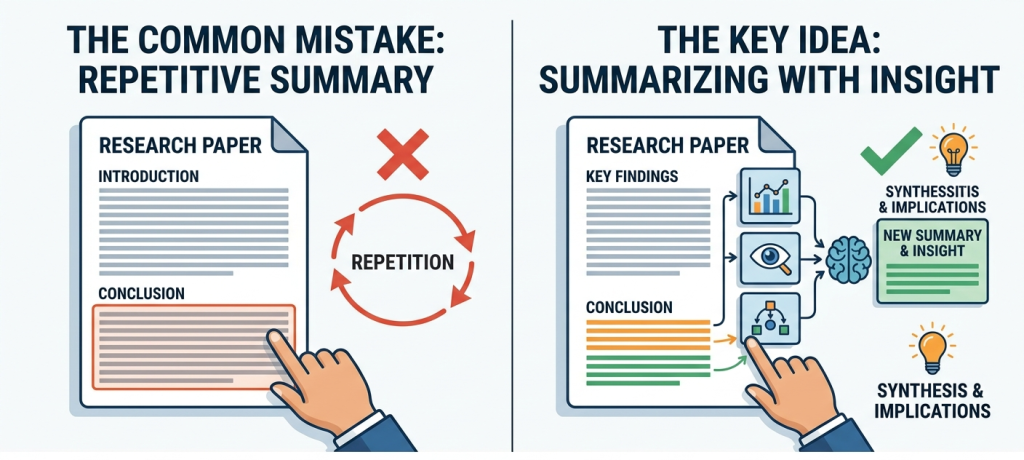
One of the most common mistakes in academic writing is treating the conclusion as a simple summary of the abstract. While it is necessary to revisit the central arguments, doing so through mere repetition can weaken the impact of the paper. Instead, a strong conclusion should synthesize the information. This means looking back at the original thesis or research question through the lens of the evidence that has now been presented.
A researcher should aim to reinforce the primary findings by showing how they connect. Rather than listing what was done, the focus should be on what the findings actually mean now that the study is complete. This approach helps to solidify the logic of the entire paper, leaving the reader with a clear understanding of the project’s success.
Step 2: Placing Your Research in a Broader Context
No study exists in a vacuum. To make a paper truly effective, the author must explain how their work contributes to the existing academic conversation. This involves stepping back from the specific data points to look at the bigger picture. Why does this study matter right now? How does it change what we previously thought about the subject?
By placing findings in a broader context, authors can demonstrate the relevance of their work to current trends or global challenges. For example, if a study focuses on a specific recycling technique, the conclusion should mention how this contributes to wider sustainability goals or industrial efficiency. This helps peers and policymakers understand the real-world utility of the research.

Step 3: The Importance of Avoiding New Information
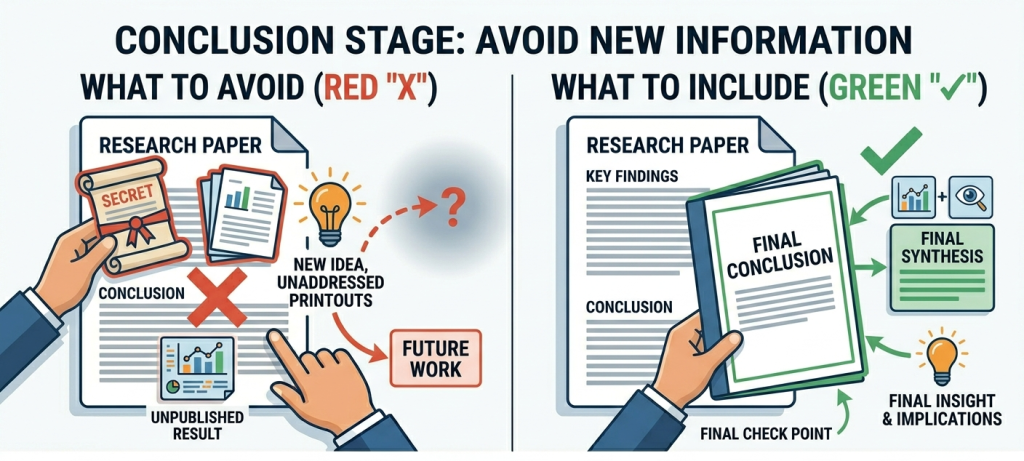
A conclusion is a place for closure, not for new beginnings. One of the strictest rules in academic writing is to avoid introducing new data, evidence, or arguments in the final section. Doing so can confuse the reader and suggest that the main body of the paper was incomplete.
The goal here is to focus entirely on the insights that have already been established. If a new idea occurs during the writing of the conclusion, it is often a sign that the discussion section needs further development. Staying disciplined in this regard ensures that the final thoughts are grounded firmly in the established research, maintaining the integrity of the entire document.
Step 4: Suggesting Directions for Future Research
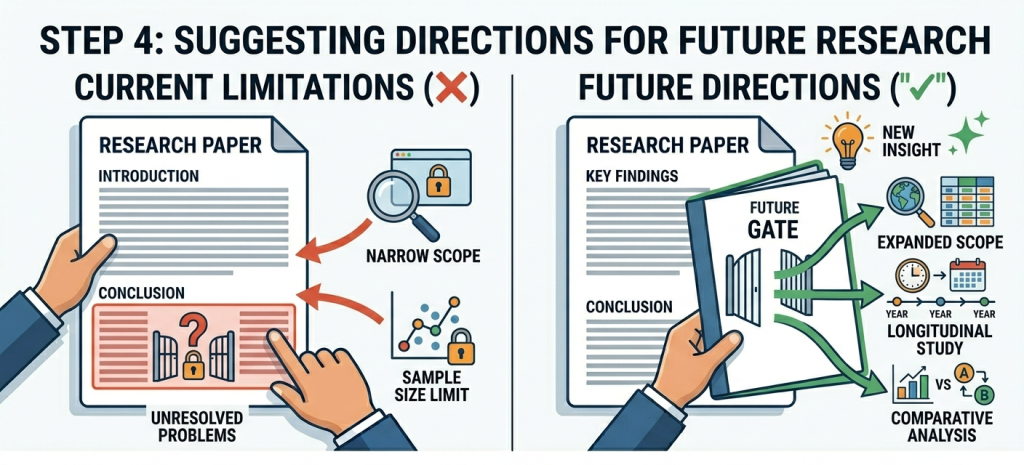
Scientific progress is a continuous process. An effective conclusion acknowledges that while one study may be finished, the investigation of the topic is far from over. By reflecting on the findings, authors can propose potential recommendations or highlight areas where further research is needed.
This does not mean focusing on the weaknesses of the current study. Instead, it is about identifying the next logical steps for the scientific community. Suggesting future directions shows that the researcher has a deep understanding of their field and is committed to long-term progress. It invites other scholars to build upon the work, which is how academic influence is truly grown.
Core Strategies for Future Directions
- Identifying Unanswered Questions: Highlighting specific gaps that appeared during the study.
- Proposing Methodological Shifts: Suggesting different ways to approach the problem in future trials.
- Broadening the Scope: Recommending that the current findings be tested in different geographic or industrial settings to see if the results remain consistent.
Step 5: Following the Ten Percent Guideline
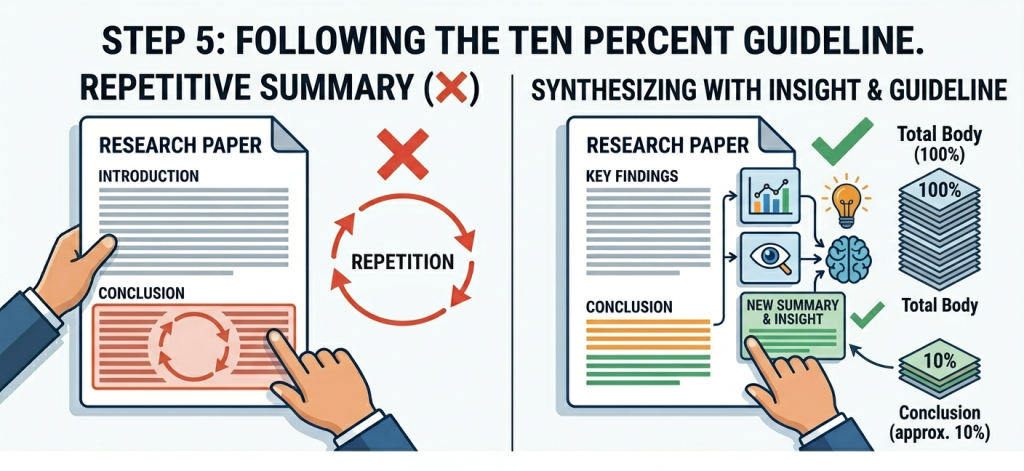
Maintaining the correct proportions is a hallmark of professional academic work. Generally, a conclusion should make up approximately 10% of the total word count of the paper. This guideline helps to ensure that the ending is substantial enough to be meaningful but not so long that it becomes a second discussion section.
If a conclusion is too short, it may feel abrupt and leave the reader feeling unsatisfied. If it is too long, it risks becoming repetitive or straying into unrelated topics. Following this structural balance helps maintain the professional flow of the document and keeps the reader engaged until the very last sentence.
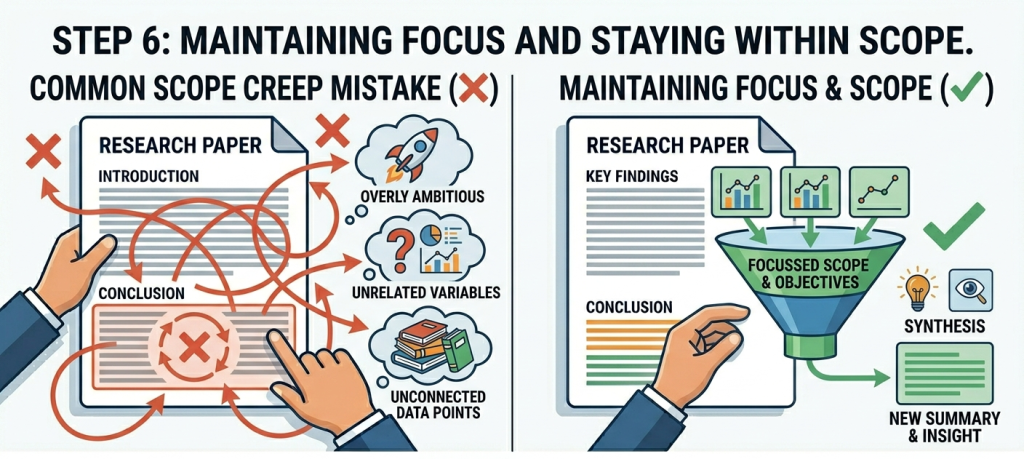
Step 6: Maintaining Focus and Staying Within Scope
When discussing the implications of a study, it is easy to become overly ambitious. However, it is crucial to remain within the objectives and scope of the research. While it is good to show relevance, an author should avoid making grand claims that the data cannot support.
Maintaining focus means being honest about what the study has achieved. If the research was limited to a specific region or a certain group of materials, the conclusion should reflect that. This level of precision builds trust with the audience and ensures that the research is cited accurately by others in the future.
Final Thoughts on Research Clarity
Ultimately, the strength of an academic paper is judged by its ability to communicate complex ideas clearly. The conclusion serves as the final seal of quality on that communication. By synthesizing arguments, suggesting future paths, and respecting the boundaries of the study, a researcher ensures that their work has a lasting impact on the academic world.
