




Film and television do more than entertain; they shape cultural values, influence behavior, and reflect societal priorities. As environmental concerns grow more urgent, the screen industry must reconsider not only what stories it tells, but how it produces them. Film and television production has long carried a high ecological footprint, and professionals, institutions, and audiences now increasingly question this reality. Sustainable Film Production has emerged as a guiding approach that links creative excellence with environmental responsibility, positioning sustainability as a core element of contemporary media practice rather than a secondary concern.
Environmental Challenges in Film and TV Production
Film and television production relies on complex logistical systems that place heavy demands on natural resources. Energy-intensive lighting, large-scale set construction, extensive travel, and compressed production schedules drive high carbon emissions. Productions often use materials temporarily and discard them after filming, while catering and accommodation generate additional waste. Industry professionals once accepted these practices as standard, but global sustainability goals now prompt critical reassessment.
Producers and sustainability teams increasingly conduct environmental impact assessments to measure emissions, water use, and waste. These assessments expose inefficiencies and highlight opportunities for improvement. What the industry once viewed as unavoidable costs now represent areas where planning, awareness, and accountability can create meaningful change.
Green Energy Use and Waste Reduction on Set
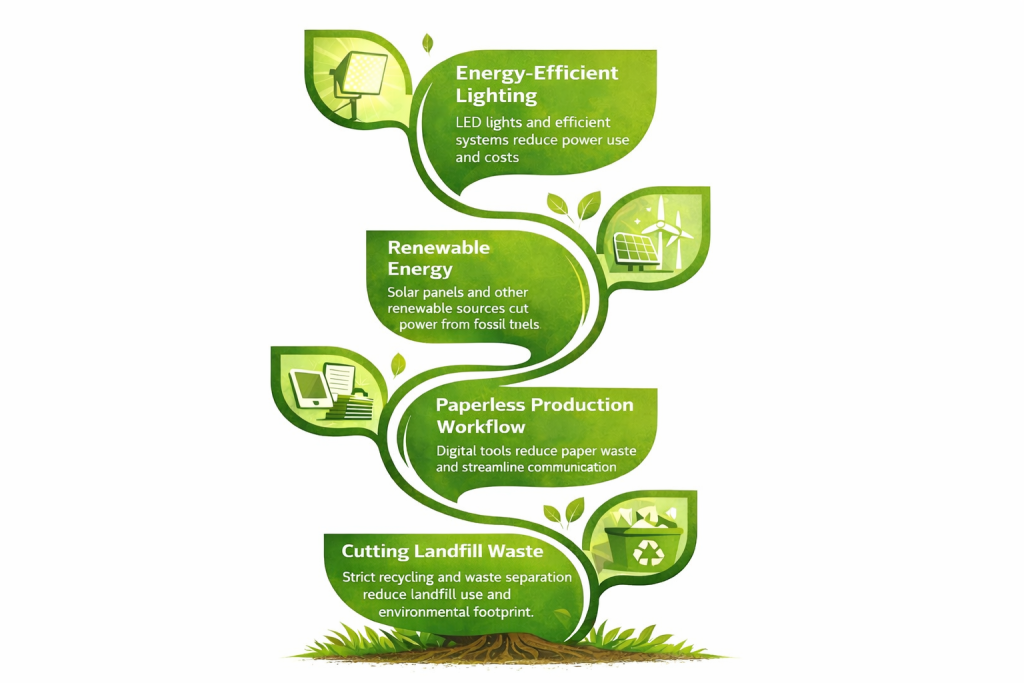
Changes in energy sourcing and consumption mark one of the most visible shifts in production practice. Productions now replace traditional lighting systems with energy-efficient alternatives that lower electricity demand without limiting creative control. Some sets integrate renewable energy sources directly into workflows, reducing dependence on fossil fuels.
Waste management practices have also advanced. Digital tools minimize printed materials, while crews prioritize reusable and modular set components. Costume and prop departments increasingly source items for reuse or donation, extending their lifespan beyond a single project. Catering teams emphasize local sourcing and waste reduction, embedding sustainability into daily production decisions rather than treating it as a separate initiative.
Sustainable Storytelling and Audience Impact in Sustainable Film Production
Sustainability extends beyond operations into the stories film and television tell. Storytellers shape public perception, and many productions now integrate environmental themes into both fictional and non-fictional narratives. Instead of relying on direct messaging, creators explore sustainability through character choices, world-building, and social context.
When productions align on-screen narratives with behind-the-scenes practices, they strengthen authenticity. Audiences engage more deeply with content that reflects consistent values and actions. This alignment encourages reflection and discussion, reinforcing the role of creative industries in driving cultural shifts toward more responsible lifestyles. Storytelling thus becomes a subtle yet powerful force for long-term change.
Industry Standards and Future Trends
Industry standards and sustainability frameworks now support the shift toward responsible production. Film commissions, broadcasters, and international organizations provide guidelines that help productions measure and reduce environmental impact. Sustainability reporting, green certifications, and incentive-based policies increasingly define professional best practice.
Technological innovation continues to accelerate this transition. Virtual production, remote collaboration, and advanced post-production tools reduce travel and limit the need for large physical sets. As these technologies evolve, they align efficiency with sustainability. The industry’s future will likely depend on adaptability, where environmentally conscious systems support creative ambition.
Sustainable Practices in Contemporary Film Production
A notable example of sustainable film production can be found in the implementation of environmental standards on large-scale productions supported by industry sustainability frameworks. Several high-profile film and television projects have adopted structured carbon measurement tools, renewable energy solutions, and waste-reduction strategies to minimize their environmental impact.
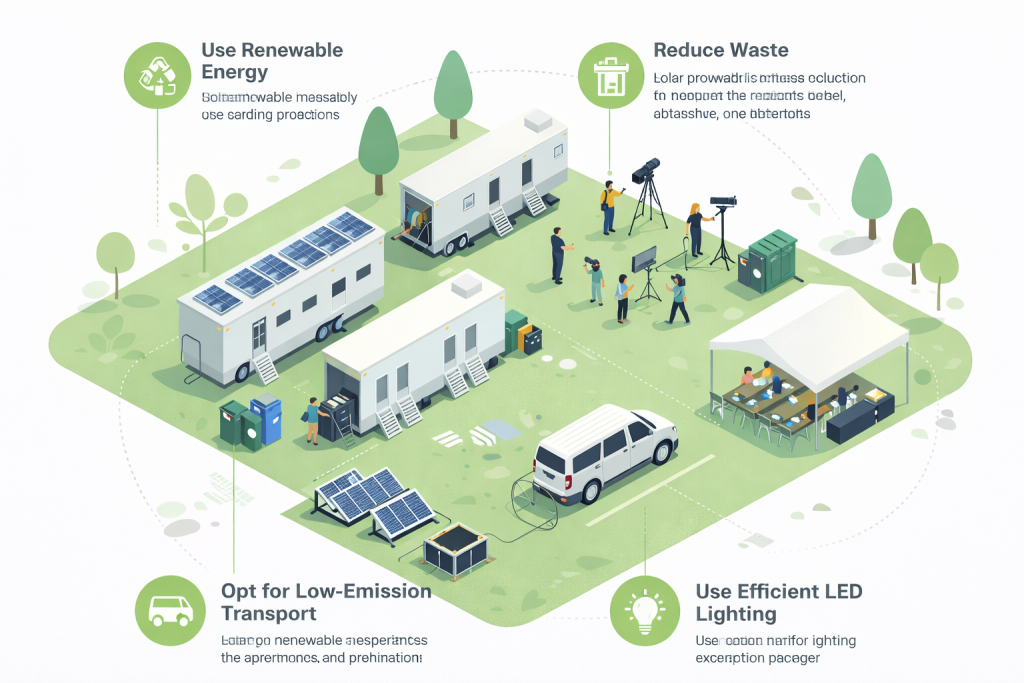
For instance, productions working under sustainability certification programs have replaced diesel generators with hybrid or renewable energy sources, significantly reducing on-set emissions. Departments have coordinated material reuse across productions, diverting large volumes of set materials from landfill. Digital documentation and call sheets have further reduced paper waste, while locally sourced catering has lowered transportation emissions.
These initiatives demonstrate that sustainability can be integrated without compromising creative ambition or production quality. By embedding environmental accountability into planning, budgeting, and daily workflows, productions have shown that responsible practices are both operationally feasible and economically beneficial. This case highlights how structured sustainability frameworks can transform environmental responsibility from an abstract goal into a practical production standard.
Conclusion
The film and television industry is transforming as environmental responsibility becomes integral to both creative and operational decisions. Changes in energy use, material management, storytelling, and industry standards demonstrate how sustainability reshapes production and perception alike. Sustainable Film Production offers a holistic framework that connects creativity, ethics, and innovation. For academics and creative professionals, embracing this shift provides an opportunity to help shape a media landscape that not only reflects the world as it is, but actively supports the world as it should be.
This discussion aligns closely with the themes of the Sustainability in Creative Industries (SCI) – 5th Edition conference, which brings together researchers and practitioners to explore sustainable practices across creative sectors. By addressing innovation, responsibility, and industry transformation, the conference provides an important platform for advancing dialogue and knowledge exchange in sustainable media production.
