


An Emerging Trend: Indigenous Voices Leading the Way
Cultural Sustainable Tourism (CST) is an ever-evolving field, responding to the challenges of globalization, authenticity, and environmental responsibility. Today, one of the most exciting and impactful trends is the rise of Indigenous, community-led tourism.
This approach puts Indigenous communities at the heart of the tourism experience—allowing them to tell their own stories, share their traditions, and benefit directly from visitor engagement. It’s a model that fosters economic empowerment, cultural revitalization, and genuine reconciliation.
Travelers increasingly seek authentic, immersive experiences, while also becoming more aware of the need for responsible and ethical travel. Indigenous-led tourism meets this demand by emphasizing self-determination, respect for ancestral knowledge, and alignment with community values. It moves beyond the extractive or superficial models of the past and embraces collaboration, respect, and shared benefit.
Case Study: Empowerment and Reconciliation in Canada
Canada stands out as a leader in this space, with initiatives spearheaded by the Indigenous Tourism Association of Canada (ITAC). One example is the partnership between Ottawa Tourism and Makatew Workshops, led by Marc Forgette of the Apitipi Anicinapek Nation.
Forgette’s workshops combine traditional crafts with open discussions on truth and reconciliation. Support from local institutions like Algonquin College helps entrepreneurs translate cultural knowledge into market-ready experiences—without compromising integrity. Ottawa Tourism takes a respectful, supportive role, following the principle: “nothing about us without us.”
This case underscores how patient relationship-building and true community empowerment create lasting, sustainable tourism models.

Case Study: Cultural Integrity and Local Control in Sri Lanka
In Sri Lanka, a recent study explored how tourism could support the Vedda community, the island’s Indigenous population. The community-led model prioritizes cultural preservation, local control, and sustainable practices—while offering authentic experiences that resonate with modern travelers, especially Generation Z.
The project emphasizes:
-
Community members as guides, artisans, and performers
-
Equitable revenue-sharing models
-
Protection of sacred cultural elements
This balance between accessibility and preservation is vital for maintaining cultural integrity while enabling socio-economic upliftment.
Case Study: Adventure and Cultural Investment in Port Stephens, Australia
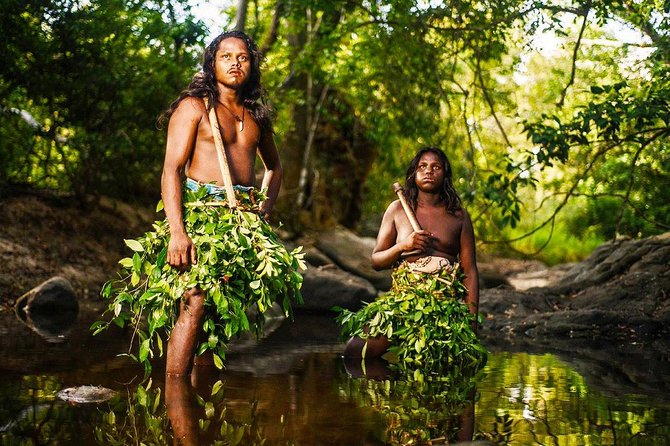
In New South Wales, Sand Dune Adventures offers high-energy quad-bike tours across Worimi Conservation Lands—but this isn’t just about adrenaline.
Operated by the Worimi Local Aboriginal Land Council, the initiative blends adventure with education, connecting visitors to the land’s spiritual and historical significance.
Proceeds from the tours fund the Murrook Cultural Centre, support job training for local Aboriginal people, and sustain environmental programs, including a native plant nursery and a ‘green team’ for land rehabilitation.
Here, tourism supports holistic well-being—economically, culturally, and environmentally.

Case Study: Art and Remote Community Support near Uluru, Australia
In Central Australia, Maruku Arts has empowered Indigenous artists for over 35 years. Owned by the Anangu people, it supports around 900 artists from 25 remote communities.
Through workshops and ethical art sales, Maruku Arts:
-
Preserves traditional techniques and storytelling
-
Provides income for artists living on Country
-
Reinvests in community training and cultural programs
Visitors gain meaningful cultural insights, while communities gain economic self-determination and cultural continuity.

These global stories tie directly into the themes of the 7th Edition of the Cultural Sustainable Tourism (CST) Conference, taking place from October 8–11, 2025, on a Nile Cruise between Luxor and Aswan, Egypt.
Held in collaboration with the University of Maia, the conference will explore:
-
Authentic cultural experiences
-
Community engagement and Indigenous inclusion
-
Cultural heritage preservation through sustainable practices
The rise of community-led Indigenous tourism aligns perfectly with the conference’s vision of a more equitable and meaningful tourism future.
Join the Conversation at CST 2025
CST 2025 invites researchers, heritage managers, tourism professionals, and policymakers to come together and share ideas, insights, and strategies for the future of tourism.
By exploring trends like Indigenous tourism, we move closer to a model that is not only economically viable, but also culturally respectful and socially inclusive.
Learn more and register:
Official CST 2025 Conference Page
